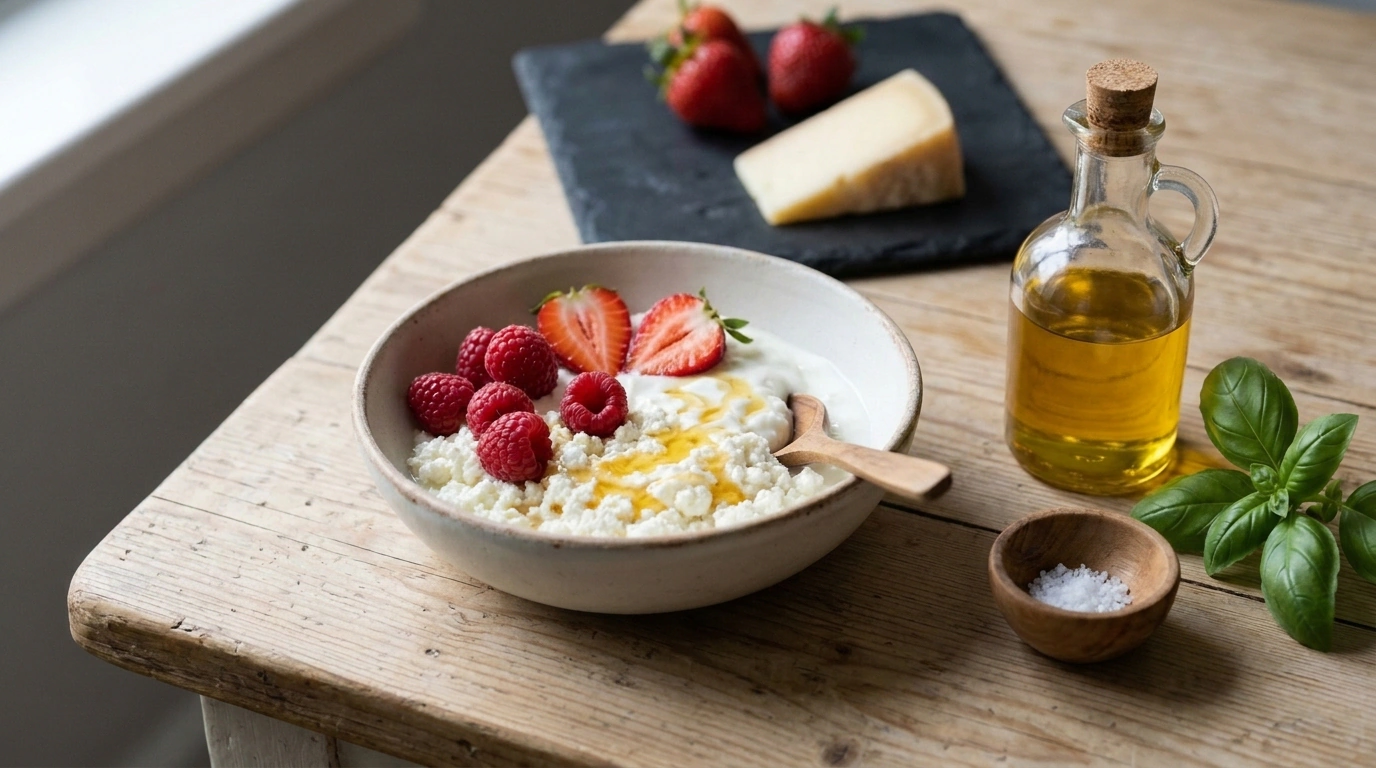
When women's health and nutrition come up, attention usually locks onto hunting down specific food "enemies." Out go yogurt, cheese, chocolate, and coffee sweeteners. It feels like just two more food bans will finally clear up your skin, make your cycle run like clockwork, and erase evening bloating.
The trap lies elsewhere. While you're fighting cottage cheese, it's easy to slash calories so hard your body pauses your period, or swap into "light" packaged snacks loaded with hidden salt. Ordinary foods don't contain targeted toxins out to wreck women's hormones. Let's check where internet scares clash with science, and which three factors genuinely hit hormones and how you feel.
Dairy, sweets, and sweeteners: scares vs. evidence
Social media's top suspect is dairy, blamed for every breakout. Meta-analyses of observational studies paint a calmer picture: a modest link with acne does show up, mostly with skim and low-fat milk. Cheese and yogurt show almost no link at all. Even then, observational data spots correlation rather than direct cause, so banning all dairy across the board makes little sense. It's far smarter to watch how your skin reacts to a specific item than to blindly cut out protein and calcium.
Sweets and sugar substitutes follow the same pattern. A slice of cake doesn't shut down ovulation or trigger yeast infections on its own, and artificial sweeteners within acceptable daily intakes don't wipe out your gut bacteria. Trouble starts when sweets crowd out real meals and push you into a calorie surplus.
The one group of fats facing serious concern from researchers is industrial trans fats found in margarine and cheap store-bought pastries. In the observational Nurses' Health Study II (Chavarro et al., 2007), getting just 2% more daily calories from industrial trans fats instead of other fats was linked to roughly a 73% higher relative risk of ovulatory infertility. Then again, trans fats harm blood vessels and metabolism in everyone, so keeping them near zero helps anybody.
Three factors that actually disrupt your cycle and well-being
First is ultra-processed food: fast food, chips, candy bars, and packaged baked goods packed with added sugar, refined oils, and salt. They make overeating effortless, and excess body weight raises the risk of polycystic ovary syndrome (PCOS)—a condition where ovulation becomes irregular and cells respond poorly to insulin. Missed periods and fertility struggles often follow. These foods hurt weight and metabolism in men too, though in women the disruption shows up faster through the menstrual cycle.
Second is losing weight too fast. When a steep calorie deficit piles onto heavy workouts and stress, the brain flips into energy-saving mode. Clinicians call this functional hypothalamic amenorrhea (FHA): the hypothalamus dials down ovulation signals, metabolism slows, cortisol rises, and periods stop. People sometimes compare it to early menopause, though it is reversible. According to Endocrine Society guidelines, treatment starts with restoring adequate calories, easing exercise load, and lowering stress. Masking missed periods with combined oral contraceptives (COCs) doesn't fix the root issue: pills create an artificial withdrawal bleed without solving the energy shortage or protecting bone density.
Third is excess salt. Shifts in estrogen and progesterone during the second half of your cycle make the body hold onto water more easily, and extra sodium worsens swelling. Under WHO guidelines, adults should stay under 5 g of salt per day (less than 2,000 mg of sodium—about one level teaspoon). Globally, people eat twice that much, with most hidden salt sitting in bread, cheese, sauces, and ready-made meals.
Three calm habits instead of food ban lists
Instead of fighting imaginary toxins, lean on three steady habits. Build most of your plate from whole foods—protein, vegetables, and complex carbs—and keep ultra-processed snacks and trans-fat pastries as rare extras; yogurt or a square of dark chocolate fits right in. Lose weight gradually without crash diets, since good sleep and moderate movement support hormones far better than any "detox." In the second half of your cycle, keep an eye on hidden sodium in sauces and packaged foods—often that alone eases morning puffiness.
Everyday habits are great for prevention, not diagnosis. If your periods stop, delays become regular, sudden heavy swelling appears, or you suspect PCOS, book an in-person visit with an OB-GYN or endocrinologist instead of testing diets or supplements on your own.