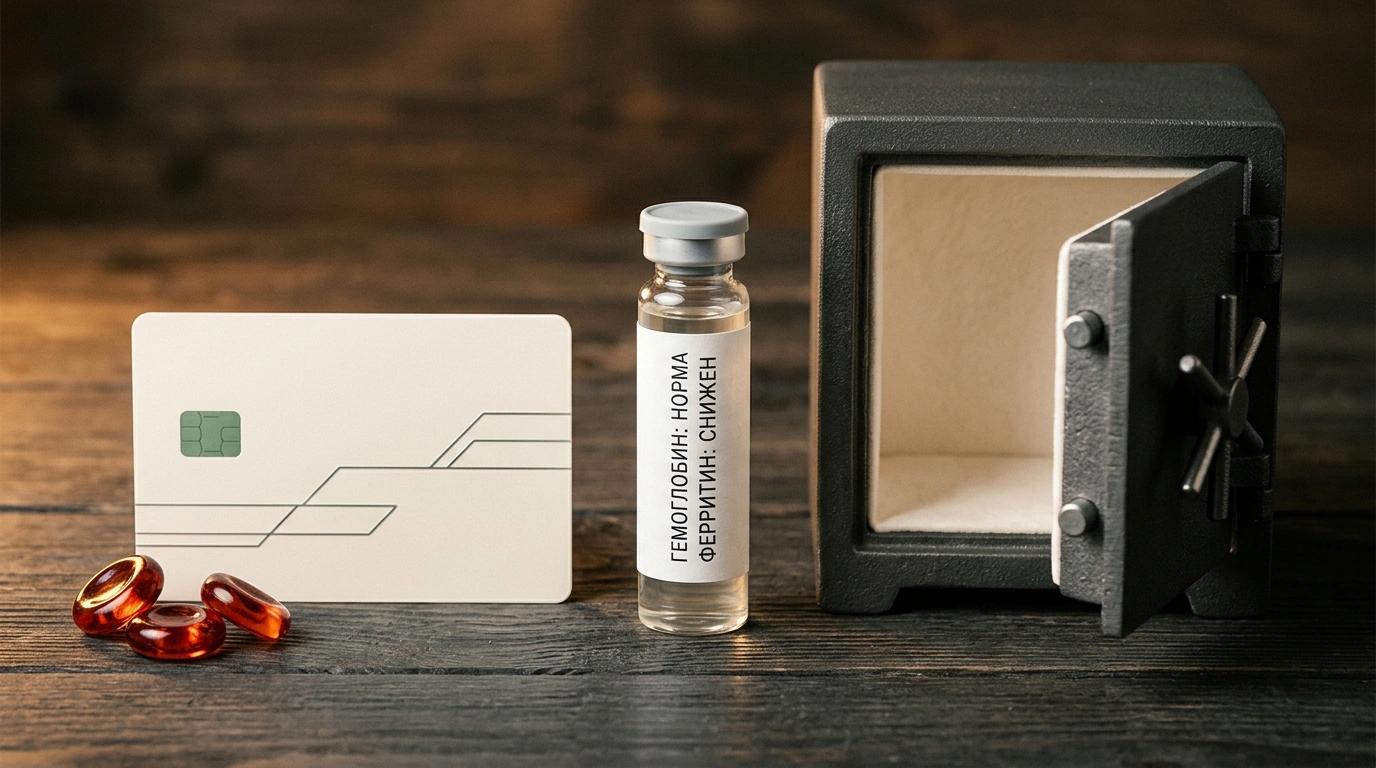
You pick up your complete blood count, glance at hemoglobin, and exhale: the number sits right in the middle of normal. Immediately, you blame your exhaustion on the weather, work deadlines, and poor sleep. Yet behind that calm lab sheet, your body may have spent months draining its last iron reserves into your bloodstream just to keep red blood cells delivering oxygen. Everything looks smooth on the surface while the warehouse inside empties out.
Hemoglobin on your debit card and ferritin in the safe
Think of personal finances. Hemoglobin is the cash on your everyday debit card. This protein sits inside red blood cells and hauls oxygen from your lungs to your tissues. Your body can't survive without it, so it keeps that checking balance steady until the very end.
Ferritin is your emergency fund locked in a safe. This protein stores iron inside your cells, and its blood level shows how much reserve you have left. When demand rises or iron intake falls short, your body quietly pulls cash from the safe to top up your checking card.
As long as anything remains in the safe, a standard blood count looks spotless. That's where the stubborn myth comes from: "My hemoglobin is fine, so my iron must be fine." In reality, iron deficiency—especially in its hidden form—is one of the most common nutritional shortfalls worldwide, particularly among women of reproductive age.
Three steps from quiet depletion to anemia
Iron deficiency doesn't arrive overnight; it unfolds in three stages.
In stage one, reserves in the safe simply start shrinking. Daily needs are still met, you feel normal, and your standard blood count stays silent.
If nothing changes, stage two arrives: latent (hidden, or non-anemic) iron deficiency. The safe is nearly empty and ferritin is low, yet hemoglobin still sits inside the reference range. Out in your tissues, though, strict rationing begins: iron is essential for enzymes that drive energy production, brain function, and muscle work. That triggers chronic fatigue, heavy mornings, brain fog, shortness of breath on your usual jog, hair shedding, brittle nails, and sometimes restless legs at bedtime. You see a pretty hemoglobin number and walk away thinking you just need a vacation.
In stage three, iron-deficiency anemia sets in. The safe is empty, there's nothing left to transfer, and hemoglobin finally drops. Only now does a routine blood count sound the alarm. And once you reach anemia, buckwheat, apples, or pomegranates won't refill the tank—you need doctor-prescribed iron therapy.
Who should check ferritin and how to read the numbers right
Nobody needs monthly blood draws, but some people drain their safe faster than others. High-risk groups include women with heavy periods, pregnant and breastfeeding women, regular blood donors, rapidly growing teenagers, and endurance athletes. People with gut conditions that block absorption (celiac disease, inflammatory bowel disease, or prior bariatric surgery) belong here too, along with vegetarians and vegans, since plant-based non-heme iron absorbs much less efficiently than heme iron from meat and organ meats.
If lingering fatigue bothers you or you're in a risk group, ask your primary care doctor about a ferritin test. By WHO benchmarks, a level below 15 mcg/L in a healthy adult means definite deficiency, though hematologists often use a 30 mcg/L threshold in practice because tissues can already run short between 15 and 30.
There is one catch. Ferritin is an acute-phase protein: during a cold, injury, or chronic inflammation, it shoots up and can show a deceptively calm 40–50 mcg/L even when your storage is empty. That's why doctors pair it with C-reactive protein (CRP). If CRP is elevated, WHO guidelines raise the deficiency cutoff to 70 mcg/L, and doctors also check transferrin saturation (TSAT below 20% confirms hidden depletion). Very high ferritin (above 150 mcg/L in menstruating women, or above 200 mcg/L in men and postmenopausal women) is also a reason to check in with a doctor.
Your body has no active way to excrete excess iron. Taking supplements by guesswork—especially if you have undiagnosed hereditary hemochromatosis—causes extra iron to build up in the liver, heart, and pancreas, damaging organs over time. Another danger is masking hidden GI bleeding from an ulcer, polyps, or a tumor (especially in men and postmenopausal women). On top of that, unabsorbed iron frequently causes nausea, stomach pain, constipation, and dark stools.
When deficiency is confirmed, a doctor first tracks down why you're losing iron, then picks a tolerable supplement form, an alternate-day schedule, or—when gut absorption fails—intravenous iron.