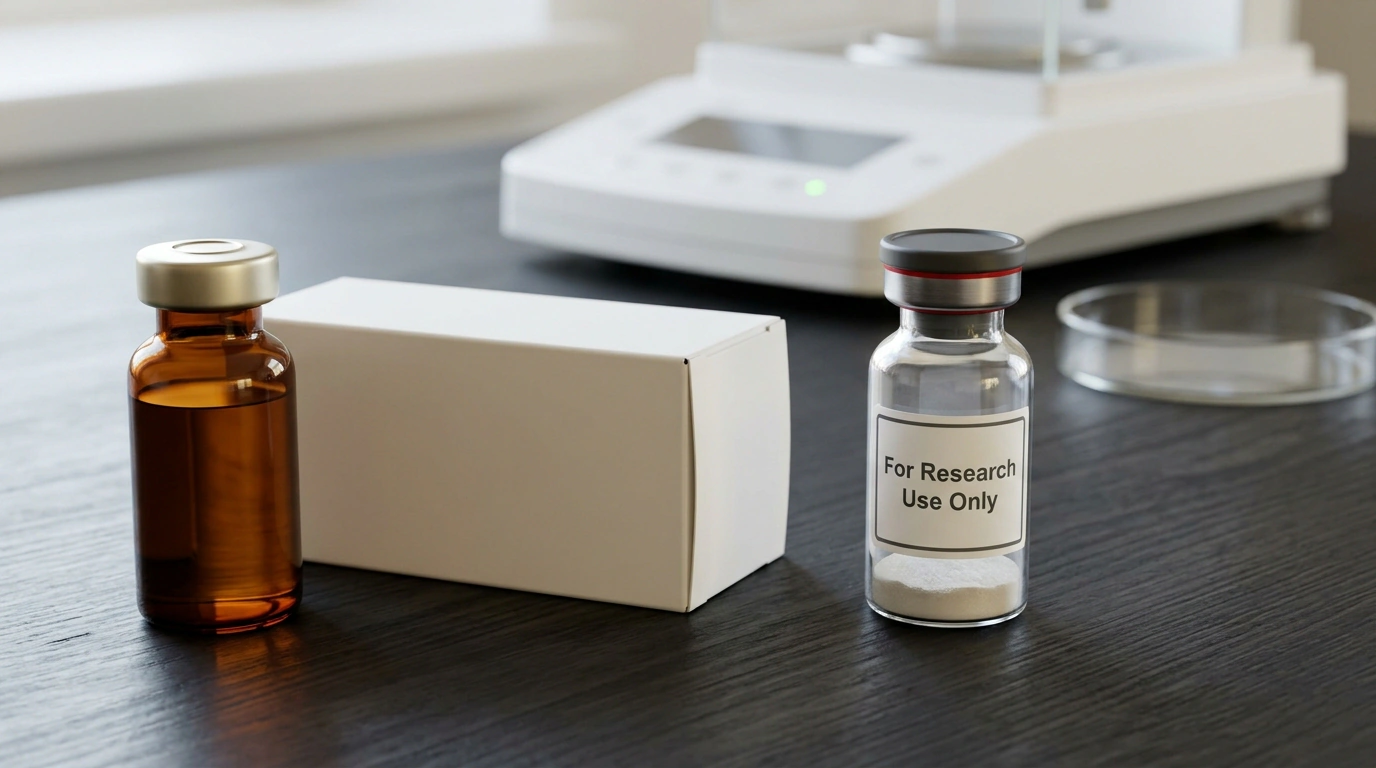
Imagine a strange scene. On one side of the counter sit drugs that have passed years of trials on thousands of patients, saved millions of lives, and come from factories under strict quality control. On the other side sit tiny unlabeled vials of powder. People order them from websites with fine print saying 'for laboratory research only,' mix them at home with sterile water, and inject them into their belly or near a sore knee. The surprising part is that both groups share the same appealing name: peptides.
Over the past couple of years, a whole cult has grown around them. In gym locker rooms, people recommend shots for 'faster tendon repair.' Longevity blogs promise to rejuvenate cells and lengthen telomeres. Then, in the fall of 2026, news spread online that the US had finally legalized popular peptides. Let's look at the facts without panic or hype: what has actually been tested in humans, where the science holds up, what chemists find in gray-market vials, and what the US Department of Health and Human Services (HHS) actually signed on October 30, 2026.
Why the word 'peptide' tells you nothing about safety or results
In chemistry, a peptide is simply a short chain of amino acids. Think of a regular protein as a long freight train with hundreds of cars. A peptide is just a short train of a few cars, or maybe a couple dozen. That is it. There is no magic and no seal of quality in the word itself. Calling something a 'peptide' and expecting it to help your body is like praising an unknown liquid just because it is clear. Water is clear, and so is concentrated vinegar.
Because of this confusion, three completely different worlds get lumped together.
The first world is approved prescription medicine. Insulin, which keeps people with type 1 diabetes alive, is a peptide. Oxytocin is a peptide. Semaglutide and tirzepatide, which transformed obesity and type 2 diabetes care, are also peptides. To reach a pharmacy shelf, these molecules run a long, expensive marathon: lab dishes and animals first, small human safety checks next, and then large trials with control groups and placebos. In one key semaglutide trial, for example, 1,961 people were tracked for 68 weeks against a placebo: those on the drug lost about 15% of their body weight, compared with roughly 2% on the dummy shot. After approval, every factory batch is tested for sterility, purity, and exact dose.
The second world is drug candidates currently in clinical trials. Retatrutide is a good example. Researchers are testing it in roughly two thousand volunteers over 80 weeks, also with a control group. The molecule looks promising, but it is not approved yet: its final safety profile and exact uses are still being worked out. Even so, black-market vials labeled 'retatrutide' are already on sale everywhere, even though no legal factory-made version exists.
The third world is the gray market of 'biohacking' and sports recovery. This is where BPC-157, TB-500, growth hormone boosters like CJC-1295, epitalon, and MOTS-c live. They are sold without a prescription and without drug approval. People often ask: if these are just amino acid chains, why do users almost always inject them instead of taking capsules? The answer is simple. Your stomach and gut are built to chop any protein or peptide into single amino acids, just as they digest a piece of chicken or cottage cheese. Most peptides in a pill get destroyed by digestive enzymes before reaching your bloodstream. Official medicine has to design complex chemical coatings and absorption enhancers for oral versions, while the gray market just sells powder for injections.
BPC-157: thirty people with no control group versus plain saline
Visit any forum about shoulder, elbow, or knee injuries, and BPC-157 comes up within five minutes. People call it liquid tape for tendons, claiming a few weeks of shots will mend an old tear. The molecule is genuinely interesting: it is a synthetic 15-amino-acid peptide studied since the 1990s by a research group in Zagreb. In rat studies, it sped up the healing of tendons, ligaments, muscles, and stomach ulcers. Its proposed mechanism involves stimulating the growth of tiny new blood vessels in injured tissue.
That sounds encouraging until you ask one awkward question: how often do miracles in rats repeat in humans? Medicine has sobering numbers on this. Back in 2006, researchers David Hackam and Donald Redelmeier published an analysis in JAMA tracking 76 of the most famous, highly cited preclinical animal studies. The results were stark.
What happened to 76 major animal discoveries when tested in humans (Hackam & Redelmeier, JAMA)
Most exciting findings in rodents never translate to people. We have a different metabolic rate, a different immune system, and a completely different tissue scale. A rat tendon heals in days with the slightest nudge, whereas a human knee is far more stubborn.
Now let's look at what has actually been tested for BPC-157 in humans. In 2025, Vasireddi and colleagues published a systematic review in HSS Journal covering sports orthopedics: out of 36 studies they collected, 35 were in animals or cells and only one involved humans. Then, in October 2026, Acta Orthopaedica Belgica published a fresh systematic review by Poolton and colleagues, the most complete audit of human BPC-157 data to date.
The verdict fits in one line: just 3 small studies, 30 participants in total, and zero control groups. The authors rated the quality of evidence as low and their confidence in the findings as very low. Let's look inside each of those three studies, because the flaws are right on the surface.
The first paper (Lee & Padgett, 2021) is the one most often cited in debates about sore joints. Yet it is not even a clinical trial. Doctors simply pulled the charts of 16 patients who had previously received BPC-157 knee injections. Six to twelve months later, they called those patients on the phone and asked them to recall how much their knee hurt before the shot and whether it felt better now. There were no validated orthopedic questionnaires, no MRI scans, and no second group receiving a placebo shot. Out of 12 people who got BPC-157 alone, 11 said on the phone that their pain had dropped. Try remembering on a scale of one to ten how badly your back ached last November. Human memory is a terrible measuring tool.
The second study (Lee et al., 2024) looked at 12 women with interstitial cystitis, a chronic bladder pain condition. After a single solution was placed into the bladder, 10 out of 12 reported that their symptoms went away. Again, this relied purely on self-reports with no control group.
The third study (Lee & Burgess, 2025) checked the safety of intravenous infusions. It included exactly 2 healthy volunteers. They received IV drips two days in a row, and blood tests showed no abnormalities. There is a catch: both volunteers had already received these infusions before, meaning they were people known to tolerate the procedure well. You cannot judge long-term safety for thousands of buyers from two pre-selected cases.
There were two older attempts as well. In the 2000s, a trial tested BPC-157 enemas in 53 patients with ulcerative colitis, but the results appeared only in brief conference abstracts, and FDA experts found the data insufficient to draw conclusions. Meanwhile, a 2015 registered trial of BPC-157 pills in 42 healthy volunteers never published any results. Only in February 2026 did a company in China start recruiting for the first proper placebo-controlled trial: 120 people with hamstring strains on a 14-day course. Its results are not out yet.
At this point, a fair objection comes up: 'Wait, those 11 knee patients and people in online reviews really did feel better! They couldn't all be making it up.'
They don't have to be making it up. Pain genuinely fades over time, even if the substance had nothing to do with it. Two powerful background effects drive this in medicine. The first is regression to the mean: nobody goes for an injection on an average, calm day. You go at the peak of a flare-up, when your knee hurts worse than usual. A couple of months later, the acute flare usually settles on its own, and your brain naturally credits the last shot you took. The second is expectation and the ritual of treatment.
A 2025 meta-analysis by Previtali and colleagues in EFORT Open Reviews showed just how strong this effect is. The authors pooled 73 clinical trials where patients with knee osteoarthritis received joint injections of plain sterile saline: salty water with zero medicine. More than half of the patients reported noticeable pain relief at 1, 3, and 6 months. Without a comparison group, it is impossible to tell a peptide apart from plain saltwater.
Short studies also leave a dangerous blind spot. When a compound is tested on 30 people without long follow-up, we know nothing about delayed risks. The very mechanism of growing new blood vessels—helpful in theory for healing a wound—must be carefully checked for safety regarding hidden tumors. Multi-year human data on this simply do not exist.
The World Anti-Doping Agency (WADA Prohibited List) bans BPC-157 (class S0, non-approved substances) and TB-500 along with thymosin beta-4 (class S2.3, growth factors and modulators) in any form—injections, pills, or creams—both in competition and during training. For a real ligament injury or chronic joint pain, internet vials are no substitute for a proper orthopedic exam and structured rehab with gradual loading.
TB-500 and thymosin beta-4: how eye drops became tendon shots
The second favorite on sports forums is TB-500. Users often stack it with BPC-157 and call the pair the 'gold standard of recovery.' If you ask sellers what backs up that claim, they will almost certainly hand you a list of papers about thymosin beta-4. Here lies a clever but misleading swap.
Thymosin beta-4 is a natural peptide (or small protein) made of 43 amino acids. It genuinely exists in our cells and helps them migrate during wound healing. Under the name TB-500, however, the gray market usually sells a short synthetic fragment of that molecule that is only 7 amino acids long. These are two different substances. Assuming a tiny 7-piece fragment acts like the full 43-piece molecule is like claiming one gear from a transmission will drive down the highway just like the whole car.
Molecular chain comparison: the long natural 43-amino-acid spiral of thymosin beta-4 and the short synthetic 7-amino-acid fragment TB-500.
Even if you ignore that swap and look at human trials of full thymosin beta-4 itself, the miracle quickly fades. It actually went through serious clinical trials—as eye drops for dry eye syndrome. Three large studies enrolled more than 1,600 people in total. Even as eye drops, the results were not strong enough to win full drug approval.
In 2026, McGuire and colleagues published a broad literature review in Applied Sciences on thymosin beta-4 and TB-500 in tissue healing. Out of 80 scientific papers they found, exactly one directly studied TB-500. There are zero human clinical trials of TB-500 for tendons, ligaments, or muscles. When FDA staff scientists reviewed the TB-500 dossier in 2026, they found no clinical trials and not even a single published medical case report of its use in humans. Adverse event databases held only two reports of people who injected a mix of TB-500 and BPC-157, and two scattered complaints cannot establish safety.
Growth hormone peptides: a lab spike does not equal new muscle
The third popular group includes peptides that push your pituitary gland to release more of your own growth hormone (GH). The best-known name is CJC-1295, often paired with ipamorelin and similar compounds. The sales pitch sounds smooth: 'Injecting pure growth hormone is scary and expensive, so here you gently nudge your own body. You get a blood test, see the numbers jump, and that means fat melts, muscle grows, and youth returns.'
This is a classic trap in evidence-based medicine: mistaking a surrogate marker for a real outcome. A surrogate marker is an intermediate lab number that is easy to measure, but does not guarantee real-life benefit. You can raise the temperature reading in a room by holding a lighter under the thermometer, yet the room itself stays cold.
CJC-1295 fits this story to the letter. In an early study of healthy adults, an injection of this peptide really did raise blood growth hormone levels 2- to 10-fold for about a week, and IGF-1 (the hormone through which GH acts on tissues) 1.5- to 3-fold for 9 to 11 days. That sounds impressive until you check the methods section: researchers never measured muscle mass, strength, or endurance in those people. They only recorded a hormone spike in blood samples.
Blueprint infographic: contrast between a sharp lab marker spike in a test tube and an unchanged muscle tissue outline.
Official medicine does have one approved relative of these peptides: tesamorelin. However, the US approved it for a very narrow use—reducing excess deep belly fat in patients with HIV-associated lipodystrophy—and only after strict placebo-controlled trials. It has nothing to do with 'rejuvenating healthy people.'
And what actually happens to a healthy person if you steadily raise their growth hormone for real? That was tested directly long ago. In a classic systematic review, Liu and colleagues (Annals of Internal Medicine, 2007) pooled data on 220 healthy older adults given actual growth hormone for an average of six months. The outcome was modest: roughly 2 kg less fat and 2 kg more 'lean mass.' Total body weight barely changed, and much of that extra lean mass was not new muscle at all, but plain water retained in tissues.
The side effects, on the other hand, were very real. People on growth hormone had noticeably higher rates of swelling, aching joints, carpal tunnel syndrome (where fluid compresses a nerve in the wrist and numbs the fingers), gynecomastia (breast tissue growth in men), and rising blood sugar. The authors concluded flatly that growth hormone cannot be recommended to healthy people for anti-aging. If even a direct course of growth hormone offers such a poor trade-off, expecting side-effect-free miracles from unstudied gray-market boosters is a risky bet.
Epitalon and MOTS-c: pretty lab biology versus real longevity
Whenever the topic turns to 'hacking aging,' two names take center stage: epitalon and MOTS-c. Both sound scientific and mysterious, yet both share the exact same gap between a neat lab concept and real human life.
Epitalon is a tiny peptide of just 4 amino acids, developed in St. Petersburg. Longevity blogs sell it as a 'telomerase activator' that supposedly lengthens telomeres (the protective caps on chromosome ends) and slows aging. Fans love citing a study where older patients with coronary heart disease lived longer and died less often than a control group.
That study has three awkward details that ads leave out. First, the 39 patients (compared against 40 on standard care) were not given pure epitalon at all—they received epithalamin, an old extract from animal pineal glands. Second, the sample size was tiny. Third, the study was run by the developers themselves, and the world has never seen an independent trial of comparable scale and design confirm it. For pure epitalon in humans, there are only a few small studies tracking melatonin levels and basic metabolic markers. There is zero proof it extends human life. As for lengthening telomeres in a dish, that is another surrogate marker: in biology, overly active telomere lengthening does not equal longevity and is actually linked to higher cancer risk in several tissues.
MOTS-c is a peptide encoded inside mitochondria, our cellular power plants. In mouse experiments, it improved insulin sensitivity and glucose metabolism, quickly earning the nickname 'fitness in a syringe.' It sounds like a dream for anyone dreading a cold November jog. In reality, human trials tested not MOTS-c itself, but a modified analog in an early-phase study of 88 participants. No full peer-reviewed paper with detailed data exists—results come only from a company press release, which described the effect as modest. FDA reviewers found no data at all on giving regular MOTS-c to humans.
To keep all five groups straight, here is how they compare alongside real peptide drugs.
| Group / Substance | What blogs promise | What is actually proven in humans | Status and main risks |
|---|---|---|---|
| Approved peptides (insulin, semaglutide, tirzepatide, tesamorelin) | Treating diabetes, obesity, specific endocrine conditions | Large placebo-controlled trials on thousands of patients | Approved by regulators, batch-tested in factories; prescribed by doctors |
| BPC-157 | Fast healing of ligaments, tendons, muscles, and joints | 3 small studies (30 people, 0 control groups); first RCT underway in China | Unapproved, banned by WADA (S0); no long-term safety data |
| TB-500 (thymosin beta-4 fragment) | Tissue and muscle recovery after injuries | No direct human trials on muscles or tendons (eye drop data is for a different molecule) | Unapproved, banned by WADA (S2.3); molecule swap in marketing |
| GH boosters (CJC-1295 and similar) | Lean muscle growth, fat loss, anti-aging | Shown to raise blood GH and IGF-1; muscle and strength not tested | Unapproved; real GH in healthy adults causes swelling, joint pain, carpal tunnel, higher blood sugar |
| Epitalon | Telomere lengthening and longer life | No independent RCTs; old 39 vs 40 study used epithalamin extract | Unapproved in US/EU for aging; surrogate marker does not equal longevity |
| MOTS-c | Better metabolism and endurance | No human data on MOTS-c itself; analog has only a press release on 88 people | Unapproved; clinical effect and human safety remain unstudied |
Roulette in a 'research' vial: what labs actually find
Suppose someone reads all of this, shrugs, and thinks: 'Fine, science hasn't caught up yet. It won't hurt to try it on myself just in case.' That is where the ugliest part of the story begins. The biggest danger of the gray peptide market is not even the molecules themselves—it is what is actually inside the glass bottle.
Vials from these websites almost always carry the label For Research Use Only. Legally, that is a handy loophole: the seller is not marketing a drug, so they do not have to prove sterility, test raw materials at each step, or guarantee accurate dosing. You are basically buying a chemical reagent of unknown origin and injecting it under your skin.
In 2026, researchers Christopher Mendias and Talha Awan released a massive audit of this market (preprint Mendias & Awan, 2026). They analyzed nearly 6,500 independent lab reports covering 14 popular peptides, including BPC-157. Buyers and sellers sent the samples in themselves, so it is not a perfect random sample of the global market, yet it is far too large to ignore.
For starters, 156 vials contained none of the stated active ingredient at all. Zero. Just empty filler or something else entirely. Things got worse when analysts compared actual purity and dose against the label, and tested a subset for bacterial toxins (endotoxins—fragments of bacterial cell walls that can trigger fever, severe inflammation, and harsh reactions when injected).
Share of gray-market peptide samples failing lab quality tests (Mendias & Awan, 2026)
The chart speaks for itself. Buying one of these vials is pure roulette: most fail strict purity or dosing standards, nearly half fail even a lenient bar, and roughly one in seven tested samples carried measurable bacterial toxins. For a skin cream, that is unpleasant; for an injection into your body, it is a direct risk of inflammation and infection.
Even gray-market copies of proven drugs fall into this trap. In 2024, a Hungarian team led by Ashraf published a revealing test purchase of non-prescription semaglutide online in JMIR. They placed 6 orders. Three packages never arrived—the money simply vanished. In the vials that did show up, actual concentrations ran about a third higher than stated on the label (hello, overdose and severe nausea), and one vial again showed elevated bacterial endotoxins.
What the US actually announced on October 30, 2026—and how to filter bold claims
In the fall of 2026, biohacking chats exploded: 'Peptides are legal in America! The FDA caved—now they're officially allowed!' To see where that noise came from and what is actually true, look at the timeline.
Back in 2023, the US Food and Drug Administration (FDA) placed BPC-157, TB-500, and several other peptides on a list of substances posing significant risks for pharmacy compounding. Regulators flagged immune reactions, impurities, and a lack of solid safety data, barring pharmacies from mixing them for patients.
In July 2026, things shifted slightly: an FDA advisory committee voted to return 6 of 7 reviewed peptides to the list of substances eligible for compounding. The vote was far from unanimous—on BPC-157 for ulcerative colitis, for instance, the split was 8 in favor, 6 against, and 1 abstention. Meanwhile, the FDA's own staff scientists recommended against including any of the seven.
Then, on October 30, 2026, the US Department of Health and Human Services (HHS), under Secretary Robert F. Kennedy Jr., published Federal Register 2026-22192. That is the document social media crowned as 'approval.'
In reality, it is a draft temporary enforcement discretion policy for US 503A compounding pharmacies. In the US, 503A pharmacies custom-make medications for an individual patient with a doctor's prescription when no suitable factory-made drug exists. The key difference is simple: compounded drugs do not go through pre-market FDA review for safety and effectiveness.
What does the October 30 document actually say?
First, the list covers exactly 6 peptides: BPC-157, Epitalon, KPV, MOTS-c, Semax, and TB-500. Popular growth hormone peptides like CJC-1295 and ipamorelin were left out.
Second, a pharmacy avoids regulatory action only if it meets ten strict conditions at once. These include a patient-specific prescription from a doctor, sourcing raw ingredients solely from a registered manufacturer, a certificate of analysis for every batch, mandatory reporting of serious adverse events and quality defects, and strict limits on routes of administration. High-risk routes like IV drips are excluded.
Third, as of late November 2026, this is not even a final rule. Public comments closed on November 13, and no final version has been issued yet. The document does not legally bind regulators to look the other way forever: it can be withdrawn at any time if harm signals emerge, and it does not override state laws. HHS's logic is purely pragmatic, almost like harm reduction: millions of people are buying unsterile powders online anyway, so the agency is trying to steer some of that demand toward a doctor's prescription and vetted pharmacy ingredients. It is in no way an 'FDA approval,' nor does it prove that BPC-157 heals tendons or epitalon extends life.
The biohacking market guarantees that tomorrow, new three-letter codes with even prettier mouse charts will replace BPC-157 and MOTS-c. To avoid wasting your money and health on every new wave, run any bold promise through three simple filters.
Three filters to check any 'miracle peptide'
- Who was tested and what was the comparison? Are there published human trials with a placebo control group? Rat experiments, Petri dishes, and uncontrolled phone surveys prove nothing.
- What was actually measured? Did researchers track real-life outcomes (faster tendon healing, greater strength, lower mortality), or just a nice lab number like a growth hormone spike or telomere length?
- Where did the vial come from and who guarantees it? Is it an approved drug with factory batch testing, or a 'research only' powder where nobody guarantees the dose or checks for bacterial toxins?