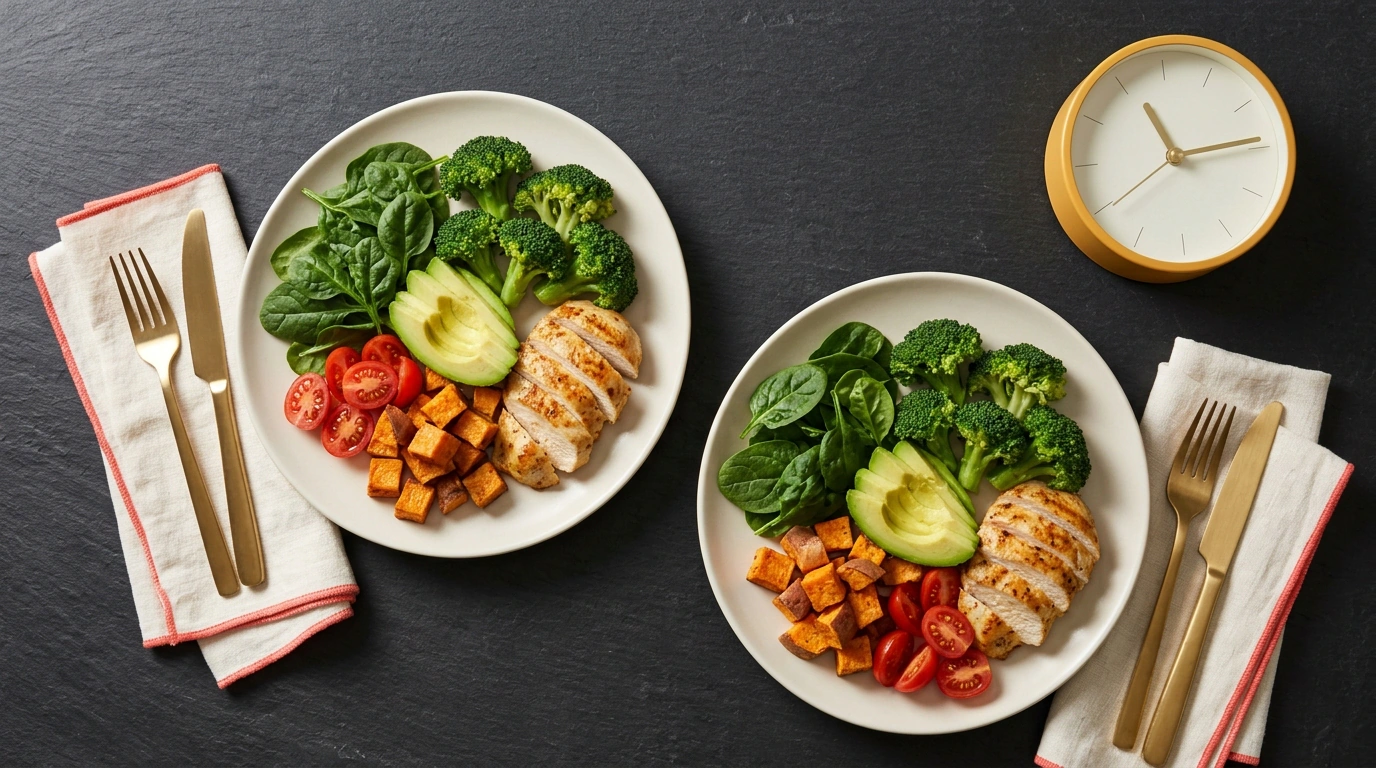
Eating a little every two hours sounds smart at first glance: toss small logs into your body's 'furnace,' and your metabolism spins faster, burning extra calories. In the 1990s and 2000s, that advice was everywhere. Dieters hauled bags with six plastic containers to work and set phone alarms for every snack. Then the pendulum swung the other way: short videos and blogs began warning that even an apple between lunch and dinner spikes insulin, damages receptors, and marches you straight toward type 2 diabetes.
Both extremes sound convincing until they meet controlled experiments on real people. When you look at what actually happens to body weight, blood sugar, and the pancreas under different meal schedules, the picture turns out much calmer and clearer.
Does grazing really speed up your metabolism?
The 'metabolic boost' theory rested on a real fact: your body does spend energy digesting food. People assumed six small meals would force digestion to clock in more often and burn more calories than three normal plates. In reality, the energy spent digesting food depends on the total amount and makeup of what you eat all day—splitting it into smaller portions changes nothing. Divide the same bowl of buckwheat and chicken into two servings or eight, and your body's total digestive energy cost stays identical.
A meta-analysis by Brad Schoenfeld and colleagues in Nutrition Reviews (2015) settled that debate. Researchers pooled controlled trials where participants ate different numbers of meals with equal daily calories and equal protein, fat, and carbs. At first, the numbers showed a tiny hint favoring more frequent meals, yet sensitivity checks quickly exposed why: a single outlier study was pulling the entire average. Remove that one paper, and the advantage vanished.
Neither fat loss nor muscle retention depends on how many times you sit down to eat. Total calorie balance over weeks and months decides everything. If five small meals suit your day, that works. If two hearty meals with zero snacks feel easier, the scale will show the exact same result.
3 meals versus 14: what happens to insulin over 24 hours
The second popular scare targets the pancreas. Any meal raises blood sugar and triggers insulin, the hormone that helps cells pull glucose from your blood. From that came a scary guess: frequent snacks supposedly keep the pancreas in constant panic and speed up insulin resistance.
Researchers tested how the organ handles different schedules in a neat crossover experiment by Martje Munsters and Wim Saris in PLoS ONE (2012). Twelve healthy, lean men stayed in a special respiratory chamber that measures energy burn and metabolism with high precision. Each man tried both schedules on the exact same diet and calorie count (15% protein, 30% fat, 55% carbs). On one stay, daily food was split into 3 regular meals; on the other, into 14 tiny portions—basically eating every hour.
The curves looked strikingly different. On three meals, insulin drew three tall peaks and three deep valleys in between. On fourteen snacks, sharp spikes disappeared, yet insulin hovered slightly elevated all day like a flat plateau. When scientists calculated total 24-hour insulin output—the area under the curve, or AUC, representing everything the pancreas released all day—there was no statistically significant difference between three meals and fourteen.
| 24-hour metric | 3 meals a day | 14 meals a day |
|---|---|---|
| Insulin curve shape | Three clear peaks and deep valleys | Flat line, staying slightly above baseline |
| Total 24h insulin (AUC) | No statistical difference | No statistical difference |
| Total 24h glucose (AUC) | Slightly lower | Slightly higher |
| Daytime fullness | Higher, less hunger felt | Lower, hungrier more often |
| Fat-burning edge | No difference at equal calories | No difference at equal calories |
The biggest everyday surprise came from appetite. On three meals, 24-hour blood glucose was actually a touch lower, and participants felt fuller with fewer hunger pangs during the day. Tiny hourly bites only teased their appetite—while the supposed 'pancreas overload' from meal count never showed up.
What actually drives type 2 diabetes risk
If meal frequency doesn't break the pancreas, where does type 2 diabetes come from? Endocrinology mapped this out long ago, and three real factors drive it.
First is chronic calorie surplus and the buildup of visceral and ectopic fat. As long as extra energy stores neatly under your skin, your metabolism copes. Trouble starts when fat packs around and inside internal organs—especially the liver and the pancreas itself. That internal fat blocks cells from responding properly to insulin and gradually impairs the pancreas.
The second factor explains why one person with noticeable extra weight keeps normal blood sugar, while another gets diagnosed at an ordinary body size. Endocrinologist Roy Taylor at Newcastle University proposed the 'personal fat threshold.' Each of us has a genetic limit on how much fat our body can safely store under the skin. Once that personal warehouse overflows, excess fat spills into the liver and pancreas. In the ReTUNE clinical trial (Clinical Science, 2023), researchers tested this idea in twenty people with type 2 diabetes and a normal BMI (averaging 24.8). Once participants lost weight below their personal threshold, fat cleared out of their liver and pancreas, and most achieved lasting remission.
ReTUNE study (2023): type 2 diabetes remission in normal-BMI adults after dropping below personal fat threshold
This chart dismantles the myth that type 2 diabetes only strikes people with severe obesity. The number on the scale can look 'normal' on a chart and still be enough to overload a specific person's liver.
Third is muscle mass and regular strength work. Skeletal muscles are your body's main glucose sink: the more active muscle tissue you carry and the more regularly you challenge it with resistance work, the more eagerly it pulls sugar from your blood—lowering your type 2 diabetes risk. Snack timing isn't the culprit; total energy surplus, internal fat, and muscle health are.
The one honest perk of intermittent fasting
Riding the wave of insulin fears, intermittent fasting became wildly popular—fitting all your daily food into a set eating window, say eight hours, and sticking to water, tea, or black coffee the rest of the time. Influencers wrapped it in myths about 'special hormonal fat burning,' yet at equal calories it delivers the exact same scale results as three regular meals.
Still, intermittent fasting offers one very down-to-earth, honest perk: it saves time and clears mental clutter. You no longer have to cook three or four times a day, haul bags of Tupperware to work, hunt for an office microwave, or wash endless dishes. Instead of constantly wondering what to grab between calls, you simply skip one meal and wait for your window.
Shifting that eating window to hours when you are already home works especially well. Home-cooked meals are easier to control for ingredients and calories: when dinner and a second meal are prepped in the fridge, your odds of grabbing a random coffee-shop pastry plummet. In practice, the schedule acts as simple guardrails—fewer chaotic eating occasions mean fewer stray calories over the week.
Long fasting windows are best avoided if you have a history of eating disorders or binge eating, as holding out too long often ends in a heavy evening rebound. It is also unsuitable during pregnancy, breastfeeding, or if you are underweight. People with diabetes taking insulin or blood-sugar-lowering drugs should only adjust meal timing alongside their doctor due to the risk of dangerous drops in blood sugar (hypoglycemia).
If none of those apply to you, pick a schedule that fits your workday and appetite. Two meals in an evening window, three classic plates, or four smaller meals all work equally well—as long as weekly calories line up and your muscles get regular work.