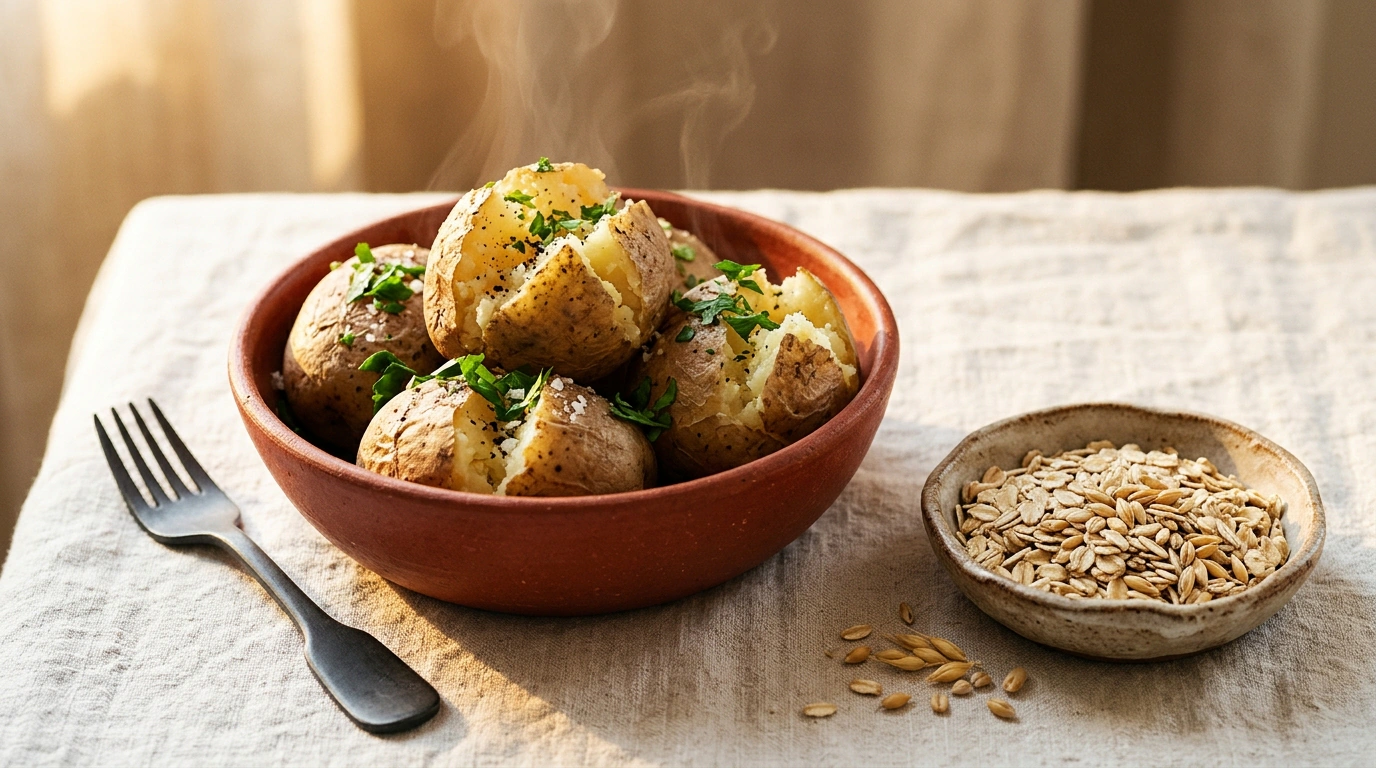
When you want to drop a couple of kilos or simply stop overeating, you usually pick one of two familiar paths. Path one is building a strict blacklist: cut out potatoes for starch, oats and rice for carbs, cheese for fat, and write off popcorn as junk food. Path two is switching to 'clean eating' with nuts, avocados, and trendy grains while ignoring calories altogether. Both paths end up in a similar spot. Strict bans leave you hungry until you eventually raid the kitchen, while 'clean' food without portion awareness leaves the scale stuck.
Why food cargo cults get in the way of weight control
In nutrition science, treating foods as strictly 'clean' or 'dirty' is sometimes called a food cargo cult. Without grasping basic biology, people build rigid rituals and lists of 'virtuous' dishes, yet real control over body weight never arrives.
The mechanics are far plainer: every diet that works succeeds through total daily calories. Burn more energy than you eat over time, and weight drops. Eat more than you burn, and weight climbs—even if every bite on your plate is 'healthy.' The trap with blacklists is that they toss out cheap, everyday staples that actually help you stay within your calorie budget without thinking about snacks every hour.
How the satiety index works—and what beat white bread
Back in 1995, scientists ran a classic test to see which foods truly keep you full. In Susanna Holt and colleagues' study, published in the European Journal of Clinical Nutrition, volunteers ate equal-calorie portions of 38 everyday foods—exactly 240 kcal (1,000 kJ) each. Every 15 minutes for two hours, participants rated their fullness, and then hit a buffet where researchers measured how much extra food they took. Plain white bread served as the baseline.
Satiety index of foods by Holt et al. (1995), white bread = 100%
The chart shows that the usual 'suspects' from diet blacklists easily beat white bread. The runaway winner of the whole experiment was plain boiled potatoes (cooked, cooled, and reheated before serving)—calorie for calorie, they kept people over three times fuller than bread.
That single result explains a broader rule of fullness. It comes down to energy density: how many calories sit in 100 grams of food. Boiled potatoes hold lots of water and almost no fat (around 86 kcal per 100 g), so 240 kcal fills a generous plate. Your stomach physically fills up, its walls stretch, and your brain gets a clear message that you have had enough. Cooked oatmeal with milk and microwave popcorn work much the same way, using water, fiber, and air to create volume. Cheddar cheese triggered a different lever—high protein, which digests slowly and quiets hunger for hours.
Where it's easy to trip up: cooking method and the whole plate
The biggest catch with the satiety index sits near the bottom of the chart—just compare boiled potatoes with French fries. You start with the exact same vegetable, yet drop slices into boiling oil and fullness plunges almost back to white bread. Added fat sends energy density soaring: a 240-kcal portion shrinks to a tiny handful, your stomach stays half-empty, and hunger bounces right back. The same thing happens when you drown oatmeal in butter and condensed milk, or coat popcorn in thick caramel.
Holt's experiment also carries one honest limitation: volunteers ate single foods alone and were tracked for only two hours. In real life, nobody sits down to a plate of plain boiled potatoes or a block of cheddar—meals are combinations. So treat the satiety index as a handy guide rather than a rigid ranking. When you look at your whole diet—total calories, protein, fiber, and physical plate volume—splitting foods into 'saintly' and 'forbidden' stops making sense. Boiled potatoes with fish and vegetables, or a morning bowl of oats, quietly keep you full and help you reach your next meal without raiding the fridge.