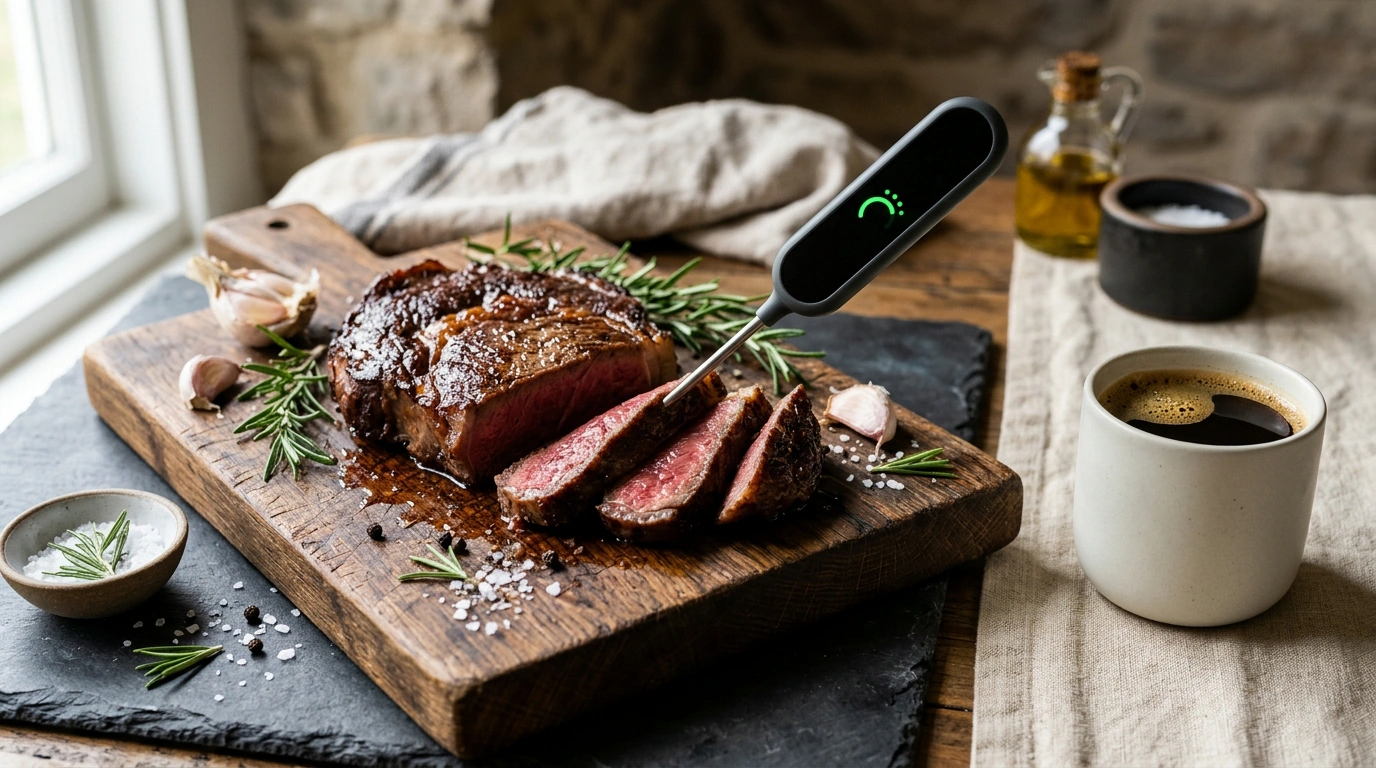
Table intuition often hands us strict rules that sound sensible at first. You cut into a beef steak, spot pink juice on the plate, and want to send it back until it's well done. You finish lunch, reach for the teapot, and remember the warning not to wash down meals or you'll wreck digestion. In reality, both fears miss the mark: pink steak and post-lunch coffee are fine on their own, yet real safety rules sit right next to them.
'Bloody' Steak: Why It Isn't Blood and Where Safe Cooking Lines Sit
You almost never see actual blood in store-bought or restaurant meat; nearly all blood is drained during slaughter. The red liquid pooling under a steak is water mixed with myoglobin, a muscle protein. Myoglobin holds oxygen inside muscle fibers and acts as a natural pigment: when gently heated it stays red, and at higher heat it changes structure and turns gray or brown. That meat juice is completely harmless on its own.
Does that mean any pink meat is safe to eat? Here is where intuition trips up—it all depends on the cut and prep. On a whole beef steak, bacteria like E. coli live on the outside surface. A screaming-hot pan or grill kills surface microbes in seconds while the dense center stays clean.
Ground meat works the opposite way: a grinder mixes surface bacteria throughout the entire patty, so a pink burger carries far more risk than a whole steak. Poultry like chicken and turkey more often harbors Salmonella and Campylobacter, so it needs the highest heat. The US Food Safety and Inspection Service (USDA FSIS) boils safe internal temperatures down to three targets:
| Meat type | Minimum internal temperature | Key rule |
|---|---|---|
| Whole cuts of beef, pork, veal, lamb | 63 °C (145 °F) | Let meat rest at least 3 minutes |
| Ground beef, pork, veal, lamb | 71 °C (160 °F) | Cook all the way to the center |
| All poultry (whole, cuts, or ground) | 74 °C (165 °F) | Check at the thickest part |
Resting a whole steak isn't just for presentation: during those three minutes on the board, trapped heat finishes off lingering microbes. Guessing doneness by color doesn't work reliably, warns USDA FSIS—ground meat can turn brown before reaching a safe temperature, and fully cooked meat can sometimes stay slightly pink. A digital kitchen thermometer in the center is the safest check.
USDA FSIS and the CDC advise pregnant women, people with weakened immune systems, young children, and older adults to avoid undercooked meat completely and follow safe internal temperatures strictly, as E. coli, Salmonella, Listeria, and Toxoplasma pose serious risks for these groups.
Tea and Coffee After Meals: When They're Fine and When They Block Iron or Sleep
The second common rule says never drink tea or coffee right after eating. For a healthy person without iron deficiency, this habit causes zero trouble: your stomach digests lunch alongside an Americano just fine.
There are two real exceptions, starting with non-heme iron—the type found in plant foods, fortified products, and most pharmacy iron pills. Unlike iron from meat, non-heme iron is easily blocked in the gut. Polyphenols and tannins in black tea, green tea, and coffee bind it into insoluble complexes that pass right through your system, cutting absorption by 40–90% when taken together.
A controlled 2017 trial in the American Journal of Clinical Nutrition tested whether timing helps: even a one-hour gap between a meal and tea noticeably eased the block. If you take prescribed iron supplements or have low iron, keep tea and coffee 1–2 hours away from iron pills, and pair iron with vitamin C to boost absorption instead.
The second exception is evening caffeine and the hidden cost of a cozy cup after dinner. People often skip late coffee yet forget that black and green tea contain caffeine too. Caffeine's half-life—the time it takes blood levels to drop by half—averages 3–7 hours, usually around 5–6 hours. A cup at 4 p.m. means half that dose is still blocking brain adenosine receptors at 10 p.m., muting your sleepiness signal.
A meta-analysis of 24 studies (Sleep Medicine Reviews, 2023) found caffeine cut total sleep by an average of 45 minutes, delayed falling asleep, added night awakenings, and trimmed deep slow-wave sleep. The safe cutoff before bed for a standard cup of coffee (~107 mg caffeine) was nearly 8.8 hours.
It's easy to fool yourself here: you might think 'I drank tea at eight and fell right asleep,' yet sleep trackers still show shallower rest. That poor sleep sets off a chain reaction for weight: sleep loss lowers the fullness hormone leptin, raises the hunger hormone ghrelin, worsens insulin sensitivity, and weakens willpower around the fridge the next day. If you want something warm at night, switch to caffeine-free herbal tea or decaf so you keep the ritual without hurting deep sleep.