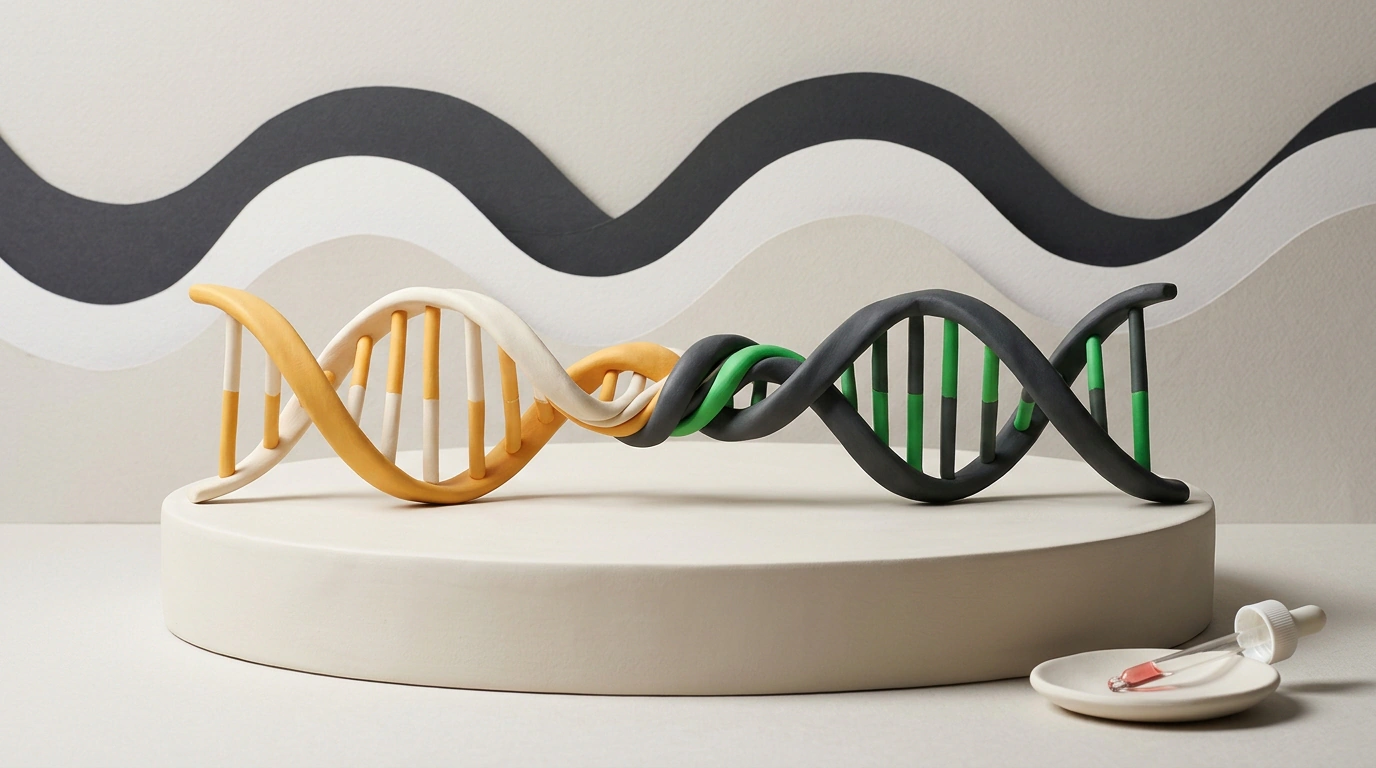
When a DNA Test Says a Child's Father Is His 'Uncle': How Tetragametic Chimerism Works
After IVF, a 34-year-old father's standard DNA test ruled out paternity and showed roughly a 25% match with his son—like an uncle and nephew—even though the man had no brothers. Here is how rare tetragametic chimerism works: when two early embryos fuse, one person ends up carrying two distinct sets of DNA, how that differs from mosaicism, and why doctors sometimes have to test tissues beyond blood and saliva.