Picture a medical mystery. After IVF, a 34-year-old man and his wife welcome their second child. The baby is healthy, yet his blood type doesn't match either parent. Their first thought is a clinic mix-up. The family orders a standard paternity DNA test, and the answer comes back blunt: the man is not the father. Repeat tests say the exact same thing.
The clinic checks every log and finds zero errors, and the couple trusts each other completely. A deeper microarray test only deepens the puzzle: genetically, the man matches the boy like a biological uncle. They share around 25% of their DNA instead of the expected 50%. Just one problem—the man grew up as an only child.
Geneticists led by Kayla Sheets reported this case in the Journal of Assisted Reproduction and Genetics. They cracked it when they tested the father's semen instead of blood and cheek swabs. The sample held two genetically distinct cell lines—two groups of cells with different DNA. His blood and saliva carried one genome, while his sperm mostly carried another: the DNA of an unborn twin brother. Paternity was confirmed, and the clinic was cleared.
How Two Sets of DNA End Up in One Body
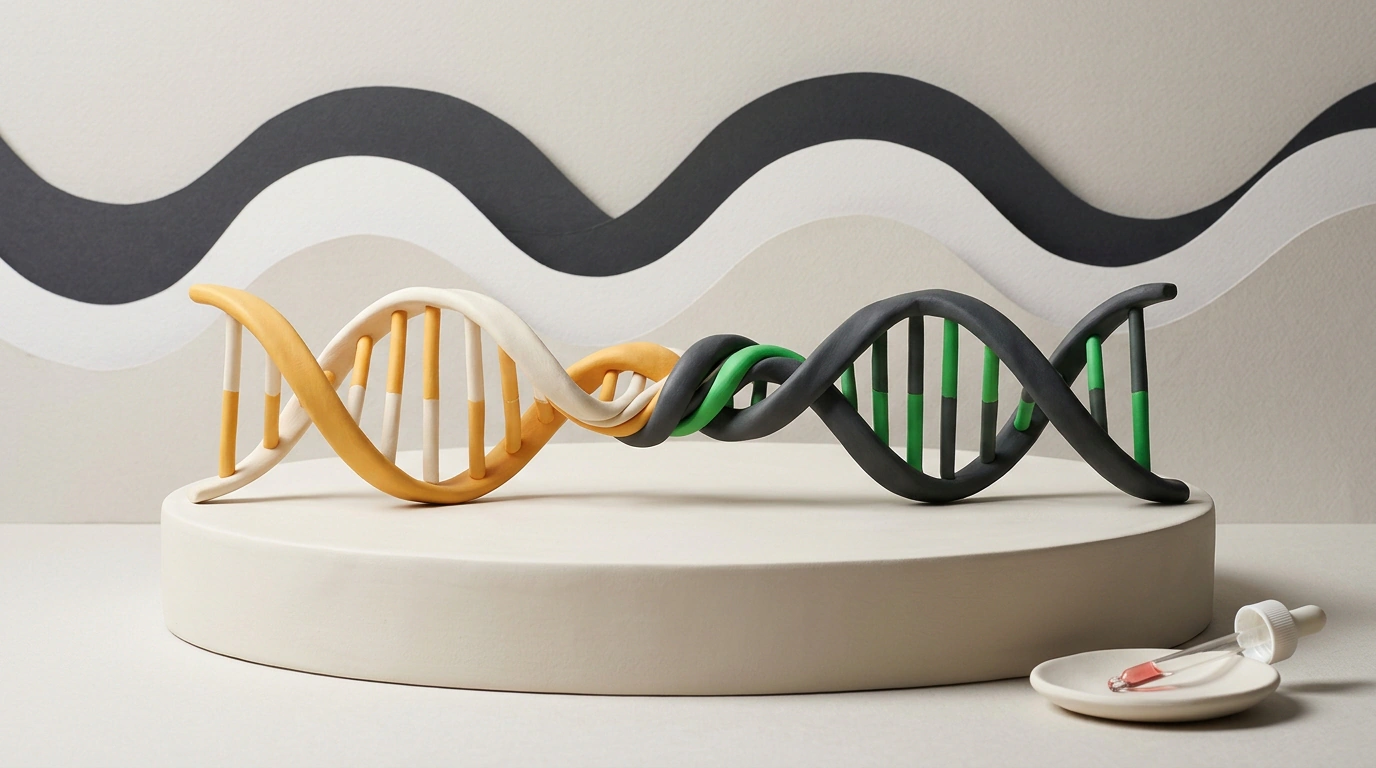
Geneticists call this tetragametic chimerism. The word recalls the mythical chimera made of lion, goat, and snake, though there's no magic here. Tetra means four in Greek, and gametes are sex cells: two eggs and two sperm took part in conception.
Normally, two fertilized eggs (zygotes) grow into fraternal twins—like regular siblings sharing roughly half their genes. Very rarely, at the earliest stage when each embryo is just 4–16 cells, the two tiny clusters merge into one organism.
The baby born from that fusion looks completely ordinary, yet their body is built like a patchwork quilt from two genomes. Skin and blood might come from one embryo, while reproductive cells come from the other.
People often confuse chimerism with mosaicism, even though the mechanism differs. Mosaicism starts from a single zygote, and a mutation happens in some cells as they divide. Tetragametic chimerism combines two separate conceptions into one body.
How Rare It Is—and When It Trips Up Medicine
Medical literature has documented roughly a hundred confirmed cases of congenital human chimerism. Geneticists suspect the real number is higher: if two same-sex embryos merge, a person can live symptom-free and never know. Sometimes there are subtle clues, like eyes of different colors or patches of differing skin pigment. When male and female embryos merge, it can affect sex-organ development, leading to an earlier diagnosis.
Issues usually surface during DNA testing or organ transplants. Standard STR kinship tests compare short repeating DNA segments from blood or cheek swabs, assuming every tissue in your body shares the same genome. In 2002, this assumption put American mother Lydia Fairchild under suspicion: blood tests said she wasn't her children's mother until doctors checked a cervical swab. Similarly, Karen Keegan's chimerism showed up when her three sons were tested for a kidney match—blood and HLA tissue typing said she 'wasn't' the mother of two of them until doctors tested her thyroid tissue.
A similar split can also be acquired later in life: after a bone marrow transplant, donor cells circulate in your blood while your cheek swab keeps your original DNA. In most disputed paternity cases, the cause is ordinary. Still, when a test clashes with IVF records or common sense, geneticists check DNA from more than one tissue.