Imagine standing at a supermarket checkout with a cart full of 8,000 rubles' worth of groceries. The cashier scans your items, you've already pulled out your card or tapped your phone, and your eyes land on a 60-ruble chocolate bar or pack of gum by the belt. You grab it without thinking. Yet if a store clerk had walked up to you in the aisle half an hour earlier pushing a "great gum promo," you would have brushed them off.
Why do we say yes to impulse add-ons so easily right at payment?
Behavioral economists call this the Open Wallet State. Once a shopper has browsed your site, picked a product, typed their shipping address, and opened the payment screen, their mental resistance hits rock bottom. The hardest decision—parting with money—is already made.
Let's look at checkout psychology and how to boost your e-commerce average order value without pushy selling.
Why a Second Receipt Kills Sales: The Pain of Paying
Behavioral economists Dan Ariely and Ofer Zellermayer proved the Pain of Paying concept in experiments. The human brain processes spending money in the same neural regions tied to physical pain.
Every separate transaction triggers a fresh sting:
- If you email a customer an hour after checkout offering a screen protector or batteries on a second bill, they feel that payment pain all over again and will likely say no.
- If you embed the add-on straight into the checkout screen as one combined total, mental accounting takes over. The brain treats the entire order as a single purchase, so pain doesn't multiply and resistance fades.
We also explored why gentle guidance beats hard pressure in our piece on stepping away from hard-sell tactics.
The 10–15% Golden Rule and One-Click Upsells
For a checkout add-on to work, it has to follow a strict price cap: the upsell must cost no more than 10% to 15% of the main order.
Next to a 60,000-ruble smartphone, a 1,500-ruble case or 800-ruble screen film feels like a drop in the bucket. Likewise, 350-ruble trip cancellation coverage on a 7,000-ruble flight feels like cheap peace of mind. Try pitching 25,000-ruble headphones at checkout, though, and you'll break the deal—the shopper starts doing math again and abandons the cart.
Three add-on categories convert best at checkout:
- Direct functional pairings: Batteries for a kids' toy, coffee pods for an espresso machine, or replacement cartridges for a water filter. Without them, the main item can't be used straight out of the box.
- Risk reducers: One-click extended warranty or shipping-loss protection.
- Service convenience: Timed express courier delivery or gift wrapping with a card.
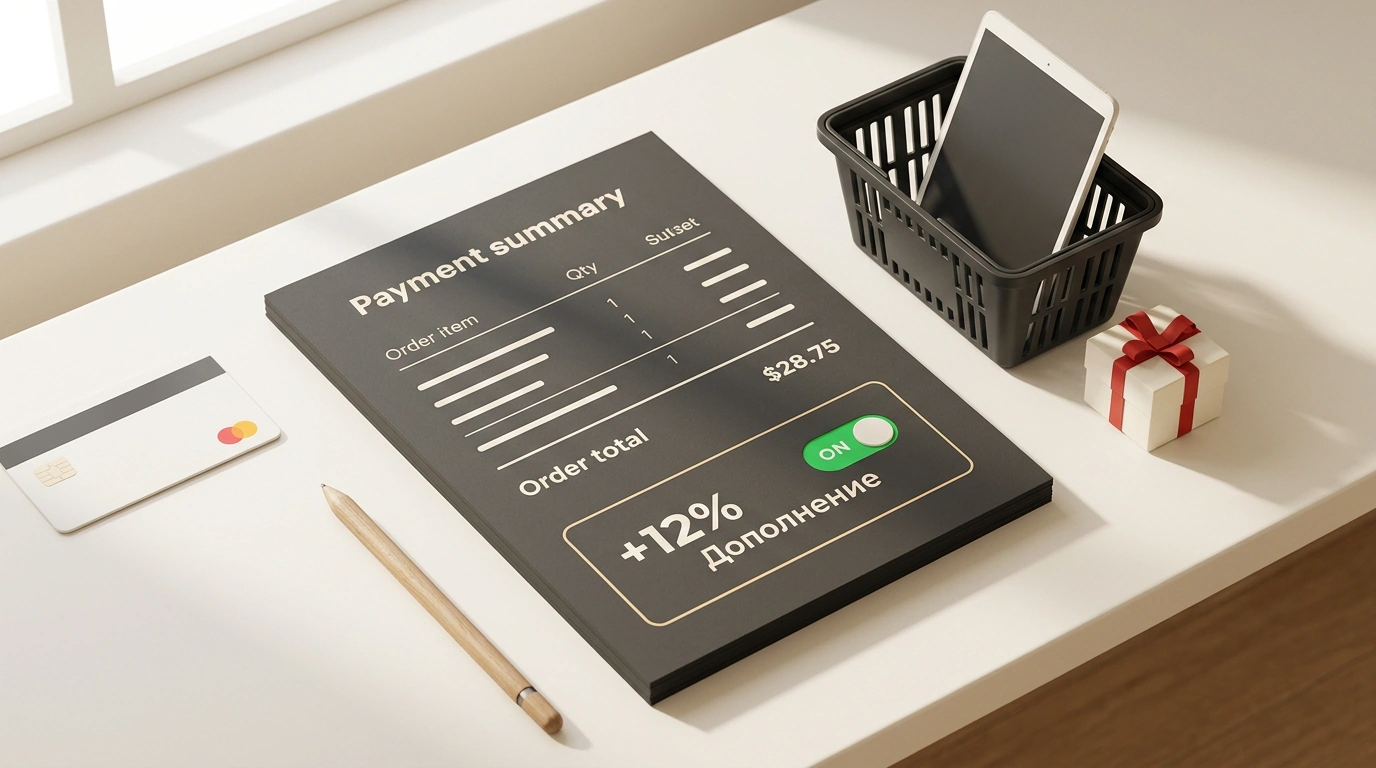
The technical standard here is One-Click Upsell: adding the item must take one checkbox or toggle right inside the cart, without sending the shopper off to another product page.
- Choice Overload: Never pitch checkout add-ons that require complex decisions! If adding a T-shirt forces the buyer to pick a size, color, and print, they slip back into doubt and abandon the cart.
- Conflicting alternatives: Showing a cheaper version at checkout ('Check out this similar kettle for 1,000 rubles less') eats your profit and causes decision paralysis.
- Pre-checked boxes: Sneaking paid insurance or extra fees into the cart without clear consent sparks instant anger and destroys trust in your store.
Treat your checkout gently. Offer only items that genuinely complete the purchase or remove hassle, and keep add-on prices under 15% of the cart.