Launching ads with bloggers often feels like playing the lottery: you ship a product sample, transfer the fee, and hold your breath waiting for a miracle. A week later, your marketer is frantically piecing together manual Excel spreadsheets, trying to match screenshots of expired Stories with analytics clicks and store orders.
I constantly see brands burn budgets on creators with millions of followers: a post collects 40,000 likes and brings in exactly zero orders. Meanwhile, a placement in a modest niche channel drives dozens of sales that the marketer simply can't trace back to the right creator.
Research by the analytics platform Modash shows the root problem is splitting the workflow into two disconnected tasks: checking content delivery (did the post go live with the right tag?) and tracking commercial return. To fix this, it's time to stop confusing vanity metrics with financial outcomes.
Vanity Metrics vs. Commercial ROI
In influencer marketing, metrics fall into two distinct buckets:
- Attention metrics: reach, impressions, reactions, and Engagement Rate (ER). They show whether people noticed the post. But attention is only a prerequisite for a sale, never a guarantee. Even revenue becomes a vanity metric if bought at a loss: bringing in $50,000 in revenue at a cost of $100,000 with over 10% customer churn destroys your unit economics.
- Performance metrics: clicks on personal links, promo code redemptions, average order value (AOV), return on ad spend (ROAS), and most importantly—Net Revenue.
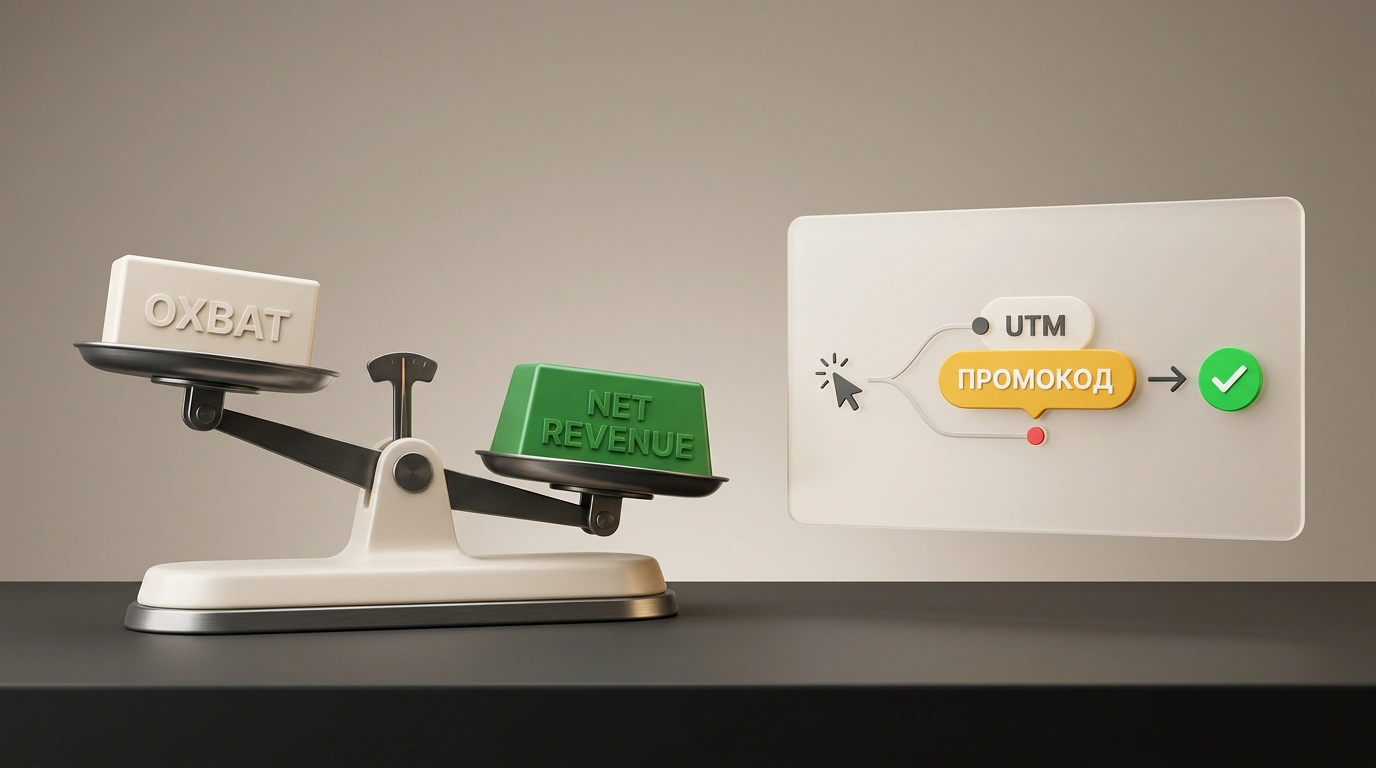
Net Revenue is the actual cash left after deducting returns, cancellations, and discounts. In e-commerce and fashion, return rates often hit 20–30%. Paying a creator a percentage of gross revenue can easily push a business into the red on returned items. When looking at how to turn a chaotic blog into a systematic sales channel, remember that every funnel must add up in net profit.
End-to-End Tracking Architecture: 5 Steps to Clarity
To measure every creator without late-night spreadsheet headaches, build a five-step system:
- Step 1. Lock the goal in the brief. Separate reach campaigns from conversion campaigns. If the goal is sales, the creator must know upfront that the content needs a clear call to action and a specific offer.
- Step 2. Automate post capture. Manually saving Stories within 24 hours before they vanish breaks down as soon as you work with ten creators. Monitoring tools capture posts via hashtags and APIs, archiving creatives automatically.
- Step 3. Assign personal identifiers. Give every influencer a unique promo code and a custom short UTM link.
- Step 4. Combine data in one dashboard. Each report row should unite the creative visual, reach, clicks, redeemed codes, net revenue, and final ROAS.
- Step 5. Reallocate budget weekly. Review performance mid-campaign: ruthlessly pause creators with negative returns and scale the ones delivering steady positive ROI.
Conflict Resolution Rule: 'Link vs. Promo Code'
A common scenario: a shopper clicks one blogger's UTM link to visit the store, then enters another creator's promo code at checkout. To prevent double-crediting commissions and disputes between creators, set one firm rule in your system: the promo code always wins. Attribute the sale to the code owner and log the click as an assist touchpoint.
Four Hidden Traps When Working With Creators
To keep your analytics clean, avoid these common mistakes:
- Double-counting orders: never sum orders from links and codes without a clear priority rule.
- Judging reach campaigns by immediate sales: don't demand instant ROAS from a brand ambassador post that had no discount or buying trigger.
- Ignoring returns: always tie payouts to Net Revenue after the return window closes.
- Shared promo codes: giving one generic code like "SUMMER2026" to multiple creators instantly blinds your analytics and leaves you guessing who actually drove the sales.
Influencer marketing stops being roulette the moment every ruble spent is tied to a real receipt. Digitize your funnel, cut out manual busywork, and scale only the creators who bring in real profit.

