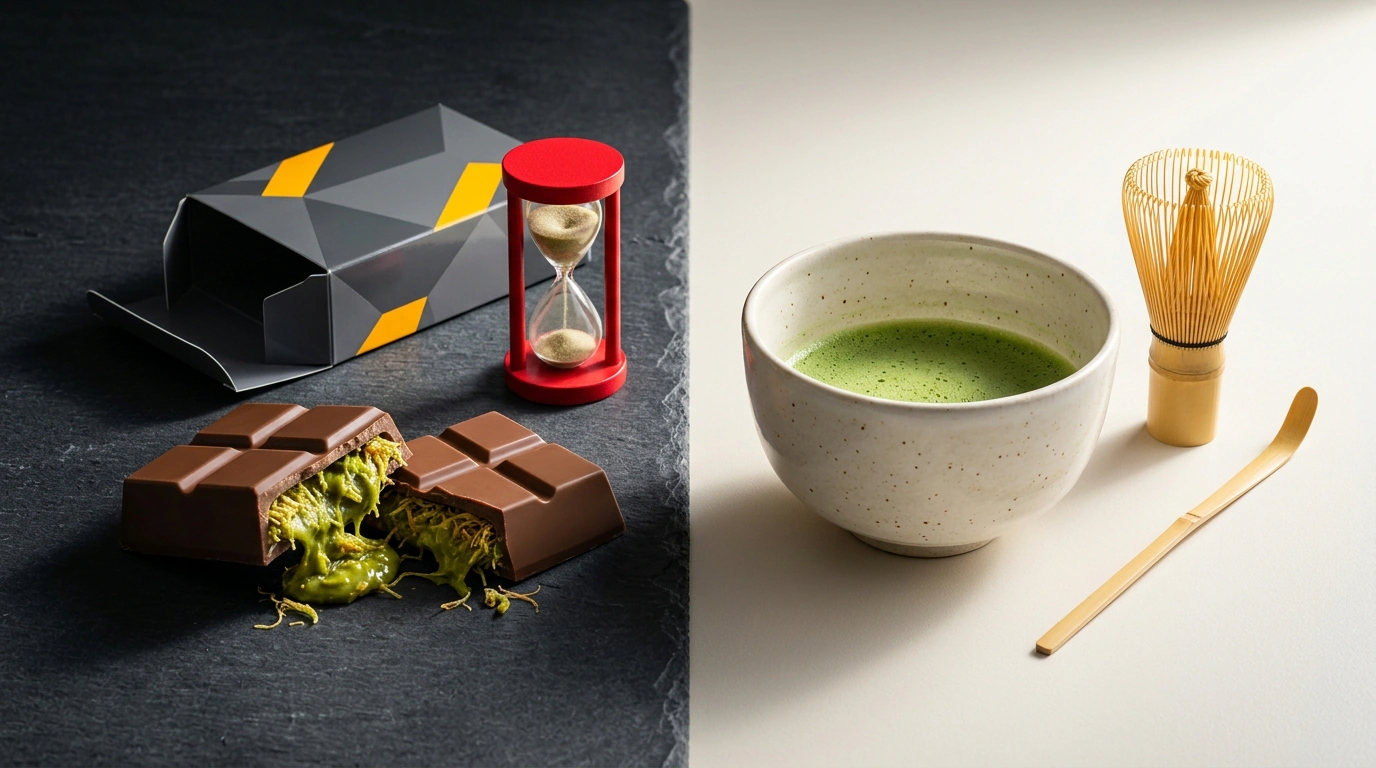
You've definitely felt that itch: you open social media, and literally every creator is snapping a chunky bar of Dubai chocolate in front of a mic. You hear the ASMR crunch of toasted kataifi pastry, watch pistachio cream ooze across the screen, and see thousands of commenters begging to buy a bar for 2,500 rubles.
Just a couple of months earlier, everyone was losing their minds over Pop Mart's toothy plush Labubu monsters, snapping up blind boxes at triple retail. Meanwhile, green matcha has quietly been edging out cappuccinos in coffee shops, turning into a steady, durable market.
That's when a switch flips in a business owner's head: "Everyone's printing money right now! We need to order raw materials immediately!" Six months later, warehouses are stacked to the ceiling with dead stock while the internet has moved on to the next shiny thing.
Where is the line between a short-lived frenzy (hype) and a deep market shift (trend)? Let's break down the anatomy of all three cases.
Anatomy of Three Phenomena: From Crunch to Daily Ritual
- Dubai chocolate (Classic hype): Born at Fix Dessert Chocolatier, the trigger was pure sensory shock—visual contrast between chocolate and green filling plus the ASMR crunch of kataifi. But there's no repeat utility: after eating one rich, ultra-sweet bar, curiosity is satisfied, and few people want to drop 2,000 rubles on it every week. Peak demand lasts 3 to 6 months, after which interest plunges 80–90%.
- Labubu and Pop Mart (Speculative craze): Collectible blind-box toys run on dopamine roulette. When a celebrity clips a monster onto a designer bag, FOMO kicks into overdrive. Yet the wave survives only as long as the manufacturer maintains artificial scarcity. The moment knockoffs flood the market, the bubble pops.
- Matcha green tea (Long-term structural trend): Matcha now accounts for 15–20% of drink turnover in many coffee shops because it solves a real daily need: steady focus and energy from caffeine paired with L-theanine, without harsh blood-pressure spikes. It rides the broader global shift toward wellness and functional nutrition.
When studying viral mechanics and creative brand seeding in communities, you have to identify right away which kind of wave you're looking at.
Four Filters to Stress-Test Any Viral Idea
- Functional value off-camera. Why would someone buy it if filming for social media were banned? If the only payoff is flexing to followers, it's hype. If it makes someone healthier, calmer, or more productive, it's a trend.
- Repeat Purchase Rate. How often do customers come back at full price? Trend products see repeat purchase rates above 40%, while hype items rarely clear 5–10%. Often, the paradox of viral social media purchases is that massive view counts trigger a one-off emotional spike with zero lasting habit.
- Capital expenditure structure (Capex vs. Opex). Buying dedicated machinery or signing a long lease for a hype product is a dangerous trap. Once the wave recedes, that specialized line becomes a monument to wasted capital.
- Audience depth. Does demand reach beyond Gen Z? If families with kids and 40-something office workers are buying it too, you're looking at an emerging market.
If you decide to cash in on hype, do it strictly on someone else's capacity (contract manufacturing or reselling) during the first 60 days at a 200–300% markup. And clear your inventory down to zero by the end of month three.
How to Ride the Wave Without Going Broke
If you run a coffee shop or bakery, launch a Dubai-chocolate dessert as a limited seasonal special. Pull in hundreds of new walk-ins—not to build your business on chocolate bars, but to introduce those guests to your core menu and loyalty program.
Trends build a company's foundation for years ahead; hype is just a bright neon sign out front. Just make sure you never confuse the sign with the foundation.
