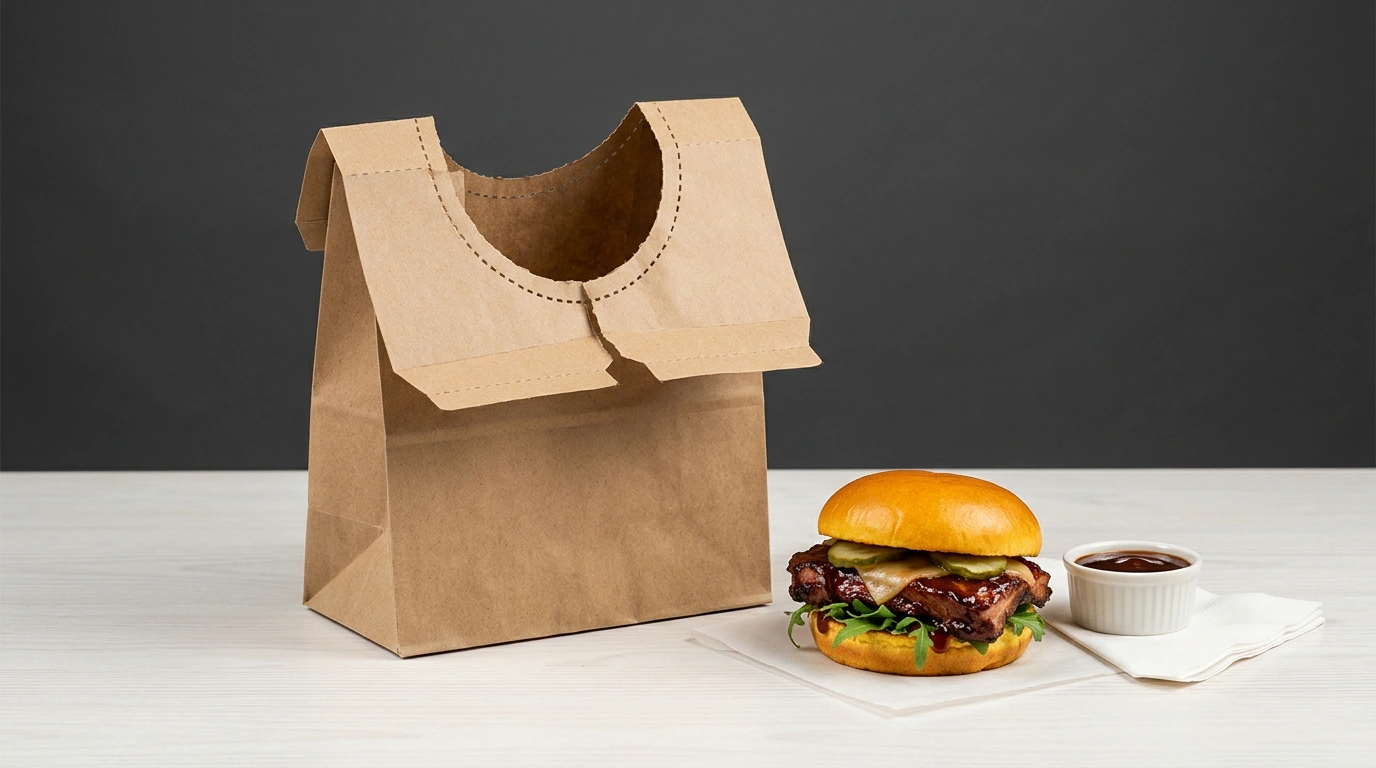
On November 18, 2026, McDonald's Australia brought the McRib and McRib Deluxe back to the menu. It's a classic limited-time offer (LTO), where a popular item returns briefly to spark demand and social chatter. This time, though, the biggest headline wasn't the burger—it was the paper takeout bag. Perforated lines let customers tear and fold the packaging into a paper bib called the McRib Bib in a couple of seconds.
Why They Left the Sauce Alone and Put the Complaint Front and Center
The McRib has a loyal fan base in Australia that spends years asking for its return. There's just one everyday catch: the long pork patty bun comes drenched in BBQ sauce. During its previous run, plenty of customers complained it was nearly impossible to eat one without staining their shirt—especially when ordering at the Drive-Thru and eating behind the wheel.
A typical business reaction here is predictable. Either pretend the problem doesn't exist, or tell the kitchen to cut the sauce in half. Both moves backfire. Ignoring complaints costs you repeat orders from people who don't want to ruin an office shirt at lunch. Cutting the sauce angers your biggest fans, who love the McRib specifically for how messy and juicy it is.
McDonald's Australia took a third route. They didn't touch the recipe at all. Instead, they turned a real customer annoyance into the centerpiece of the entire ad campaign.
A Paper Bag as a 'Technological Breakthrough'
Australian agency Akcelo came up with the idea and structure. The team took a standard paper takeout bag and turned it into functional packaging—packaging that keeps working after delivery by solving an everyday problem while the customer uses the product.
The mechanic is almost laughably simple. They added perforations and a three-step instruction right on the bag: tear off the sides, fold the paper, and tuck it into your collar. You get a disposable apron for Drive-Thru orders at participating restaurants while the limited batch of bags lasts. The production cost is tiny: same paper, same print line, just die-cut perforations and a few extra lines of text.
Contrast did the rest of the work. If you just post a photo of a bag with tear lines, people forget it in a minute. So the launch came with a video styled like an over-the-top tech giant keynote: dramatic lighting, slow camera sweeps, close-ups of kraft paper, and a solemn narrator. An ordinary takeout bag was pitched as "one giant leap in takeout bag technology," a new frontier in stain protection, and a breakthrough in intuitive sauce interception. It's funny, and it makes you want to send it to a friend.
A whole lineup of agencies backed the rollout: OMD handled media, Eleven ran PR and influencers, Wieden+Kennedy Sydney led broad-reach ads, and Digitas managed digital channels and CRM emails. McDonald's hasn't published final reach, print-run, or sales-lift numbers yet—the launch is less than a week old—but the underlying mechanic is already crystal clear.
How to Bring This Tactic Into an Everyday Business
A major brand won here with a move that works just as well for a small coffee shop, a local delivery service, or an online store. One small tweak to a paper bag shows a practical three-step playbook for any physical product.
First, honestly admit your product's minor inconvenience. If customers keep grumbling about the same small hassle in reviews, don't rush to change the core product. Often the annoyance is a side effect of the exact thing people buy it for: generous filling, rich cream, a delicate shape, or complex assembly.
Second, solve that friction at the point of use on something you're already paying for. Bags, cups, boxes, tags, and inserts are already baked into your unit cost. Adding a perforation, a pull tab, a lid that doubles as a coaster, or a quick-start cheat sheet costs pennies and upgrades the customer experience right away.
Third, don't be afraid of self-irony in how you present it. The more seriously and boldly you announce a simple, thoughtful detail, the higher the chance customers will film it for their Stories and share it in group chats without extra ad spend.
- What small everyday hassle do customers complain about most in reviews or support tickets when using your product?
- Can you fix that annoyance without changing the product itself—through the box, bag, insert, or instructions?
- Which packaging item are you already buying every month that is only working at half capacity?
- How could you present that upgrade with light self-irony so customers smile and want to show their friends?