Today the internet is flooded with pseudo-psychological buzzwords. A guy gets ghosted by a girl he liked on a dating app, misses a school deadline, or simply wakes up wrecked after three sleepless nights at the computer—and immediately posts on social media: "I have clinical depression."
This inflation of terms breeds two dangerous extremes. In the first case, a young man slaps a patient label on himself and retreats into total learned helplessness: "I'm not looking for a job, not working out, and not approaching women because I have a diagnosis." In the second, a guy ignores a genuine affective breakdown, trying to "pull himself together" on sheer willpower until his nervous system burns completely to ash.
Harvard Medical School psychiatrist Alok Kanojia (Dr. K, founder of HealthyGamerGG) lays out a clear clinical dividing line between a natural psychological reaction and an actual illness.
Four Objective Criteria: From the Blues to a Diagnosis
To avoid diagnosing yourself from short clips in your feed, pay attention to four key parameters:
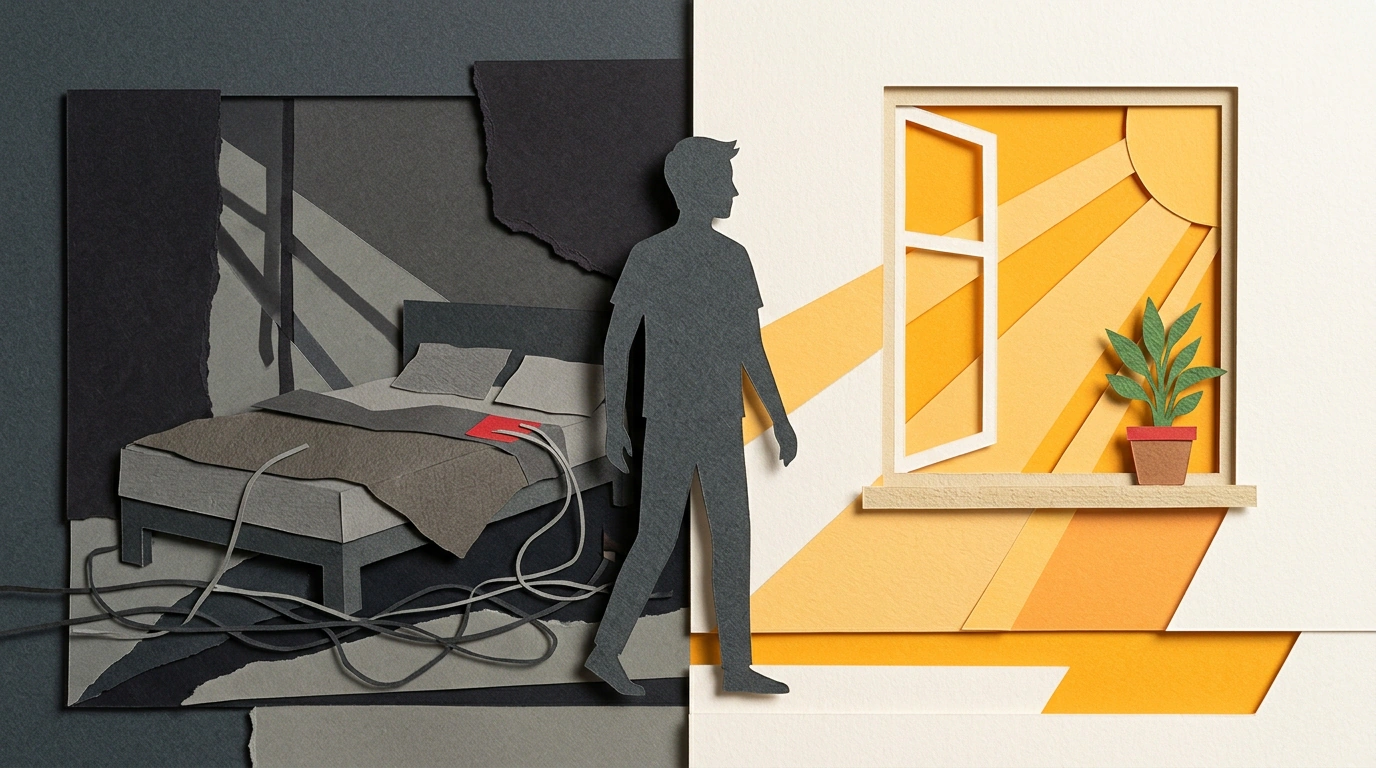
- Situational congruence. If your girlfriend dumped you after six months of an intense relationship, feeling grief, anger, and apathy is completely normal. Your psyche is processing the loss of someone who mattered. That is healthy situational sadness. Clinical depression looks different: objectively, everything in your life is stable, the sun is shining, there's money in your account, yet inside a dark, crushing void of meaninglessness opens up. That is an incongruent state—a malfunction in brain chemistry.
- Duration threshold. In the DSM-5 manual, the formal criterion for an episode starts at two weeks with five out of nine symptoms present. In clinical practice with young men, however, Dr. K uses a stricter marker: two months of continuous duration. If an emotional slump lasts 60 days straight without a single bright stretch, it stops being just a bad mood.
- Functional impairment. The main verifiable indicator is whether basic daily routine holds up. In a bad mood, a guy feels down, yet he still brushes his teeth, cooks food, goes to class, and presses a barbell at the gym. In depression, the foundation collapses: a person goes weeks without washing his hair, can't get out of bed, lies facing the wall in a dark room, and wakes up at four in the morning with sticky dread.
- Anhedonia. With ordinary fatigue, you can order your favorite pizza, meet an old friend, or boot up a new video game—and get distracted for a couple of hours, crack a smile. In clinical depression, reward receptors are paralyzed: neither food, nor socializing, nor sex triggers a drop of emotional response.
In a related piece, we detailed how to tell seasonal blues and burnout apart from depression, and the core takeaway is the same: the functional capacity to act separates fatigue from pathology.
Dr. K warns against the trendy advice to "explore your sadness, be curious about your emotions." In severe depression, that turns into rumination—toxic mental chewing where the brain endlessly replays thoughts of personal worthlessness. In that state, overanalyzing yourself is counterproductive: you need to get up, mechanically put your body into physical motion, and see an evidence-based psychiatrist.
If you've simply thrown off your usual rhythm or are dealing with rejection, don't slap a label on yourself. Catch up on sleep, hit the gym, clean up your diet, and give yourself time to digest the experience. But if daily functioning has collapsed and the darkness lasts longer than two months, see a specialist: depression is highly treatable when you don't let it fester for years.
