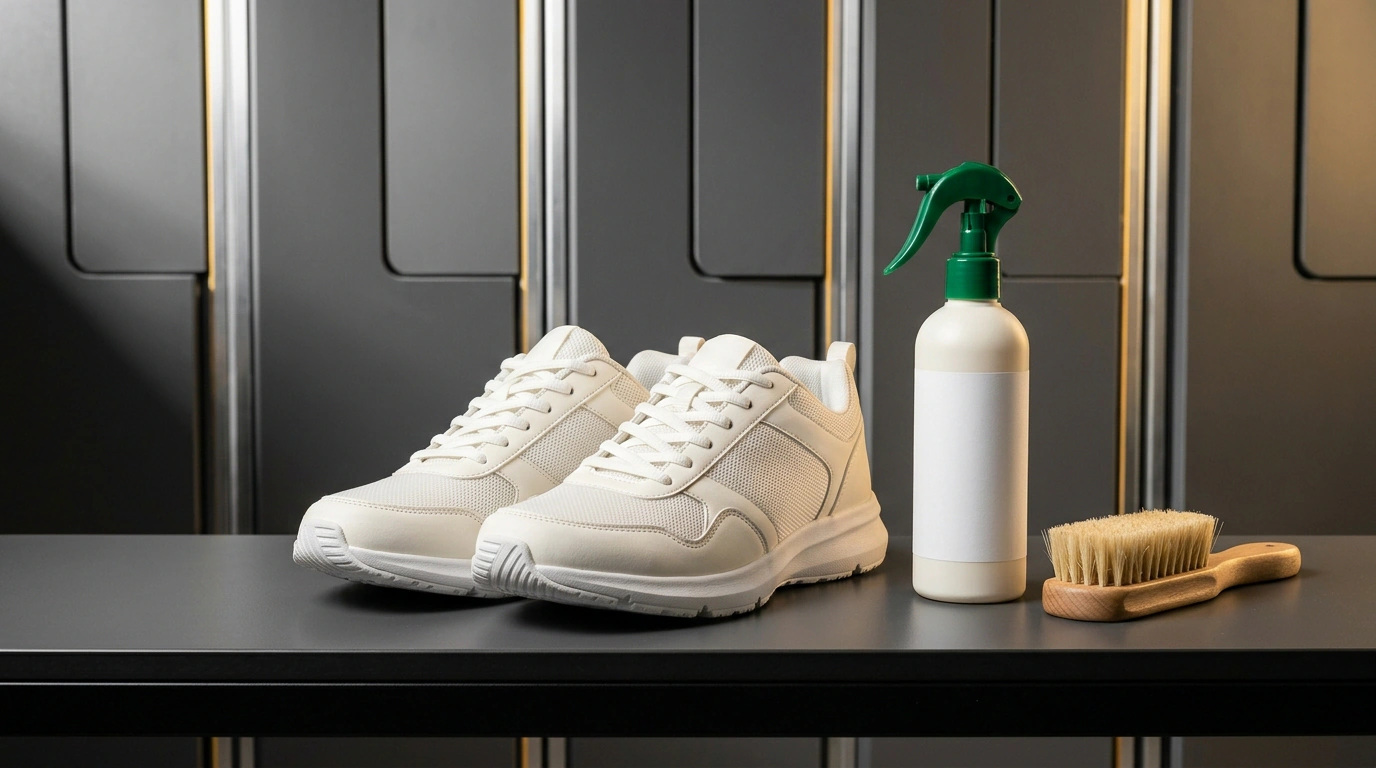
Let's look inside your running shoes an hour after you get back from the gym and leave them in the hallway. From the outside, the pair looks clean and neat, but inside the dense foam and insole a tropical incubator is already running—no light, no ventilation, and greenhouse dampness. The moment you slip freshly washed feet back into a pair that hasn't dried, hidden biomechanics inside the shoe go to work against you.
Board-certified dermatologist Dr Dray emphasizes that fungal infections and heavy odor don't come from washing too rarely. So how should you properly care for your feet and athletic shoes to eliminate itching, irritation, and unpleasant smell for good?
The Greenhouse Effect in Sneakers: What Skin Maceration Is
Fungal spores don't attack skin because of dust—they attack because of excess water with nowhere to evaporate. During physical exertion, the sweat glands on the soles of your feet release up to 200 ml of fluid a day—a full glass of water trapped inside closed footwear.
In dermatology, the result of that dampness is called maceration. Translated from medicalese into plain language, it's the state of your fingertips after soaking too long in a hot bath, when the skin turns white, swells, and wrinkles. In the tight folds between your toes, that process runs for hours: sweat softens the outer layer of the epidermis, protective lipids wash away, and the skin develops microcracks. Through that waterlogged barrier, the fungus Trichophyton rubrum easily penetrates deeper into the tissue and causes athlete's foot (tinea pedis), bringing itching, peeling, and a sour smell.
The Cleanliness Trap: Why Soap Is Powerless Against a Damp Insole
Softened epidermis explains the main paradox of men's grooming: you can wash your feet twice a day and still end up with irritation. Soap washes sweat off for a couple of minutes, but it doesn't change the damp environment your foot goes right back into after the shower.
Take a real-life scenario: a guy trains at the gym 4 times a week and showers morning and night, yet he wears the same running shoes to work and workouts, leaving them overnight in his gym bag or hallway. For training he puts on thick 100% cotton socks that hold moisture against the skin like a compress, and after showering he hastily towels off only the tops of his feet. A month later, redness, itching, and peeling skin appear between his fourth and pinky toes. Even harsh tar soap doesn't help: clean, steamed skin goes straight back into a damp sneaker every morning.
The Dermatological Protocol: Dry Rotation, Synthetics, and Absorbent Powder
To remove the root cause, shift your focus from soap lather to keeping your shoes and the spaces between your toes dry. According to American Academy of Dermatology (AAD) standards and Dr Dray's recommendations, protection rests on four rules:
- Shoe rotation with a 24–48 hour break. A dense pair needs one to two full days for moisture to evaporate completely from the insole. Alternate at least two pairs every other day and pull your sneakers out of your gym bag right away. And for choosing breathable membrane models for the street, I covered that in my autumn guide to technical sneakers and boots.
- Moisture-wicking synthetics instead of cotton. For workouts, wear athletic synthetic socks (polyester, polyamide, Coolmax fibers) that pull sweat outward, and change into dry ones right after the gym.
- Patting dry between the toes. Always wear rubber flip-flops in public showers and locker rooms, and after getting wet, pat the folds between your toes completely dry with a clean towel without rubbing.
- Absorbent and antifungal powder. Before heading out, sprinkle a pinch of powder into your socks and inside your shoes. Formulas based on cornstarch or talc with tolnaftate or miconazole absorb sweat, cut friction, and suppress fungus.
Once our gym-goer set aside a spare pair of sneakers for a full day of drying, switched to synthetic socks, and added absorbent powder, the microclimate around his feet changed immediately. His skin stopped getting waterlogged, the outer layer regained its density, and within 10 days the itching and odor were completely gone.
One crucial detail: apply powder strictly to dry feet, or it will clump up into wet lumps and cause blisters. And remember that powder is for prevention—if fungus has reached the nails (onychomycosis) or deep cracks have formed, you need a scraping test from a mycologist.
Today, men's grooming and the sportswear industry are moving away from masking odor with deodorants toward engineering microclimate control. Brands are introducing breathable weaves and antibacterial threads, and keeping your sneakers dry is becoming as basic a habit for a confident guy as a crisp shirt and a neat haircut.