In 1879, British textile manufacturer Thomas Burberry solved a problem English tailors had wrestled with for decades. Before him, people sheltered from downpours in Charles Macintosh’s rubberized coats: heavy, sticky, and suffocating. In the rain, a coat like that kept water out, yet after half an hour of walking a man was soaked from the inside as if wrapped in a plastic bag. Observing Hampshire shepherds whose smocks shrugged off dampness, Burberry came up with treating cotton yarn with lanolin (sheep’s wool wax) before it ever hit the loom.
Today, coats inspired by that invention hang in every store, yet the fitting room often brings disappointment: under the guise of a classic, shops sell flimsy polyester rags that let wind cut straight through and hang like a shapeless robe. I went through the archive and the video breakdown by Gentleman's Gazette to show you which tailoring details make a trench coat the gold standard of outerwear—and how to tell the real thing from an imitation.
Born in the Trenches: Why Military Practicality Created a Timeless Menswear Standard
During World War I, the British War Office commissioned an officer’s coat tough enough for the waterlogged trenches of the Western Front. They took the 1912 Tielocken model as a base and adapted it for field conditions—and by 1914, the “trench coat” was born.
Its construction works like a pitched roof with attic ventilation. A cheap raincoat seals your body inside a greenhouse, whereas a military trench cuts the wind and sheds water outward through a system of flaps while staying breathable. At the same time, every military feature shapes masculine proportions: broadening the shoulders, framing the chest, and tapering the waist into a V-shaped silhouette.
Seven Features of an Authentic Trench: Military Engineering in Every Detail
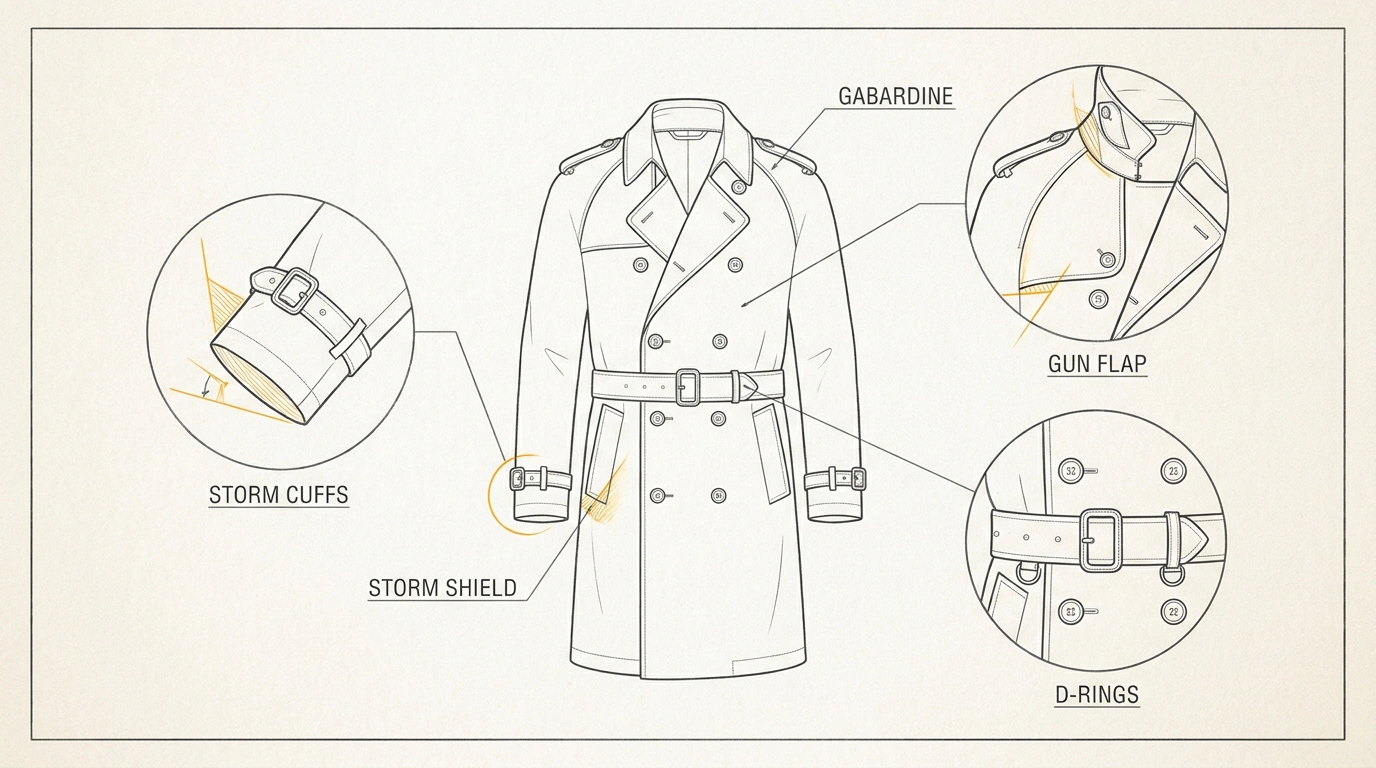
In their trench coat guide, the editors at Gentleman's Gazette highlight seven essential tailoring elements born of field logic:
- Cotton gabardine. Cotton threads are proofed with lanolin and woven into a tight diagonal twill: raindrops roll down the ribbed channels while the fabric breathes.
- Gun flap. The extra layer on the right side of the chest cushioned the recoil of a Lee-Enfield rifle butt—and in a downpour, kept water from seeping past the top buttons.
- Epaulettes. Buttoned shoulder straps held rank insignia and secured straps for binoculars, bags, or whistles. Shoving gloves under them makes no sense, yet the tabs square up your posture and broaden your shoulders.
- Double-breasted front. A 10-button, two-row layout creates a double shield across the chest that blocks a November gale as well as a heavy jacket.
- Belted waist with D-rings. Contrary to myth, Mills grenades weren’t hung from the belt for safety reasons—archives debunk that story. The rings served as clips for map cases, compasses, binoculars, sabers, or holsters.
- Storm cuffs. When you raise your arms with binoculars or an umbrella, water runs down the sleeves toward your elbows. Wrist straps with buckles let you cinch the cuffs over gloves and seal out the cold.
- Storm shield. The cape-like back yoke acts like eaves on a roof: water drips straight off to the ground, bypassing your lower back, while the opening underneath vents excess heat.
Trying It On and Fit: Raglan Sleeves, the Sweater Test, and Proper Length
Never try on a trench coat over just a T-shirt: the military coat was worn over a tunic, so bring a blazer or a chunky knit sweater into the fitting room (for pairing knitwear with outerwear, see our breakdown of men’s cardigan fit rules).
With the coat layered over a second piece, check the shoulders. A true trench uses a raglan sleeve, named after Field Marshal Lord Raglan: a diagonal seam runs from the collar to the underarm. There’s no top shoulder seam—the first place rain leaks through—and the sleeve drapes cleanly over a blazer or sweater. Cross your arms over your chest; the back shouldn’t pull tight. Next, fasten the throat latch under your chin and cinch the cuffs: the collar should seal your neck against the wind without choking you.
A classic trench covers the knee, protecting your trousers from splashes. Cropped hip-length versions cut your legs in half and rob you of height—we covered how those lines work in our guide to 10 men’s style rules and silhouette proportions. On a date, don’t buckle the belt to regulation tightness: wear the coat open and tie the belt ends loosely behind your back or at your side.
You’ll find more on the history of British mills and gabardine colors in the full Gentleman's Gazette guide. In the fitting room, just check the seven military features and the freedom of the raglan sleeve: that way you’ll walk out with reliable menswear armor rather than a seasonal prop—a coat that handles rough weather and sharpens your look from the first second.
