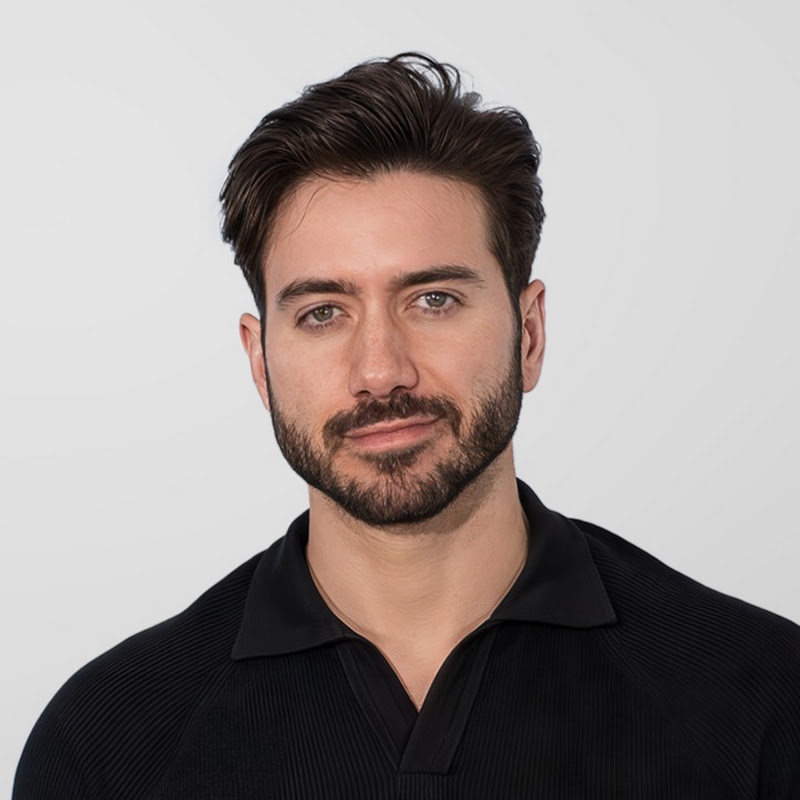
Men's style creator Alex Costa recently posted a video titled "The New Era Where Going Bald Is Optional Has Begun." He argues that medicine has solved hair loss and that going bald today is a choice. Let's cool the hype right away: there is no 100% guarantee, medications carry side effects, and they require lifelong use. Still, doctors genuinely have stronger tools now—from a proven two-drug combo and clean transplants to new pills finishing Phase 3 trials.
Why Playing Defense Is Easier Than Rebuilding Your Hairline
We hit the gym five times a week, whiten our teeth, and take care of our skin without a second thought. Yet the moment a hairline starts creeping back, many guys freeze up and hide under baseball caps.
Most men lose their hair not because medicine is helpless, but because they wait too long. Keeping the hair you have today is roughly ten times easier than trying to revive shrunken follicles five years down the road. In androgenetic alopecia (male pattern baldness), follicles at the temples and crown are sensitive to the hormone DHT (dihydrotestosterone). The follicle shrinks, and each new hair grows thinner and shorter until it turns into peach fuzz. As long as the follicle is still alive, you can protect it.
Shield and Stimulator: The Clinical Backbone and FDA Status
Evidence-based treatment relies on two drugs working like sparring partners: finasteride is the shield, and minoxidil is the stimulator. Finasteride slows the conversion of testosterone into DHT to halt shedding. Minoxidil boosts blood flow and oxygen to the roots, thickening weakened strands.
Costa is nearly 40 and has taken this combo daily for three years. He started with topical minoxidil foam twice a day, yet hated how greasy and "crunchy" it made his hair. His doctor switched him to a single combination pill—finasteride plus low-dose oral minoxidil.
Doctors prescribe several popular options off-label, meaning in a form or dose the regulator hasn't formally approved specifically for hair loss. Here is the real breakdown based on FDA data:
| Drug Form | Role | FDA Status | Key Caveat |
|---|---|---|---|
| Oral finasteride | DHT shield | Approved (Rx) | Backbone therapy; systemic side effects possible |
| Topical finasteride (spray) | DHT shield | Off-label | FDA warns it still absorbs into the bloodstream |
| Topical minoxidil (2%, 5%) | Stimulator | Approved (OTC) | Apply 1–2x daily; can make hair greasy |
| Oral minoxidil (LDOM) | Stimulator | Off-label | Easier routine; needs heart and blood pressure monitoring |
Pay close attention to finasteride spray. Costa mentions "minimal absorption," yet the FDA explicitly warns that systemic absorption still occurs. That means it can carry the same side effects as the pill: lower libido, sexual dysfunction, mood changes, and fatigue.
An influencer's routine is not a prescription. Finasteride and off-label oral minoxidil (which carries risks like fluid retention, extra body or facial hair, and blood pressure or heart rate changes) should only be chosen with a dermatologist or hair specialist.
The New Pill VDPHL01: What Clinical Trials Showed
A new candidate from Connecticut-based Veradermics is extended-release oral minoxidil, VDPHL01. Standard oral minoxidil spikes in the bloodstream quickly, which forces doctors to keep doses tiny. Slow release flattens that peak, eases strain on the heart, and allows 8.5 mg once or twice daily.
Phase 3 trial numbers across more than 1,000 men look strong. In Study '302' (519 men), terminal hair density rose by +30.3 (once daily) and +33.0 hairs/cm² (twice daily) at six months versus +7.3 on placebo, reaching up to +43.9/cm² at one year. Study '304' (536 men) delivered +28.6 and +36.4 hairs/cm² versus +6.6 on placebo, with no heart safety flags. A Phase 3 trial in women (NCT07146022) is also underway. The drug is heading toward an FDA filing and isn't in pharmacies yet.
Scar-Free Transplants, Laser Helmets, and PRP
Modern hair transplants look nothing like the old "doll-hair" plugs with a long scar across the back of the head. Costa's nearly 70-year-old father had a procedure in Brazil under local anesthesia and slept through most of the day. After a week of mild redness and scabbing, his density and confidence returned within 6–9 months. Beyond the US, top clinics operate in Turkey, Brazil, and Mexico—picking the right surgeon matters most. Even after a transplant, though, most men still need finasteride and minoxidil so their native hair doesn't keep thinning around the grafts.
Non-invasive LLLT (red-light laser helmets) have basic evidence for boosting microcirculation, yet they are much weaker than medication or surgery—useful mainly as an add-on or gentle start. Meanwhile, PRP (platelet-rich plasma injections) and exosomes offer modest results at high prices and frequent clinic visits, trailing far behind proven core treatments in value.