Issue October 13Daily digest · 10 items
In this issueReviewed 67 sources, gathered 10 items
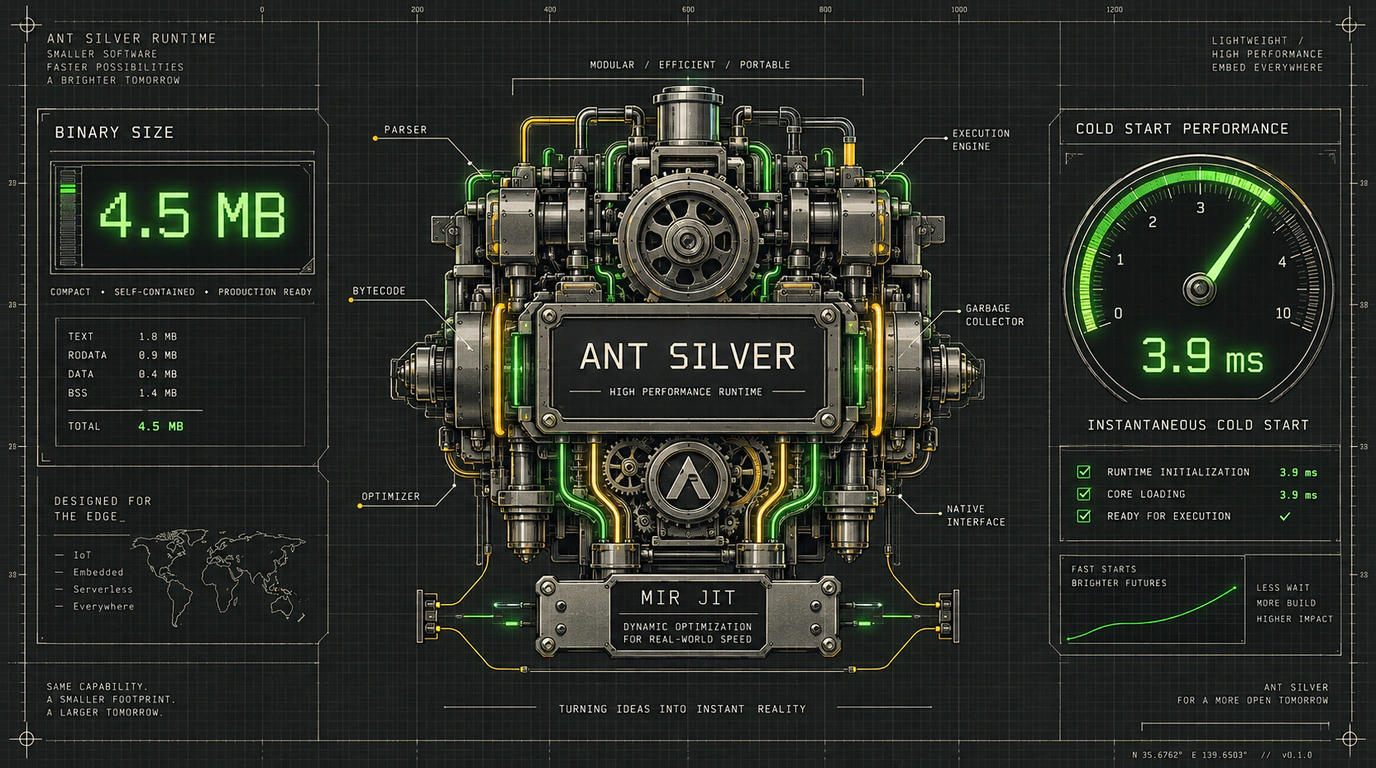
Engineering blueprint of the lightweight turbine microkernel for the Ant JavaScript runtime next to a 3.9-millisecond startup speedometer on a high-contrast graphite background.
ArticleDevelopmentOpen SourceJavaScriptRuntimes

Ant: A Lightweight JavaScript Runtime with the Silver Engine and 4 ms Startup

Used to server-side JavaScript pulling in hundreds of megabytes of V8 or JavaScriptCore? Meet Ant, an independent runtime with its own Ant Silver engine and a fast JIT powered by the MIR compiler.

Its binary weighs just 8.6 MB (or a record 4.5 MB with -Os), and a Hono cold start takes only 3.9 milliseconds, several times faster than Bun and Node.js. It also passes 100% of the WinterTC and Temporal specs.

Here is a look at the new runtime's architecture, benchmarks, and where such a lightweight tool pays off most.

👍 0
Best of JSGitHub — theMackabu/antAnt — Official Site
October 13
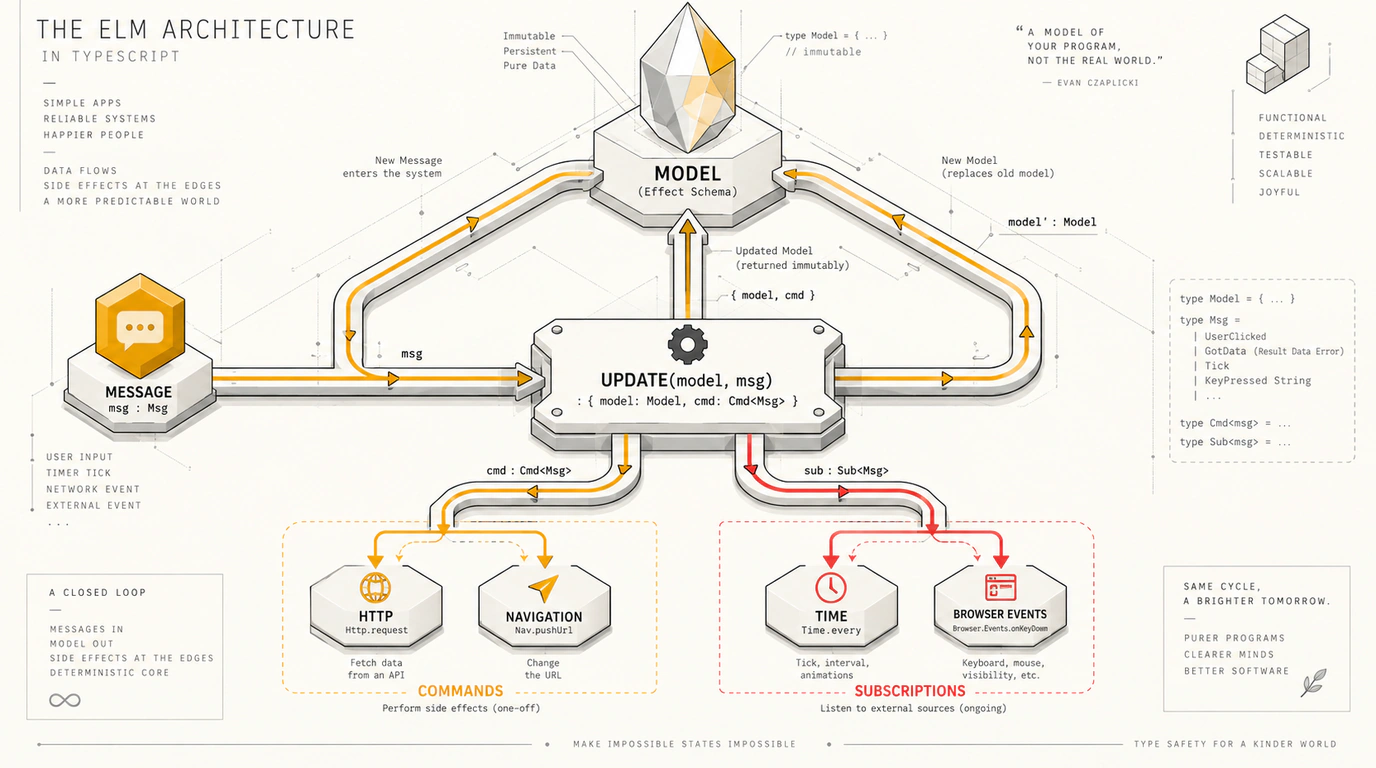
Isometric architectural diagram of a predictable state management loop in TypeScript with clean Model, Message, and Update blocks.
ArticleDevelopmentOpen SourceFrameworksTypeScript

Foldkit: A TypeScript Framework Built on Effect and the Elm Architecture for Predictable State

Tired of hidden side effects in useEffect, request race conditions, and endless cascading re-renders in React? The Foldkit frontend framework brings the strict discipline of The Elm Architecture into modern TypeScript.

Instead of scattering state across components, Foldkit keeps data in a single Effect Schema model, enforces exhaustive event typing, and runs transitions through pure functions. It also includes a built-in MCP server for debugging alongside AI agents.

Let's break down the framework's architecture, effect isolation, and a typed counter example.

👍 0
Best of JSFoldkit — Official SiteGitHub — foldkit/foldkit
October 13
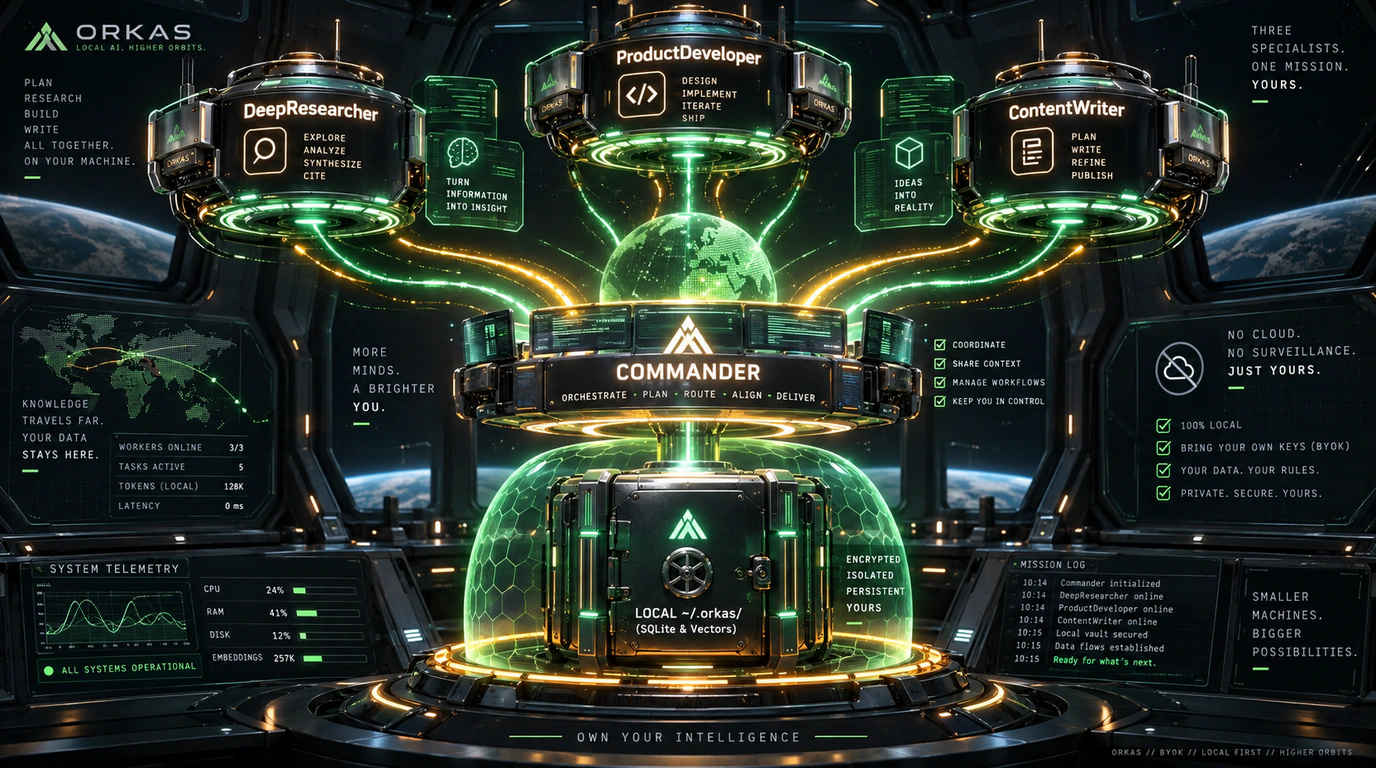
AI agent command center featuring the central Commander coordinator, a secure local SQLite vault, and parallel worker streams.
ArticleAI AgentsOpen SourceAutomationDesktop

Orkas: A Local-First Desktop Environment for Parallel AI Agent Teams

A single chat window with one AI model quickly gets overwhelmed when a task spans research, coding, and documentation. The open-source desktop app Orkas tackles this with a local-first multi-agent system.

A central Commander coordinator breaks down goals and runs specialized workers in parallel using your own API keys. Every file, SQLite index, and vector memory entry stays strictly on your disk.

Here is how its architecture, local search, and cloud-free automation work.

👍 0
Best of JSOrkas — Official SiteGitHub — Orkas-AI/Orkas
October 13
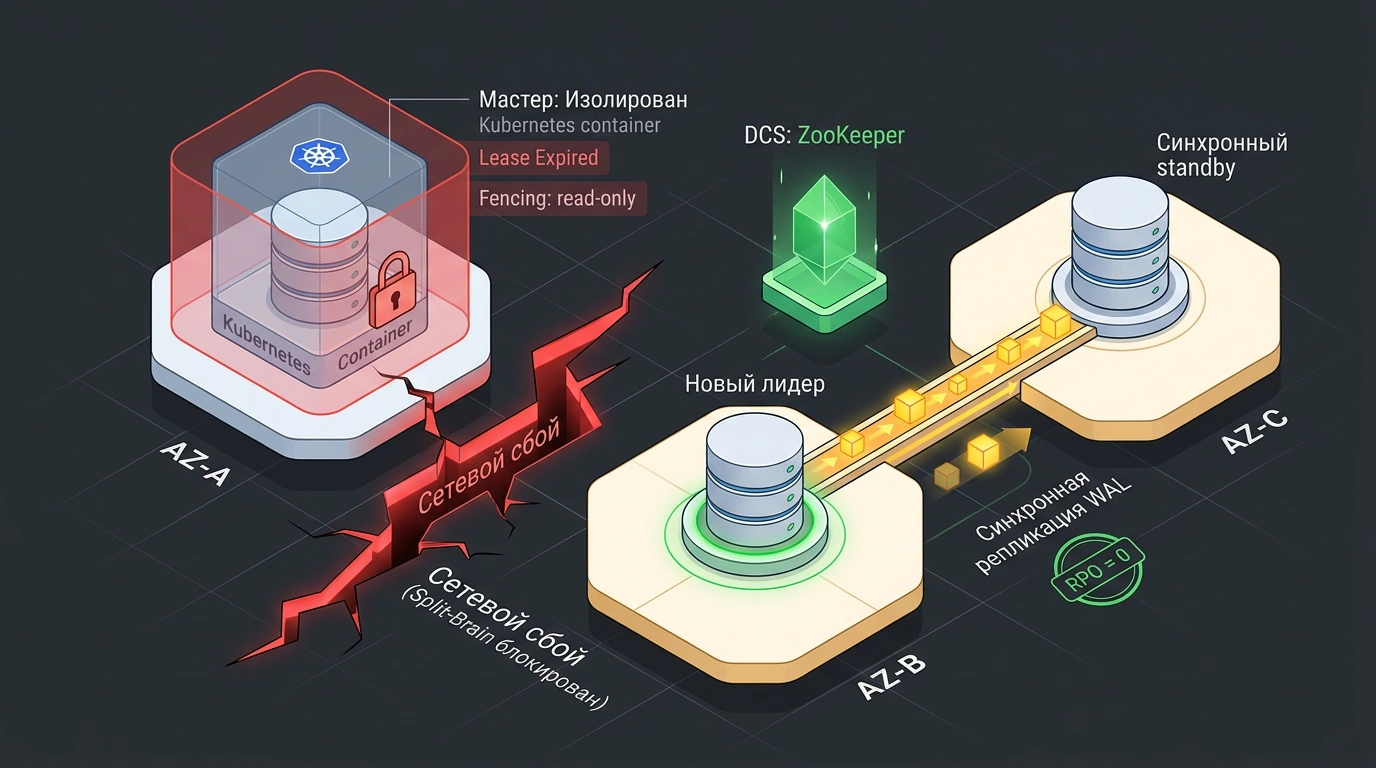
Isometric architectural illustration of a fault-tolerant PostgreSQL cluster in Kubernetes showing an isolated failed primary and a protected synchronous Patroni quorum.
LongreadDevelopmentSafetyKubernetesPostgreSQL

Fault-Tolerant PostgreSQL on Kubernetes: Preventing Split-Brain and Balancing Latency

Sure your Kubernetes high-availability operator will automatically protect PostgreSQL during an outage? Real-world chaos drills show the opposite: cross-zone network degradation can easily stall an asynchronous failover or trigger a catastrophic split-brain.

Datadog engineers proved that a resilient cluster requires splitting nodes into two separate pools, enforcing strict synchronous replication, and using remote_apply. Write latency rises noticeably, but you gain a rock-solid RPO = 0 guarantee.

We examine Patroni's architecture, ZooKeeper DCS tuning, and cloud reliability trade-offs.

👍 0
DevOps&SRE LibraryDatadog Engineering: Building High-Availability PostgreSQL on Kubernetes
October 13
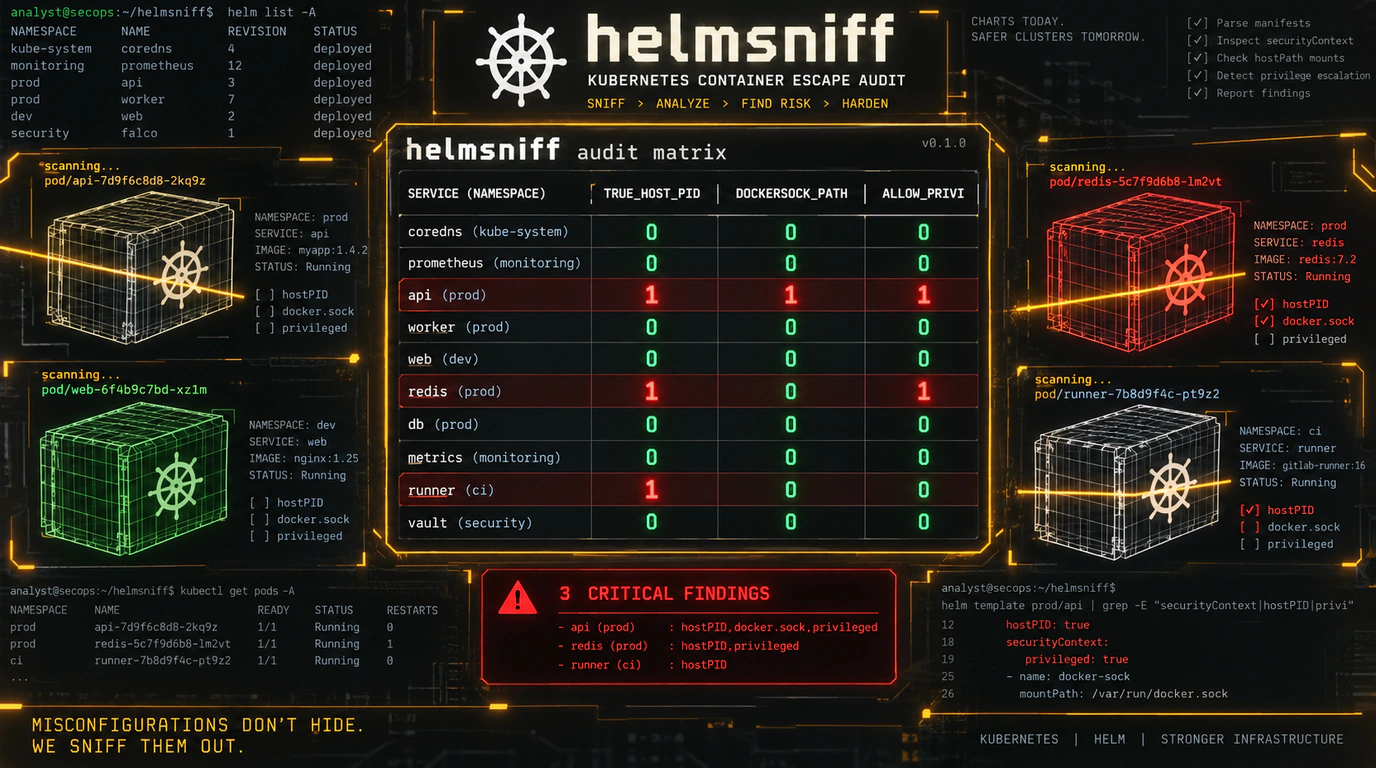
Terminal screen of the helmsniff utility showing a binary security check matrix for Kubernetes manifests with highlighted critical attack vectors.
ArticleSafetyOpen SourceKubernetesDevOps

helmsniff: CLI Security Auditing for Rendered Helm Chart Manifests

When an infrastructure runs thousands of Helm charts, heavyweight security scanners drown in their own reports. The open-source CLI tool helmsniff takes a fast, matrix-based approach to statically auditing rendered Kubernetes manifests.

It checks 18 critical container-escape vectors—from running as root and mounting docker.sock to host namespaces. Output arrives as a compact 0/1 matrix ready for pandas analysis or fast CI/CD pipelines.

Let's look at its check design, vulnerability detection examples, and CLI usage.

👍 0
DevOps&SRE LibraryGitHub — VahidR/helmsniffVahid Rafiei: helmsniff Tutorial
October 13
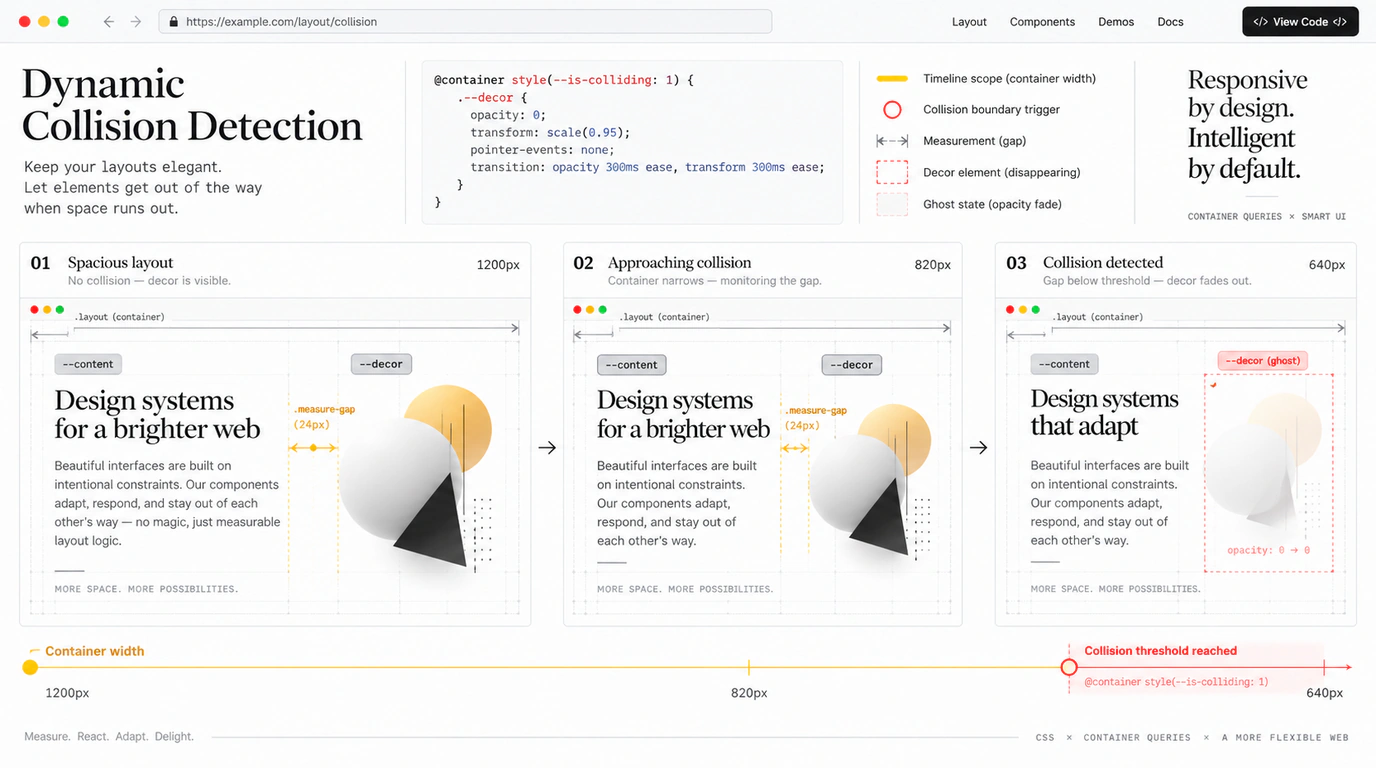
CSS collision-prevention demo using a floating anchor, a gap-measuring block, and reactive hiding of an overlapping element.
ArticleDevelopmentDesignCSSFrontend

Pure CSS vs. Overlapping Decor: Combining Anchor Positioning and Scroll-Driven Animations

Ever had a floating decorative element collide with article text when the window shrinks, while media queries fail inside multi-column layouts? Engineer Ahmad Shadeed shared a clean solution using zero lines of JavaScript.

CSS Anchor Positioning measures the real gap between blocks, a tiny overflow scroller with timeline-scope catches when they get too close, and a 1 ms animation flips a container style flag to hide the decor. No heavy ResizeObserver listeners or layout thrashing.

Here is the mechanics behind the CSS trick, the working code, and a safe progressive fallback.

👍 0
Библиотека фронтендераAhmad Shadeed: Detect Collision With CSSMDN Web Docs: timeline-scope
October 13
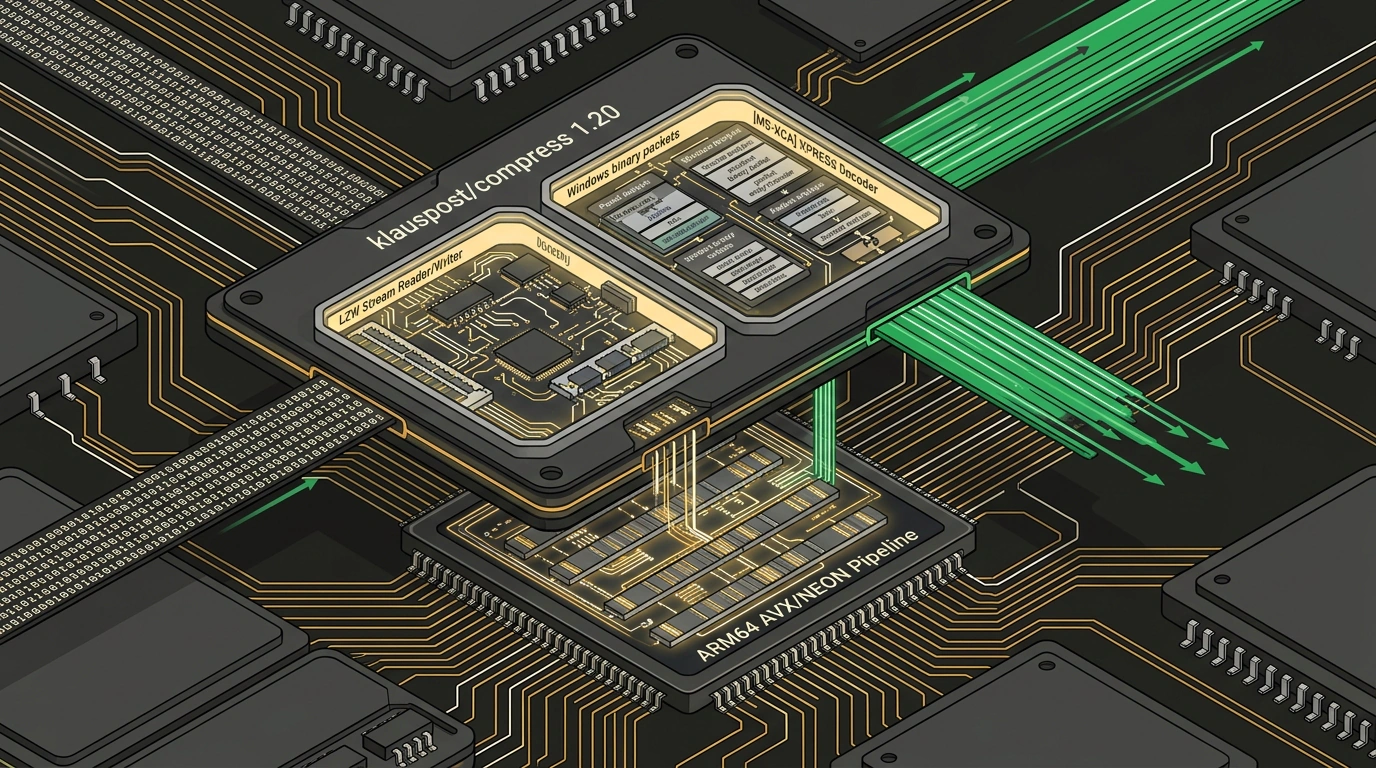
System archive unpacking and acceleration in Go with native decoding of LZW and Microsoft XPRESS streams on an ARM64 chip.
ArticleDevelopmentAlgorithmsGoData Compression

klauspost/compress 1.20: LZW Streaming and Microsoft XPRESS Decoding in Go

Need to parse Windows RPC dumps, Active Directory replication, or WIM disk images in Go services? The klauspost/compress 1.20 release frees you from heavy C bindings via CGO.

It adds native Microsoft XPRESS (MS-XCA) decompression and a fast streaming LZW reader/writer. On arm64 servers, it also introduces assembly S2 encoders and protects the Go scheduler from long blocking loops.

Let's explore the new packages, ARM optimizations, and pure-Go decompression code.

👍 0
Библиотека Go-разработчикаGitHub — klauspost/compress v1.20.0 Release
October 13
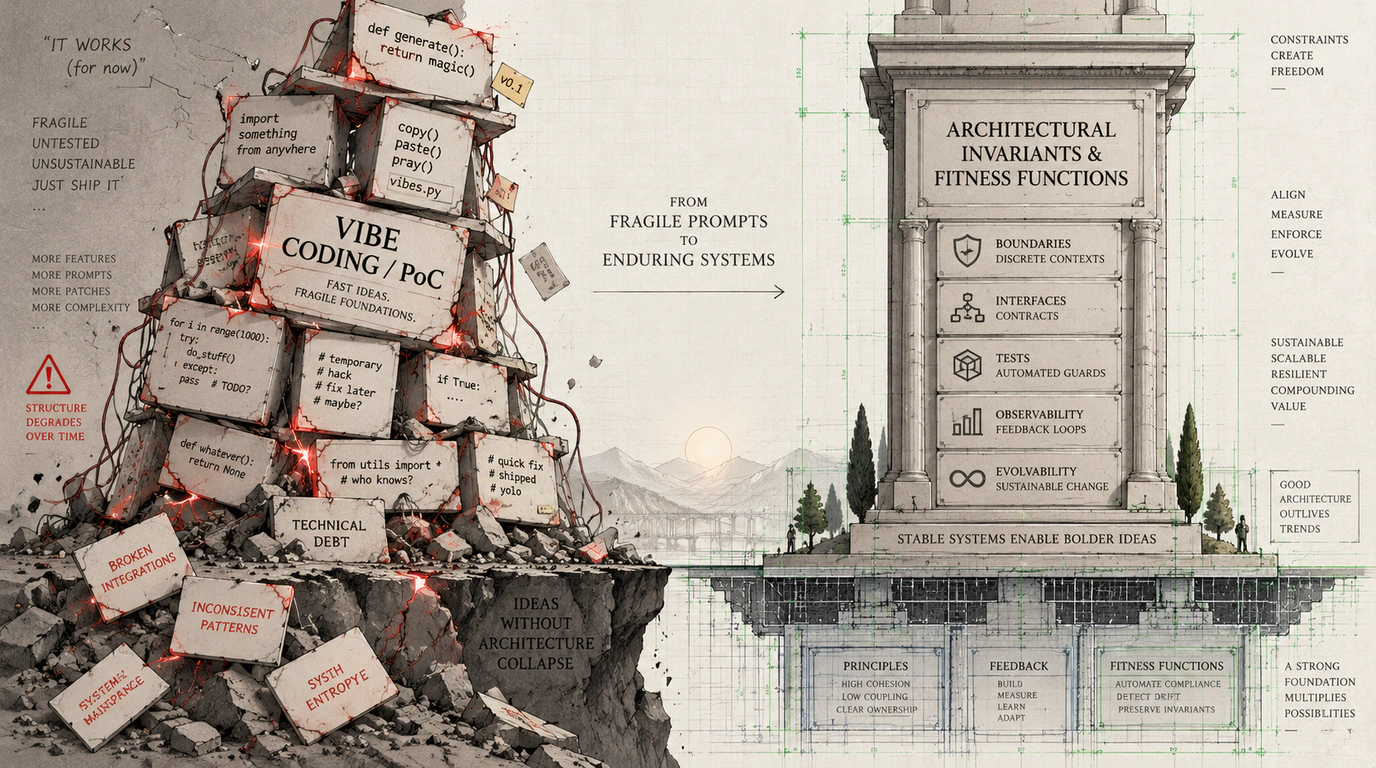
Contrast between a fragile house of cards built from generated spaghetti code and a solid engineering foundation backed by an architectural specification.
ArticleDevelopmentAIArchitectureSoftware Design

Architectural Erosion: Why Vibe Coding Breaks Long-Lived Systems

Vibe coding promises effortless development: write a prompt, get a working prototype, and ship it to production. So why do those systems quickly collapse into unmaintainable spaghetti code? Systems architect Timur Shemsedinov breaks down the core risks of indiscriminate code generation.

When an AI model builds a project without a strict spec, it quietly makes irreversible architectural decisions for you. Domain invariants break, and teams lose track of how modules connect.

Here is the line between PoC and production, how architectural erosion happens, and how CI fitness functions keep codebases healthy.

👍 0
HowProgrammingWorksYouTube — Тимур Шемсединов: Архитектура и проектирование ПО
October 13
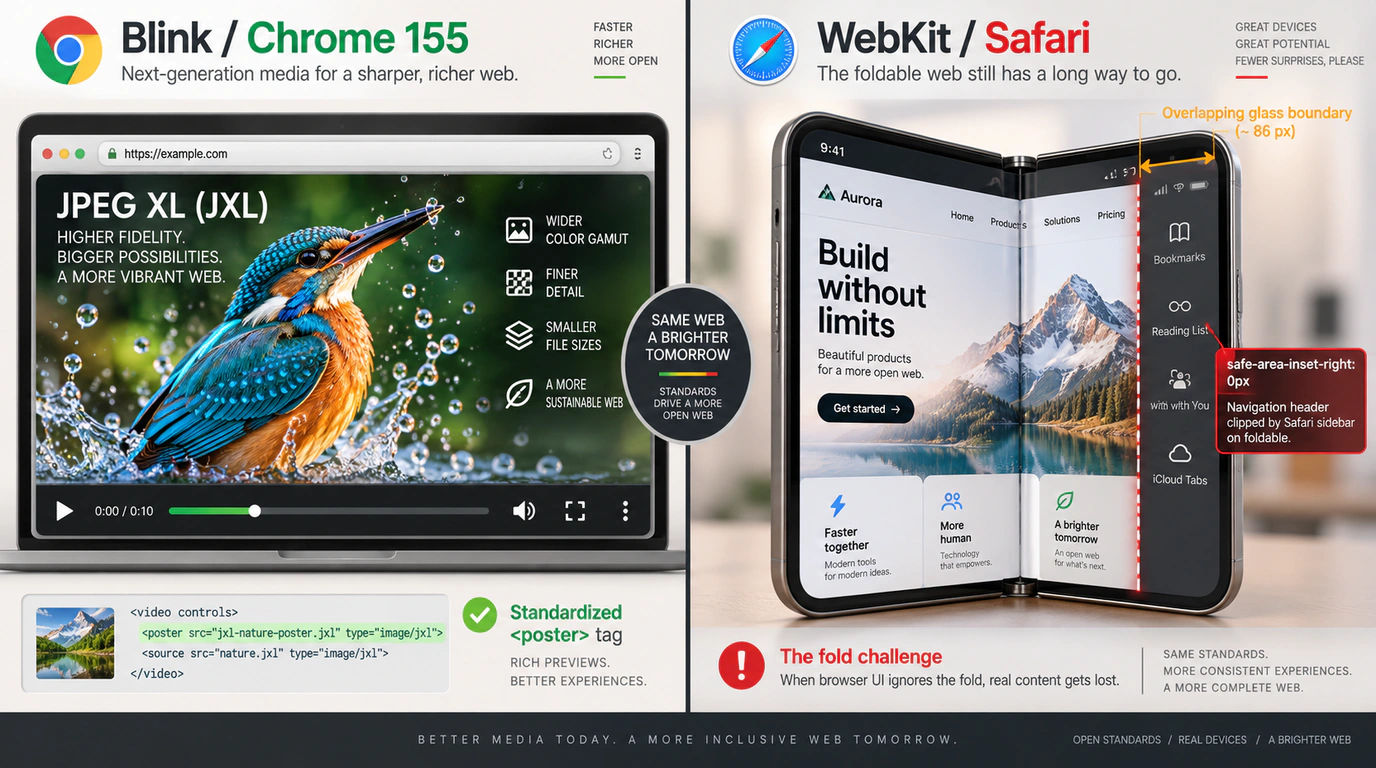
Diptych of browser technologies: crisp JPEG XL imagery in Chrome 155 alongside a layout on a dual-screen foldable smartphone with Safari's sidebar.
Thematic roundup2 sectionsDevelopmentOpen SourceBrowsersWeb Standards

Browser Engines and Web Standards: Chrome 155 Updates and Safari on Foldable Screens

While Google pushes open media standards forward, Apple is creating unexpected layout puzzles. Chrome 155 brings hardware-accelerated JPEG XL back to Blink, and the WHATWG has standardized a dedicated <poster> element for video players.

Meanwhile, WebKit in the foldable iPhone Duo simulator reveals a nasty surprise: Safari leaves its sidebar out of env(safe-area-inset) and samples page colors with an undocumented heuristic, slicing off fixed headers.

We compare these new media standards with practical CSS rules for foldable displays.

👍 0
Веб-стандартыВеб-стандарты — Выпуск 548Mike Piontek: iPhone Duo Safari
October 13