Issue November 16Daily digest · 8 items
In this issueReviewed 66 sources, gathered 8 items
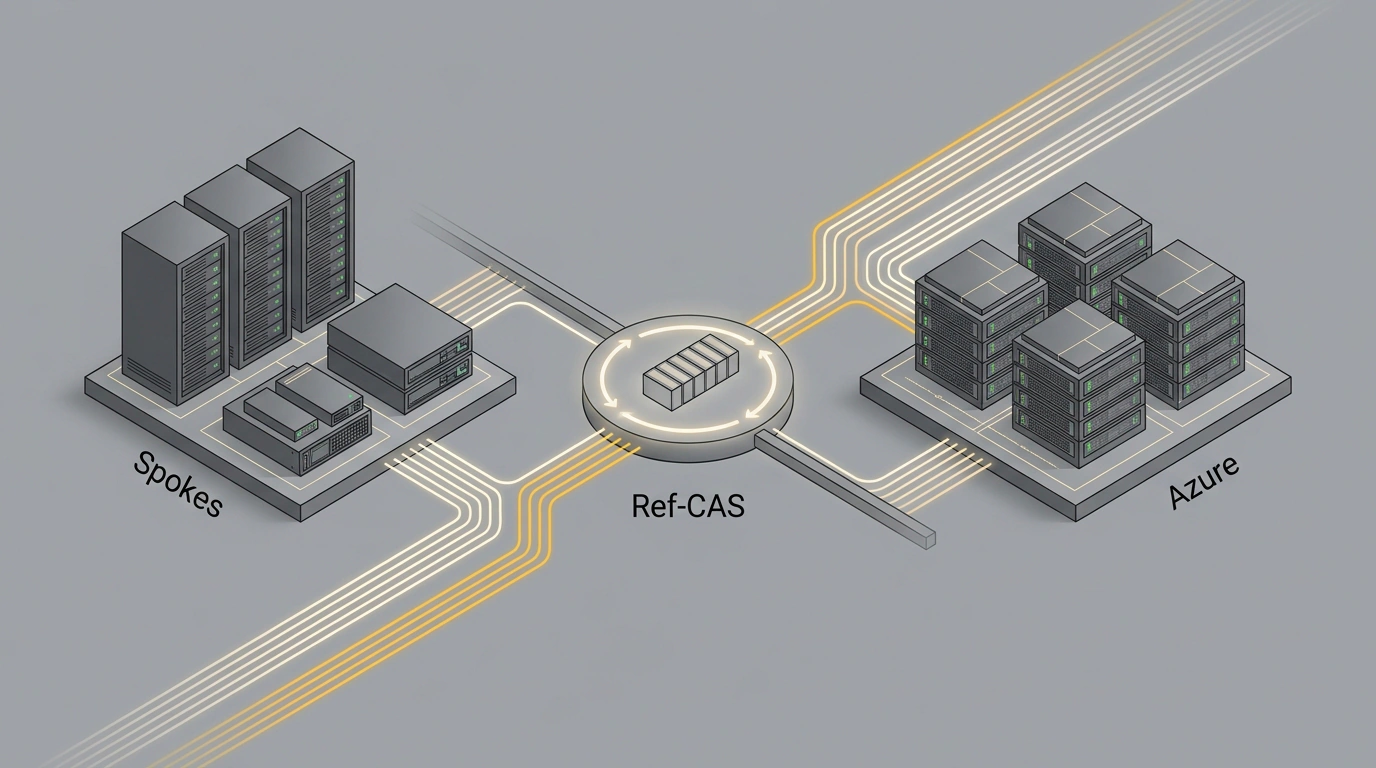
Architectural isometric diagram of Spokes infrastructure splitting Git write traffic between an on-premises data center and the Azure cloud.
ArticleDevelopmentArchitectureGitInfrastructure

Agent-Scale Git Infrastructure: How GitHub Moved 99.99999% of Repositories to Azure and Adopted Per-Reference Quorums

Moving GitHub to the cloud sounds like a simple bandwidth problem, yet the busiest 0.00001% of repositories ran straight into network physics. With 1,000 miles and 25 ms of latency between on-prem data centers and Azure, a global repository lock turns parallel pushes from dozens of AI agents into a standstill traffic jam.

Switching Spokes to per-reference quorums and offloading reads to ephemeral replicas backed by Blob Storage sped up writes by 3–4x. Almost every object in Git is immutable, after all—only one tiny piece actually needs strict synchronization across servers.


👍 52
DevOps&SRE LibraryThe bridge to agent-scale Git infrastructure | GitHub Engineering
November 16
Cinematic still life of an SRE engineer's workstation featuring a monitoring display and an on-call smartphone.
ArticleDevOpsMonitoringReliabilityAnalytics

Work Metrics vs. Resource Metrics: Why You Shouldn't Wake On-Call Engineers for CPU Spikes and What to Alert On Instead

Waking an on-call engineer at 3 a.m. over a 90% CPU spike or a disk that won't fill up for a week quickly blinds the team with false alarms. After nine empty pages in a row, an exhausted human reflexively ignores the tenth—right when successful logins collapse to 50%.

A server running at 95% CPU with 80 ms responses is earning its keep, whereas a node at 5% CPU throwing 500 errors to half your users is a critical outage. Even sharp work metrics, though, still leave blind spots where internal sensors can't see.

👍 29
DevOps&SRE LibraryStop paging on how your machines feel | Great Circle BlogGoogle SRE: Practical Alerting from Time-Series Data
November 16
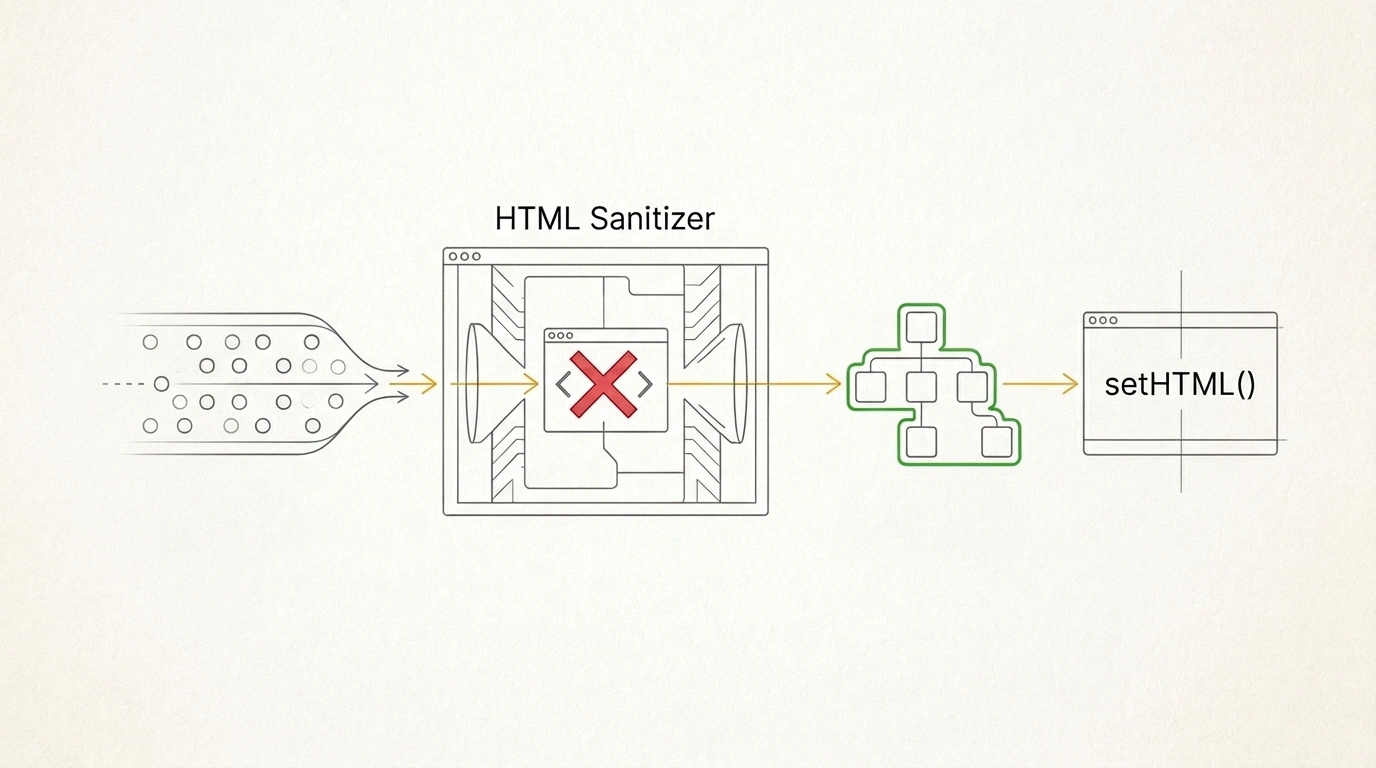
Infographic blueprint of an HTML markup sanitization pipeline using the browser's Sanitizer API filter.
ArticleSafetyBrowsersJavaScriptDevelopment

Firefox 158 Release: Safe Markup Insertion with the HTML Sanitizer API and Typed Arithmetic in CSS

When rendering user-submitted HTML, you can scrub strings with third-party parsers before touching innerHTML—bloating your client bundle—or hand the filtering to the browser engine through the native HTML Sanitizer API.

In Firefox 158, the safe Element.setHTML() method unconditionally strips javascript: from links, while Element.setHTMLUnsafe() preserves complex nodes like Shadow DOM and lets you filter protocols via Sanitizer.setJavascriptURLs(). Choosing between the two modes comes down to what kind of markup your component renders.

👍 30
Библиотека фронтендераFirefox 158 release notes for developers | MDN
November 16
Modern editorial vector graphic illustrating direct server-side JSX rendering without a client runtime.
NoteDevelopmentFrameworksNodeJSOpen Source

Jeasx: Streaming Server-Side Rendering in Pure JSX Without a Client Runtime

Want to write templates in familiar JSX without forcing the browser to download a client runtime and rebuild a virtual DOM during hydration? The open-source Node.js framework Jeasx keeps JSX on the server as a pure templating layer on top of Fastify, esbuild, and jsx-async-runtime.

You write routes in routes/ as plain async functions: the server queries your database straight from the component and streams HTML into the socket with zero client JavaScript. Skipping browser-side state altogether, however, comes with a clear architectural ceiling.

👍 11
Best of JSJeasx GitHub RepositoryJeasx Official Documentation
November 16
Product still life showing an exploded modular binary structure alongside a vernier caliper.
NoteDevelopmentOptimizationGolangCompilers

What Takes Up Space in a Compiled Go Service: A Practical Audit with go tool nm

The command go tool nm -size -sort size breaks a compiled Go service down by its symbol table and shows where the megabytes actually go:

  • runtime.pclntab (R, 518,624 bytes) — the address-to-source map for panic stack traces, taking up 15–25% of small builds;
  • _type:* and go:func.* (R) — type and function descriptors for reflection in fmt and encoding/json;
  • -ldflags="-s -w" — strips DWARF debug tables and shrinks the binary by 20–40%.

Yet one giant symbol tagged B at the top of the report can send your optimization down the wrong track.

👍 18
Библиотека Go-разработчикаcmd/nm documentation | Go Standard Library (go1.27.3)Go Internals: Inception of pclntab
November 16
Sculptural diorama of a database engineer and a compact AI assistant collaborating over a PostgreSQL schema.
NoteDatabasesPostgreSQLAI AgentsMonitoring

Datasentinel 2026.10 Release: Connecting PostgreSQL Monitoring to AI Assistants via MCP

Letting a language model near a production PostgreSQL cluster sounds risky—one heavy query or leaked row could take prod down. In Datasentinel 2026.10, the AI Connector module changes the setup so the assistant never gets network access to the database at all.

Through an MCP server and a Skill profile, you track down locks, autovacuum lag, and plan regressions via datasentinel_analytics using plain chat questions without running live SQL. The trade-off for fast conversation is sending schema metadata to an external model API.

👍 24
PostgreSQL NewsDatasentinel AI Connector DocumentationDatasentinel Official Platform
November 16
Bauhaus geometric block construction illustrating a finite state machine and checkout data filtering.
Thematic roundup2 sectionsFrontendDevelopmentVueTools

Vue and Nuxt Ecosystem: Payload Size Warnings in Devtools 4.2 and State Machines Without Hacks

You can tidy up a Vue and Nuxt app in two ways: manually inspect serialized JSON and juggle five boolean ref flags, or let your inspector and type system enforce the rules.

The Payload tab in Nuxt Devtools v4.2.0 immediately flags which useState key bloated your server response from 4 KB to 60 KB, while a 10-line useReducer hook on top of shallowRef replaces conflicting flags with a strict state machine. Still, forcing a state machine onto every simple toggle is just as counterproductive as building checkout on independent booleans.

👍 16
VueDigestNuxt Devtools v4.2.0 Release | GitHubNuxt Devtools Official DocumentationState Machines in Vue with useReducer | Alex Op+1
November 16