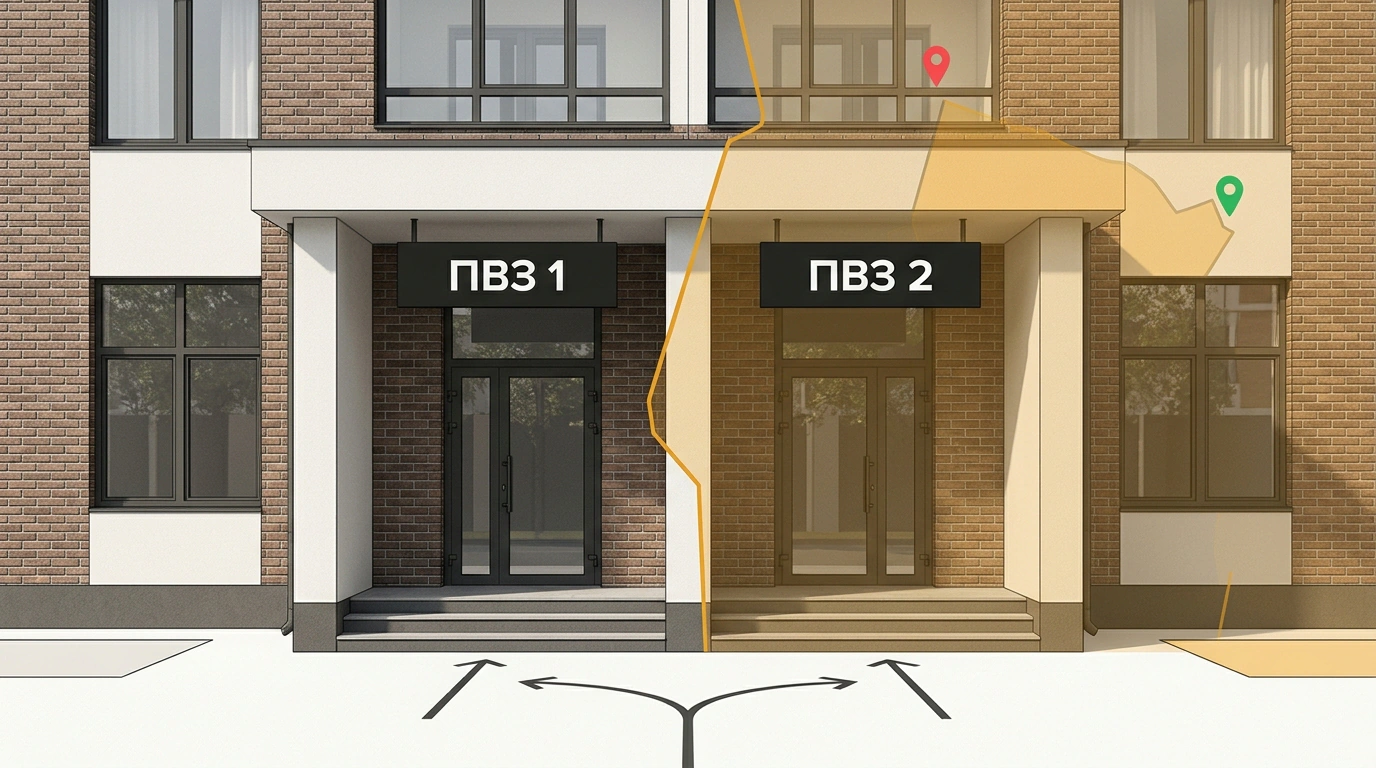
When an Ozon pickup point (PVZ) owner in Ulyanovsk asked platform support how a second location with subsidized payouts got approved right inside his own building, the reply was disarmingly blunt: the map is calculated automatically, no rules were broken. The Marketplace_biz channel published that exchange, exposing a sharp conflict inside the partner network.
I immediately ran the numbers as if it were my own register: you pour money into renovations and signage, train your neighbors to pick up their parcels from you, and then the marketplace moves a direct rival under the same roof—and pays them out of its own pocket. Let's break down why algorithms pit veteran and rookie partners against each other in the same building, and how to protect your location from losing half its orders.
Survival Mode on Latysheva Street and the Subsidy Imbalance
The existing pickup point at 13 Narodnogo Uchitelya Latysheva Street in Ulyanovsk has been operating for three years. It's hardly printing money: the owner's agency fee barely clears the minimum financial support (MFP) threshold, and after paying rent, staff wages, and utilities, the business is barely breaking even.
Under Ozon's financial support program, in blue and green high-demand zones, the marketplace guarantees new pickup points a fixed income for their first 6–12 months. If their percentage of turnover falls short of the target, the platform covers the gap for rent and payroll. Ozon reclassified the block on Latysheva Street into one of those zones, and another investor promptly started opening a second pickup point in the same building: the veteran covers all costs alone, while the newcomer through the wall gets subsidies to fight for the exact same residents.
Dynamic Zone Algorithms and Entrance-Level Protection
Ozon support's reply revealed two gears turning behind the scenes. First, the zone map is dynamic: algorithms recalculate it automatically based on total order volume, population density, and network coverage strategy—without ever checking an existing partner's net margin. Second, in multi-unit residential buildings, territorial protection—the buffer zone where no duplicate from the same network can open—shrinks to the boundaries of a single entrance. The staircase next door is fair game as far as the algorithm is concerned.
You'll reasonably ask: "If the algorithm sees high turnover, maybe one pickup point isn't enough for the building and there are plenty of orders for two?"
Let's do the math. If the old pickup point were drowning in boxes, its payouts would have cleared the minimum support floor long ago. Hanging a second sign at the next entrance won't move new residents into the building or double their shopping. Both pickup points will split the exact same line of neighbors: the existing owner will lose 30–50% of turnover while paying the same rent, while the rookie plugs the losses with platform subsidies.
Platform Interests vs. Store Margins and How to Protect Yourself
For the marketplace, dense signage is pure upside: the closer the door is to a shopper's elevator, the higher the order frequency. Meanwhile, real estate costs get pushed onto partners—just like turning Ozon's pickup network into mini-warehouses or backroom pileups from Ozon Polka shipments. Competitors draw stricter lines: under Yandex Market's protection zone rules, a red no-go zone spans a 150–300+ meter radius, ruling out duplicates in the same building.
To stay out of this trap, build your defenses ahead of time:
- Monitor the map. Keep an eye on your block on Ozon's interactive map: seeing your building switch into a support zone is an early warning that a neighbor is coming.
- Stress-test your unit economics. Before signing a lease, model a 50% drop in foot traffic and check whether the register can still cover overhead without subsidies.
- Go multi-brand. Add parcel handoffs for neighboring services—Yandex Market, Avito Delivery, DPD, or Boxberry (where the format allows)—so your rent is backed by multiple order streams.
There's no magic shield that stops an algorithm from recoloring your block and greenlighting a competitor right behind your wall—the platform will always play for network expansion. But once you know that territorial protection shrinks to your front door, you stop counting on a courtyard monopoly and bake a safety margin into your numbers from day one.
