
Issue October 12Daily digest · 5 items
In this issueReviewed 35 sources, gathered 5 items
Conceptual 3D illustration of balanced nutrition with a plate of whole foods and an hourglass against a stopped pendulum of diet restrictions.
LongreadNutritionHealthHabitsEating Behavior

The Secret of Naturally Slim People: Why Habits Beat Strict Diets

Trying to force yourself into a strict diet almost always ends the same way: a binge, guilt, and regaining the lost weight. Meta-analyses confirm that up to 95% of people return to their starting weight within two to five years after harsh restrictions, and it has nothing to do with a lack of willpower.

When your brain hears a ban on favorite foods, it treats it as a threat of starvation and switches on hyperfixation. Endocrinologist Maksim Kuznetsov notes that breaking this cycle starts with legalizing all foods and paying attention to a hunger scale from 1 to 10. When you sit down to eat at early body signals around 3–4 and stop at comfortable fullness around 6–7, food anxiety fades on its own.

Follow these steps to reset your eating habits so you can bring calm back to the table and stop fighting your own appetite.

👍 0
Максим Кузнецов - Врач эндокринологValidation of the flexible and rigid control dimensions of dietary restraint (Westenhoefer et al., 1999)
October 12
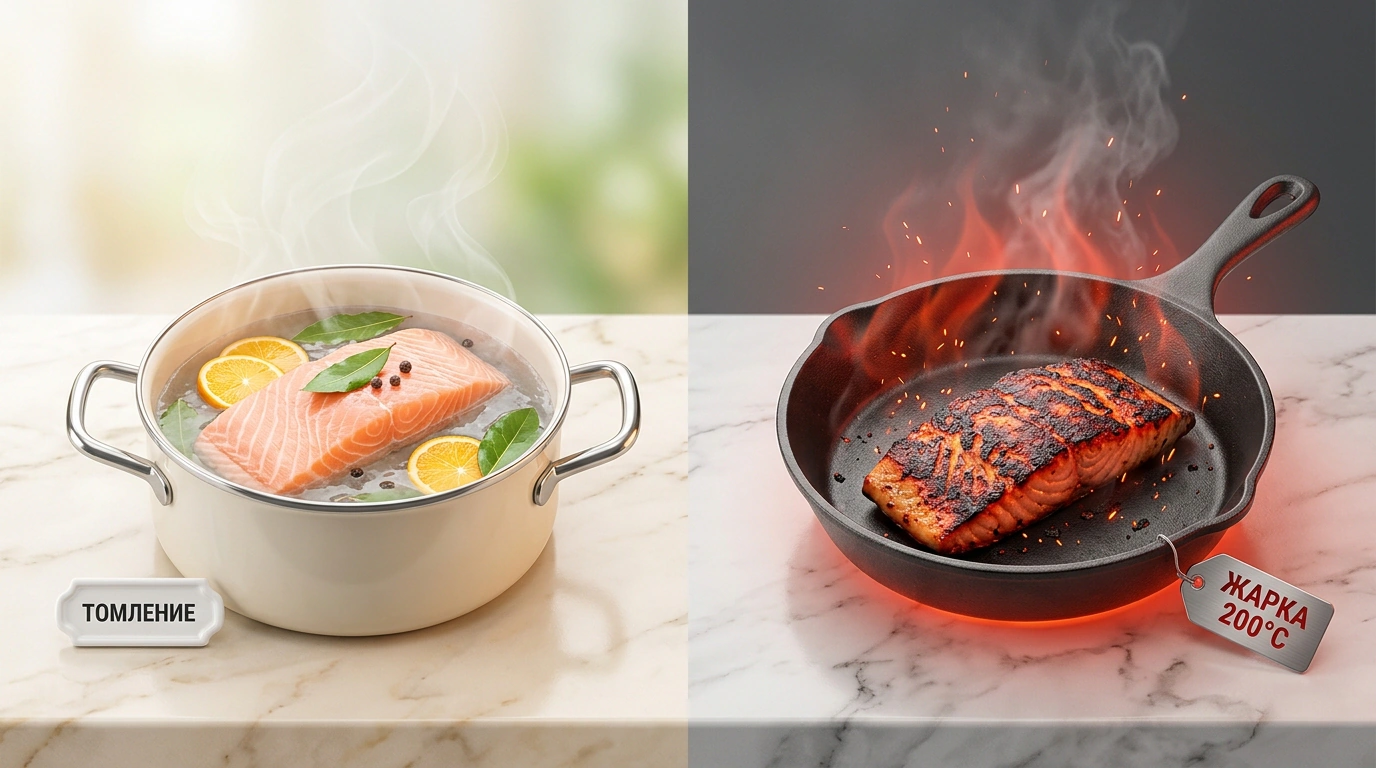
Visual comparison of fish cooking methods: gentle simmering in a pot with lemon versus harsh frying in a hot, smoking skillet.
ArticleNutritionHealthCookingDigestion

Boiling vs. Frying: How Cooking Fish Affects Protein and Digestion

We usually blame post-lunch heaviness after fried fish on overeating, but temperature is the real culprit. Gentle boiling at 80–100 °C unfolds protein smoothly, so digestive enzymes break it down into useful amino acids with ease.

On a hot skillet at 160–200 °C, thermal protein cross-linking takes place: fibers lock into dense clumps that are 30% harder for your stomach to digest, while healthy omega-3s oxidize. Endocrinologist Maksim Kuznetsov recommends gentler methods.

Try switching how you cook fish to get all the benefits without drowsiness or stomach discomfort.

👍 0
Александр Алексеевич. Атлетизм для всехВарю рыбу и объясняю, почему давно отказался от жареного (YouTube)Effects of Cooking Methods on Fish Protein Digestibility and Oxidation (MDPI Foods)
October 12
3D illustration of strength training benefits for longevity: a neat dumbbell and a metabolic health shield against a protective effect chart.
ArticleTrainingHealthFitnessLongevity

Why You Need Strength Training: Health and Longevity Benefits in 30–60 Minutes a Week

Going to the gym isn't just about building big muscles—it is about active longevity. Muscles release special signaling molecules called myokines that fight systemic inflammation and protect blood vessels.

A large meta-analysis in the British Journal of Sports Medicine confirms that just 30–60 minutes of strength training per week lowers the risk of death from all causes by 10–17%. Training beyond two hours brings no extra benefit, so daily heavy lifting isn't necessary.

See how to build short workouts that protect your joints and support long-term health without burnout.

👍 0
Тренер Артём
October 12
News · October 121 news item

The Real Risk of Energy Drinks: Caffeine Dosing and Heart Strain

The main risk of energy drinks isn't taurine or sweeteners—it is concentrated caffeine. One 500 ml can packs 150–200 mg of the stimulant. Chugging two cans at once blows past the safe 400 mg daily limit, triggering peripheral vessel spasms, blood pressure spikes, and heart arrhythmias.