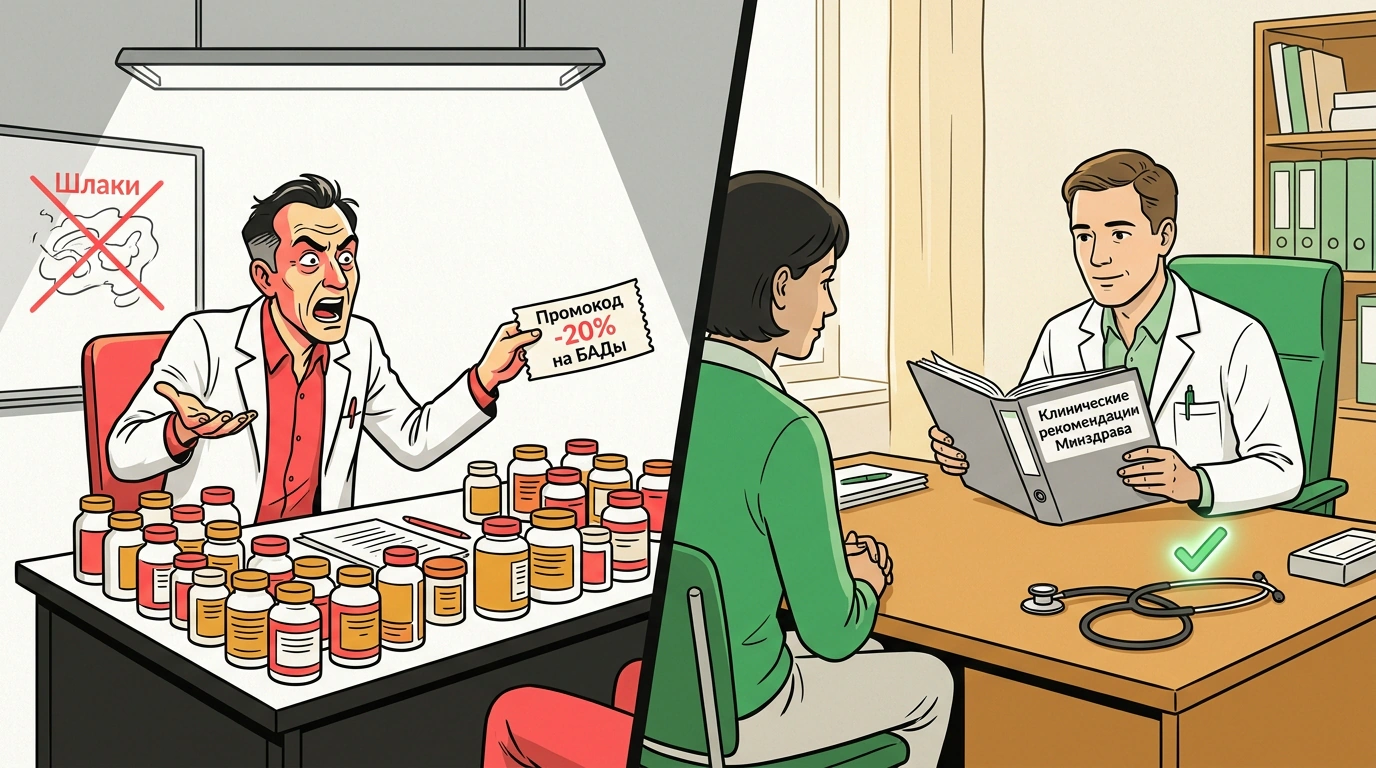
Almost everyone has felt vulnerable as a patient at some point. When you're tired day after day, your blood pressure jumps, or your stomach aches, you want a thoughtful specialist who will finally get to the root of it. Unfortunately, 'integrative' and 'preventive' labels today often hide plain commercial sales pitches.
Endocrinologist Maxim Kuznetsov lays out the key red flags that help you evaluate a doctor's advice at your very first visit and avoid falling for pseudoscientific marketing.
Made-up diagnoses outside international classifications
The first and clearest sign of a pseudo-doctor is tossing around terms that don't exist in the International Classification of Diseases (ICD-10/11) or official clinical guidelines:
- 'Adrenal fatigue': If your adrenal glands truly stop making hormones, you develop severe adrenal insufficiency (Addison's disease), which requires emergency care. Mythical stress-induced 'fatigue' is a favorite label for supplement sellers.
- 'Leaky gut': The intestinal barrier can indeed become inflamed (for example, in Crohn's disease or celiac disease), yet that's treated with targeted prescription drugs, not chlorophyll drops.
- 'Clogged liver and vessels': Your liver is a self-cleaning filter, not a trash bin. There are no 'toxins' sitting inside that you can flush out with glutathione IV drips.
If a doctor hands you a diagnosis from that list, you're sitting across from a salesperson, not a clinician.
Useless lab tests: from Osipov's method to hair analysis
The second warning sign is being sent for exotic lab panels costing tens of thousands of rubles:
- Osipov's GC-MS (gas chromatography–mass spectrometry of microbial markers): This test looks for bacterial fatty-acid fragments in a finger-prick blood drop. Evidence-based gastroenterologists have long dismissed it as invalid: it doesn't reflect your living gut microbiome and carries no diagnostic value.
- Hair mineral analysis: Hair collects dust, shampoo residue, and environmental dirt. It tells you nothing about iron or zinc stores in your organs.
- Live blood cell analysis: A dramatic microscope show for trusting clients that has nothing to do with clinical lab diagnostics.
Supplement promo codes and stopping essential meds
The most dangerous moment comes when prescriptions are written. An evidence-based doctor treats patients with approved medications backed by proven efficacy and safety.
Watch out if a doctor:
- Hands you a list of 15 to 25 supplement bottles.
- Gives you a personal promo code for a specific website or sends you to a closed-network pharmacy.
- Tells you to stop vital drugs—statins, blood pressure pills, metformin, or levothyroxine for hypothyroidism—claiming 'pharmacy chemicals poison your liver.' Stand up and walk out immediately.
Replacing statins or blood pressure medications with supplements sharply raises your risk of heart attack and stroke. No licensed physician has the right to take a patient off proven baseline therapy without medical grounds.
How to protect yourself: the Ministry of Health directory
Under Russian Federal Law No. 323-FZ 'On the Fundamentals of Health Protection of Citizens,' medical care must follow approved clinical guidelines.
Every patient has a free, legal way to double-check a plan: the official portal cr.minzdrav.gov.ru (Clinical Guidelines Directory of the Russian Ministry of Health). Search your official diagnosis there to see the approved list of tests, exams, and proven medications.
We've already explained why thousands of capsules only create an illusion of caring for your health. Trust doctors who rely on facts and research, not people selling hope with a promo code.