Sound familiar? On Sunday you are fired up: you buy a gym membership and promise yourself you'll train every other day. Come Wednesday morning, the alarm rings, sleet taps on the window, and your brain whispers: "Too tired today—let's start fresh next week." The membership gathers dust on a shelf, and you sigh: "Working out just isn't for me. I have zero willpower."
There is nothing wrong with your willpower. "Just Do It" looks great on a poster, but it falls flat against real human biology. Oleg Zingilevsky, founder of the Fizikl project, laid out the behavioral mechanics of exercise—and how to outsmart your brain's resistance without bullying yourself.
Evolutionary Economics: The 'Investor Brain' Model
Health psychology has a name for this: the Intention-Behavior Gap. Meta-analyses by Pascal Sheeran and Ryan Rhodes show that even genuine intention explains less than a third of actual behavior. In fitness, that gap hits 46–48%—nearly half of the people who decide to work out never follow through.
Our brains evolved under ancient calorie scarcity: burning energy without an immediate payoff meant risking survival. Your brain is wired to conserve resources. Expecting yourself to suddenly fall in love with squatting until you drop is wishful thinking.
Subconsciously, your brain acts like a venture investor, weighing the "entry cost" (effort, time, beginner awkwardness) against guaranteed return. The couch beats the gym not because you are weak, but because the couch has an entry cost of zero and delivers instant dopamine from rest and a show. The gym carries a steep entry cost, while the payoff sits months away.
Willpower is a fast-draining battery. What actually works is radically lowering the entry cost and stripping out cognitive friction.
Habit Engineering: How to Remove Friction
Cognitive friction is a chain of tiny hurdles: where your gear is, sitting in traffic, figuring out what routine to do. Every micro-decision drains your prefrontal cortex. Zingilevsky suggests a practical playbook:
- Create external accountability: Promises written in your own calendar are the first to break. A paid program, a workout buddy, or a coach activates social commitment: when someone expects you, canceling feels harder than showing up.
- Cut the commute: A gym five minutes from home beats a trendy club forty minutes away every single time. Getting there shouldn't take longer than the workout itself. Too drained for the gym? Start at home with resistance bands and a mat.
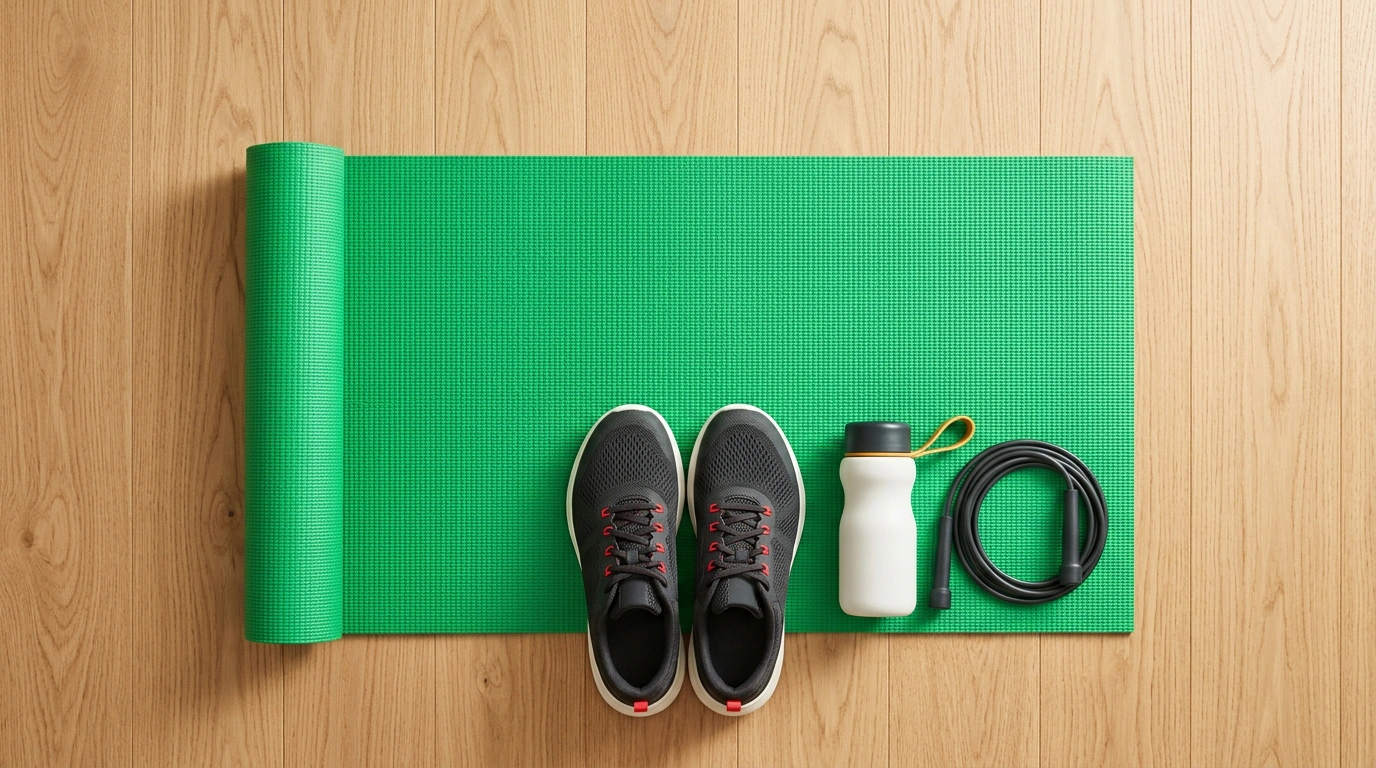
- Automate the first step: Habit research (Wendy Wood, BJ Fogg) shows you shouldn't try to anchor a 90-minute session—anchor the trigger (lacing up your sneakers, unrolling the mat). Momentum handles the rest.
- Drop the bar to 10–15 minutes: Forget grueling marathons. Set the bar low enough that you can clear it 9 times out of 10, even on a rough day: 10 minutes of mobility or two basic sets.
- Skip early scorecards: Stepping on the scale or scrutinizing the mirror in week one only breeds frustration. In our piece on how self-dissatisfaction sabotages workouts, we unpacked the self-criticism trap. Early on, the only metric that counts is showing up on the mat.
Give yourself permission to have a sloppy workout: sluggish, with light weights, or just gentle stretching. What matters is logging the act of starting. Ten minutes of lazy movement beats an ideal workout that only exists in your head.
If even a warm-up feels like too much, plain walking will save the day. Check out why a simple walk beats the gym for weight loss: low-intensity steps burn calories gently without frying your nervous system.
Short 10-minute blocks carve the neural groove of a habit. Once moving feels automatic, you can dial up the load effortlessly. First, just lower the price of admission.