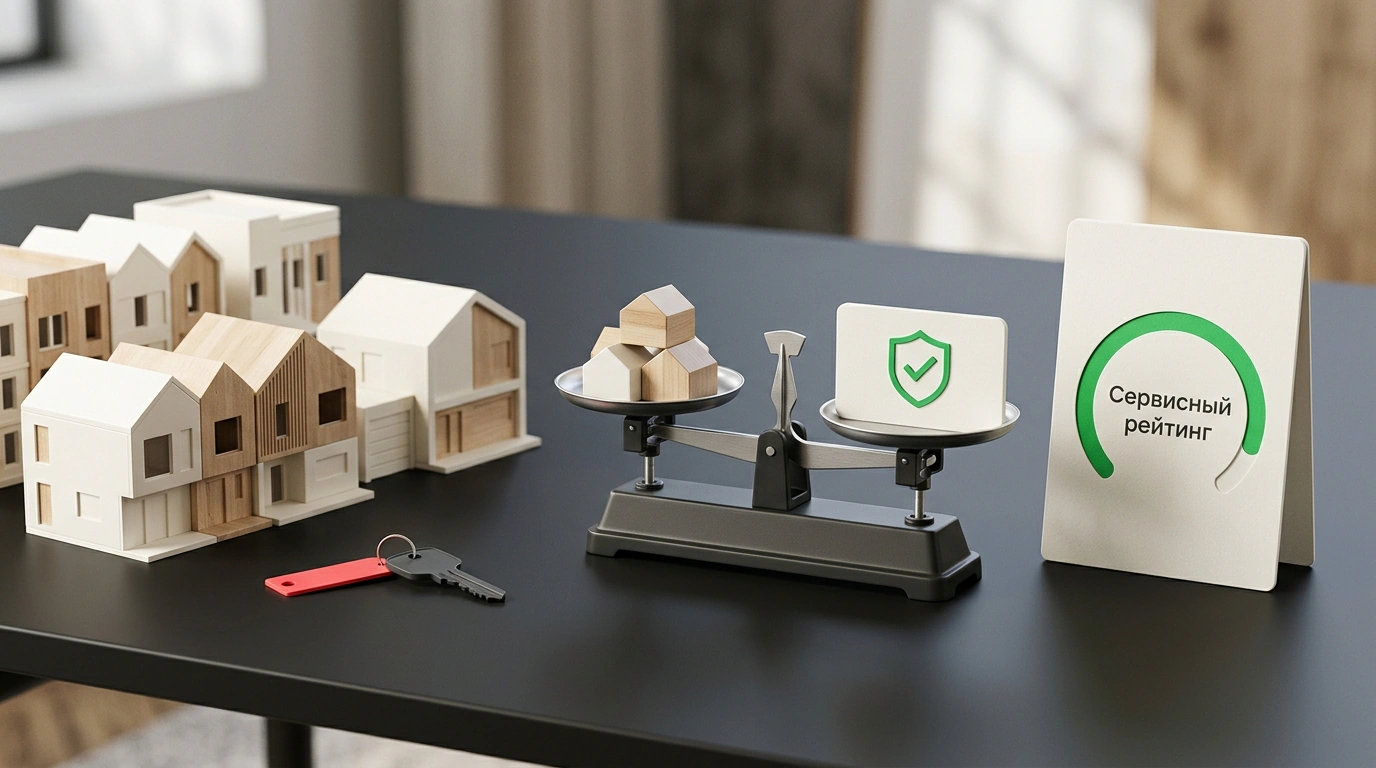
If your real estate agency or brokerage team actively feeds listings to Avito, I've got two major updates for you. On October 9–10, Avito's Moscow office hosted a closed-door strategy session with the leadership of Poleznye Lyudi ("Useful People"), a nationwide network operating across more than 60 cities.
During the session, Avito Real Estate top executives Ekaterina Chizhova and Daria Chunzhina—alongside network founder Yury Parshikov and trainer Oleg Izvekov—laid out the new rules of engagement for professional partners. On one hand, the platform rolled out its long-awaited "Progressive Discount" for large listing inventories. On the other, they made one thing crystal clear: no discount or ad budget will save agencies that slack on service standards.
Economies of scale: how to unlock up to 15% off promotion
The "Progressive Discount" works on a simple principle: the more active, verified listings an agency keeps in its pool on the platform, the bigger its discount on placement and promotion services. At the top tier, the discount reaches 15%.
The program covers the core residential segments:
- urban resale apartments;
- country houses, cottages, and townhouses;
- land plots;
- long-term residential rentals.
One key detail: commercial real estate is excluded from the progressive discount. In residential, however, the mechanic trims your cost per incoming call by 10–15%. That gives agents room to digitize and list exclusive properties they previously hesitated to put ad spend behind.
There is a strict catch in the fine print, though: your discount only lasts as long as you maintain or grow your active inventory. The moment an agency shrinks its pool of live listings, the accumulated discount resets to zero. It echoes the approach introduced with Avito's Professional plan, when the platform began systematically weaning businesses off erratic, one-off listing spikes.
The paid-traffic illusion: why service beats budget
The second—and bigger—point came from Daria Chunzhina: trying to paper over poor service with cash no longer works on Avito.
Plenty of agencies still operate on the old playbook: "We'll just buy an x10 boost package and worry about listing quality or reply speed later." Avito's algorithms now penalize that mindset automatically. When your service score drops, an agency account slides from the "green" zone into the "red" zone, where its visibility index crashes from 100% down to a brutal 10–20%.
Four mistakes that tank an agency's service rating overnight:
- Fake map pins. Dropping the pin in an upscale neighborhood next door to hijack someone else's search traffic. This is one of the fastest ways to get downranked or blocked.
- Bait pricing. Entering a "per square meter" or "fractional share" figure in the total price field, or hiding mandatory agency fees.
- Ghost listings. Conveniently "forgetting" to pull a sold apartment down just to keep funneling buyer calls toward other properties.
- Slow chat replies. Ignoring messages in Avito's messenger or routinely letting incoming calls go unanswered.
Once you're in the "red zone," paid boost packages turn into dead weight: the search algorithm strips your listings out of the "Similar Properties" block and cuts your reach. Just as we saw with regional builders in our look at promoting country homes on Avito, only total transparency in your terms turns views into closed deals.
Your account's service score is calculated continuously over the past 30 days. If your brokers rack up user complaints or miss reply-time targets, it takes a full month of spotless, violation-free work to earn the algorithm's trust back.
What to put in place at your agency today
To lock in the maximum progressive discount without losing search visibility, agency heads should roll out three simple rules:
- Assign a duty coordinator to pull sold or rented listings from the feed within one business day.
- Audit the map coordinates on every listing: the address must match the Unified State Register of Real Estate (EGRN) extract to the letter.
- Set up lead routing among brokers so first-response times in chat never exceed 5–10 minutes.