Let's be honest about how most sellers and business owners still run Avito today. The script is painfully familiar. Someone writes one generic listing full of clichés like "best factory-direct prices," attaches a couple of warehouse photos, tops up the ad wallet, cranks the view bid to the max, and stares at the screen waiting for magic.
On Monday, three calls come in—"Awesome, Avito is printing money!" By Tuesday and Wednesday, dead silence, even though the view counter keeps spinning and the wallet balance melts away. The natural impulse is to bump the bid even higher, which burns more cash without bringing a single extra order. Eventually the owner slams the laptop shut and declares: "Avito is dead, it's all freebie hunters and bots."
Classifieds practitioner Sergey Vorontsov points to a sobering reality: roughly 90% of sellers treat platform promotion like a slot machine. They genuinely believe success comes down to how many paid views they buy. In 2026, though, the rules have shifted. The winner isn't the seller who floods the platform with cash—it's the one who builds an end-to-end conversion funnel where no qualified lead slips through the cracks.
Traffic doesn't leak because the platform is broken; it leaks at the seams between funnel stages—from fuzzy positioning, vague offers, and painfully slow chat replies. To stop gambling with your ad spend, let's walk through five foundational rules of a systematic setup.
1. Meet Buyers Through Multiple Doors
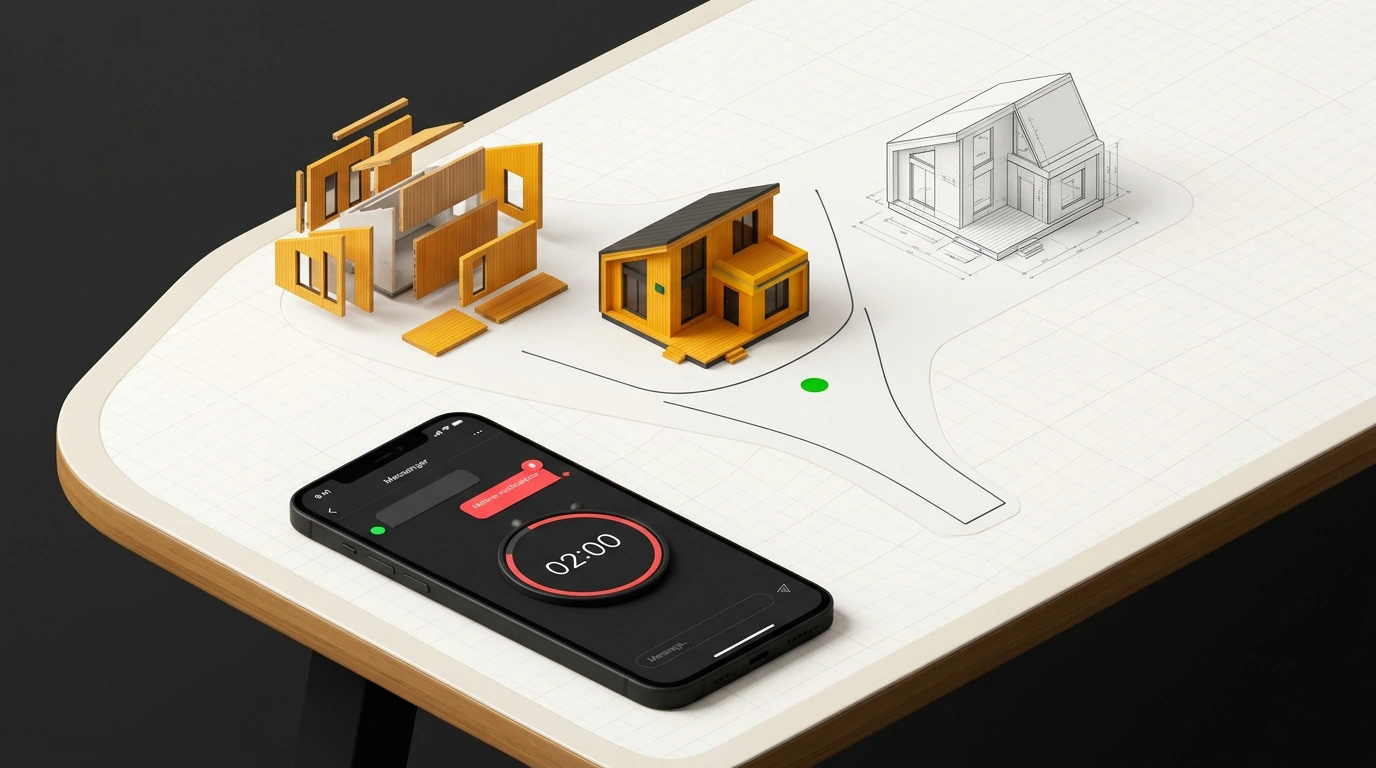
People on Avito search for the exact same solution in completely different ways. If you build modular frame houses or bathhouses and only post in "House Construction," you're willingly cutting yourself off from two-thirds of your potential buyers.
A systematic setup puts you in three catalog sections at once:
- In Services, you pitch custom design and turnkey on-site assembly.
- In Goods, you offer ready-to-assemble house kits, wall panels, and building blocks.
- In Real Estate, you list a finished cottage as a move-in-ready country property.
The one non-negotiable here is following platform moderation rules: every listing's offer has to match the exact catalog section you chose, or moderators will pull the card immediately for category mismatch.
2. Ditch the One-Size-Fits-All Listing
Trying to please every buyer in a single description guarantees you won't hook anyone. A family with two kids and a private investor look at the exact same country house through completely different lenses.
The family cares about eco-friendly insulation, quiet surroundings, yard safety, and kids' bedroom layouts. The investor couldn't care less about that—they want payback period, projected rental yield, and resale liquidity. Each buyer segment needs its own visuals, its own headline, and its own copy built around the triggers that actually matter to them.
3. Track Conversion at Every Step, Not Empty Clicks
Chasing cheap clicks is a fast track to a cash crunch. A disciplined seller steers campaigns strictly by hard funnel metrics:
- What is your view-to-first-contact conversion rate (CR1)?
- What share of people messaging you are genuine target buyers rather than casual window-shoppers?
- How much does one qualified contact (CPL) cost relative to your net profit?
- What share of inquiries convert into a signed contract (CR2), and what is your true customer acquisition cost (CAC)?
If a campaign setup yields a high cost per closed deal, pouring more budget into it won't fix anything—you need to rework the offer packaging or your sales chat script.
4. Hold a Strict Two-Minute First-Response Standard
Put yourself in the buyer's shoes. Someone opens Avito search, types a query, opens 8 to 10 tabs in a row, and blasts the exact same question to all of them: "Hi, how much is this turnkey?"
The seller who replies first and starts a substantive conversation captures up to 80% of the buyer's attention. If your rep wakes up an hour and a half later, the customer is already hashing out details with a faster competitor. Today, response speed decides who gets the deal.
5. Follow Up on Stalled Chats With Automation
When a buyer says, "Thanks, I'll think about it," that's rarely a hard no. Nine times out of ten, it means they didn't get enough clarity—they're unsure about timelines, confused by the estimate, or worried about hidden fees. Leave that thread hanging, and you just handed Avito money for a click and walked away empty-handed.
To stop losing paid leads without burning out managers on 24/7 shifts, teams plug in chat automation—platforms like Omnexa, for instance. It connects via Avito's official Messenger API (eliminating any ban risk from browser emulation) and runs a trained AI sales assistant. The assistant replies in 5 to 10 seconds day or night, qualifies the request, pushes the deal straight into amoCRM or Bitrix24, and gently re-engages buyers who went quiet. That takes up to 95% of routine chatter off your sales team and guides prospects to a booking or a call with a senior engineer.
We've covered several adjacent pieces of building a real system: it's worth comparing Avito automation trends and tools in 2026 so you don't reinvent the wheel. Also check out our head-to-head breakdown of pay-per-view vs. pay-per-listing to see the click math clearly, and our practical guide on calculating niche capacity and ad budget before launch.
Stop crossing your fingers and hoping for luck. Build an end-to-end funnel, answer buyers in seconds, and your ad account stops acting like a cash vacuum and starts running like a predictable profit engine.