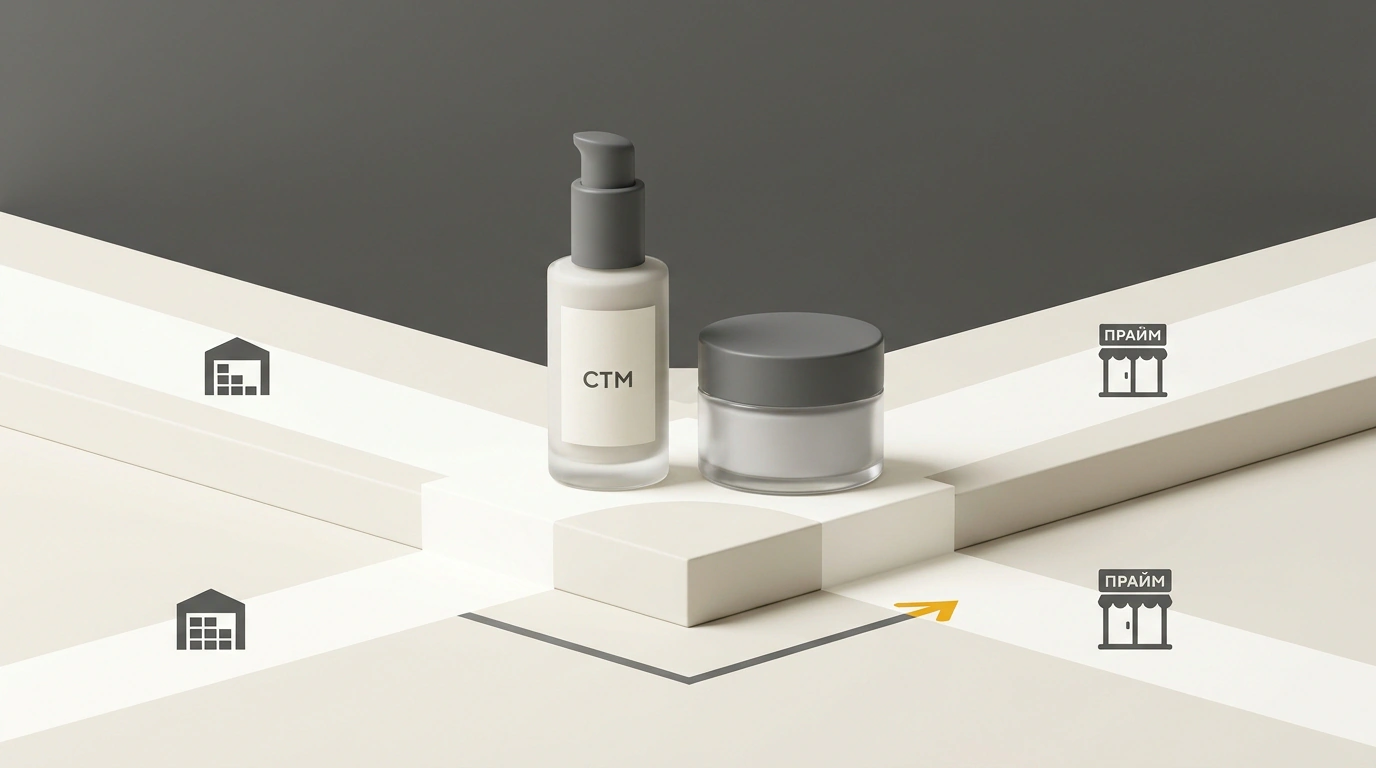
For twenty-nine years, cosmetics giant Faberlic operated inside a completely closed ecosystem. Its business model relied on classic direct sales: an army of consultants, glossy paper catalogs, and a strict ban on putting products on open retail shelves. That machine ran like clockwork, generating roughly 54 billion rubles in annual turnover in 2025.
Market realities, though, show no mercy. News just broke that a Faberlic subsidiary—LLC Prime—pulled in a solid 1.1 billion rubles in revenue across Wildberries, Ozon, and traditional retail chains in just the first nine months of 2026.
Why would a direct-sales powerhouse with multi-billion turnover jump into the cutthroat meat grinder of marketplaces? More importantly, what critical strategic lesson should every independent seller take away from this?
Let's unpack this case and look at the numbers without rose-tinted glasses.
Grabbing Shelf Space: Why Giants Are Moving Into Open Retail
Faberlic's motive for entering marketplaces is pure pragmatism: after Western brands exited, a massive vacuum opened up across Russian retail and online storefronts in skincare and color cosmetics. The holding company owns huge manufacturing facilities inside Russia. Keeping those factories running at full tilt solely through traditional sales reps is no longer realistic—younger shoppers don't wait for a consultant to call; they order face cream in one tap for delivery to the nearest pickup point.
Corporate leadership sees the writing on the wall: if they don't claim that shelf space now, competitors will—or international brands will eventually return and take it back.
Still, Faberlic faced a thorny dilemma known as channel conflict. If you dump core catalog items onto Wildberries at a discount, your army of consultants revolts: why would anyone buy from a rep when they can get it cheaper on a marketplace?
How the Corporation Sidesteps Sales Channel Conflict
To avoid cannibalizing its own distributor network, the holding company spun up a separate legal entity, Prime, and launched standalone brands. Those lines are sold exclusively in open retail and on marketplaces, with zero overlap with the consultants' exclusive catalog.
The Lesson for Sellers: The Fatal Trap of Single-Platform Dependence
Now let's flip the coin and look at this story from the other side of the counter—through the eyes of an everyday marketplace seller.
For years, plenty of sellers lived in a comfortable illusion: "Why bother with a website, social media, or wholesale? I'll just ship stock to Wildberries FBO, turn on internal ads, and count my profits." Look at what's happening right now, though.
Heavyweights are marching onto marketplaces: giants like Faberlic with their own factories, rock-bottom raw material costs, and bottomless ad budgets. At the same time, the platforms themselves keep tightening the screws. In the cosmetics category in 2026, total seller fees—platform commission, base logistics, storage, acquiring, and mandatory internal ads—routinely eat 40% to 55% of the retail price.
In M.Video-Eldorado's Hybrid Marketplace: Vladislav Bakalchuk's Ambitions Against 200 Billion in Debt, we already saw how legacy big business scrambles to rebuild distribution channels under debt pressure and shifting market rules. The takeaway is the same: a marketplace is no longer a magic money-printing button.
If your entire business depends on a single platform, you're a hostage. One day the marketplace triples receiving coefficients, a bot wrongly blocks your listing, or commissions jump 5%—and your net profit turns into a pumpkin overnight.
The Faberlic case maps out the playbook every smart seller should follow:
- Build omnichannel sales: open parallel revenue streams—from your own online store and direct Telegram sales to wholesale supply for regional brick-and-mortar shops.
- Develop your own brand (private label): stop selling generic unbranded imports and build real brand loyalty so customers search for your product regardless of where it's listed.
- Own your customer base: collect buyer contacts through warranty cards, chatbots, and loyalty programs so you can talk to your audience directly.
When even conservative giants with a 29-year track record overhaul their business models to diversify, clinging to a single seller account is a luxury you can't afford. It's time to build an independent brand.
