Ad platforms are turning AI conversations into paid storefronts: Google places sponsored blocks in AI Mode even inside follow-up replies, Bing pins ads above its generative summary, and Yandex automatically mixes contextual ads beneath Alisa's answers. Yet alongside this rush, your ad dashboard is flying blind: you cannot turn off placements under AI advice separately from search, and there is no isolated report for them.
You see only a blended "average temperature" for the campaign and are probably wondering: is it even worth paying extra for a line beneath a chatbot's answer, or is client money leaking elsewhere? Let's compare field measurements in the Runet with the first major study of the Western market to see what businesses are actually paying for here.
Churn Under Alisa's Answers: 460 Thousand Participants and 8 in 10 Players Replaced in a Week
Ads from more than 460,000 advertisers have already appeared in Alisa's chat—the system pulls them by default from Yandex Direct search campaigns. The platform claims customer acquisition costs there are comparable to classic search, but does not disclose the numbers.
To test this storefront, marketer Alexander Krasnobaev asked Yandex 27 buyer-intent questions ("recommend an accounting firm for an LLC in Moscow," "recommend an arbitration lawyer," plus choosing a cleaning service, windows, a private school, and a web studio). The neural network answered 17 queries, and 12 of them carried a "Promo" label underneath.
A follow-up check seven days later—on November 3 and November 10—revealed the key pattern: out of ten niches where ads appeared both times, the advertiser under the answer changed in 8 out of 10 cases. Only accountants and home builders kept the same players, while under the real estate agency advice, ads were bought by off-topic projects—a trade show, a classifieds board, and a forum. Businesses enter an overheated auction, burn through their budget in a week with no leads, and hand the slot over to the next bidder.
The Economics Across 10 Billion Visits: A Free $3.27 Recommendation vs. a Paid Block
The numbers behind this churn were explained by Maximilian Kaiser and Christian Schulze of the Frankfurt School of Finance & Management and WU Vienna University of Economics and Business. In their paper Can Advertising Fund Free AI?, they analyzed 1,898 online stores with roughly $16 billion in revenue and nearly 10 billion visits over 60 weeks ending in late August 2026.
What caught my eye in the report was the revenue-per-visit breakdown:
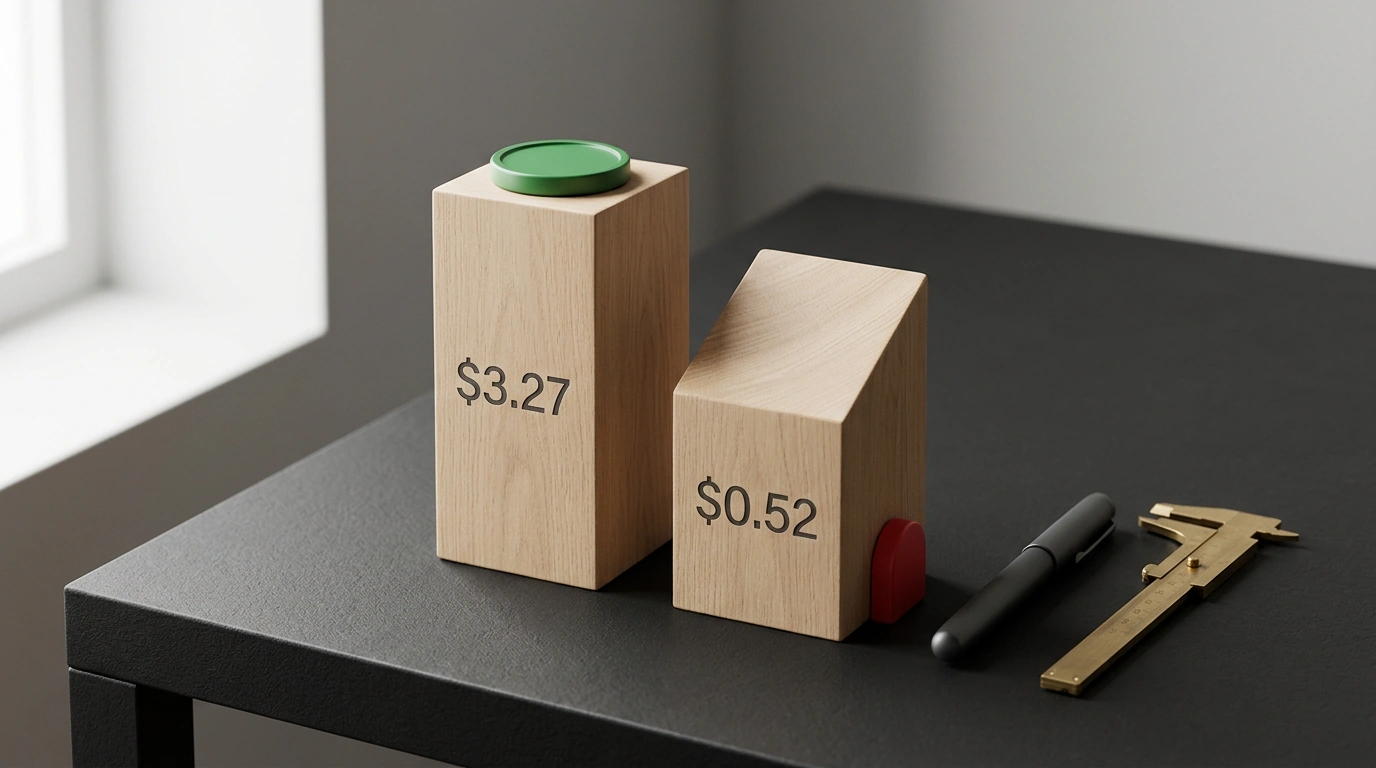
- a click from a free recommendation inside a ChatGPT answer brings the store $3.27;
- a visit from a paid Google Search ad generates $2.45;
- a click on a paid ad block below a ChatGPT answer generates just $0.89—3.7 times less than the model's own recommendation.
On return on ad spend, the gap is even sharper: every dollar spent on Google Search returns $3.40 in revenue, while ads under ChatGPT answers return just $0.52—six times less and at a loss. For a click under an AI answer to match search profitability, it would need to cost around $0.26, whereas OpenAI recommends starting at a $3–5 bid.
Why 82% of Advertisers Get Zero Purchases and How to Protect Your Media Plan
Out of 102 companies with end-to-end tracking, 82% of advertisers in ChatGPT saw zero purchases, while a single major retailer captured two-thirds of all orders. Paid chatbot traffic converted at 0.37% compared to 1.17% on Google Search. In an AI dialogue, people trust the answer text like advice from an expert, while treating the "Promo" block below the line as ad noise.
As a result, two completely different tools sit side by side in the same answer. You only rent the spot below the line for as long as you top up your balance, and its losses stay hidden inside blended dashboard averages. You can uncover the real return only manually: spend three days checking your own prompts like "recommend service in city," ask customers whether the bot named your company or they clicked the bottom banner, and run a 2–4 week geo-test with search paused. When a US consultant turned off Google automated campaigns for 28 days in 26 of 48 states, sales dipped only 18%, and actual return turned out to be $1.17 per dollar instead of the $2.3–2.8 reported by the ad platform.
By contrast, a spot inside the answer itself cannot be bought per click—it is earned through media articles, rankings, directories, and reviews. We previously covered how to build this work in articles on how businesses get cited in ChatGPT and Alisa and auditing your brand to appear in language model answers.
Before overpaying for a fleeting rental of a line beneath a chatbot's reply, invest in independent reviews, rankings, and directories, because in a conversation with AI, only the neural network's own direct recommendation drives sales.