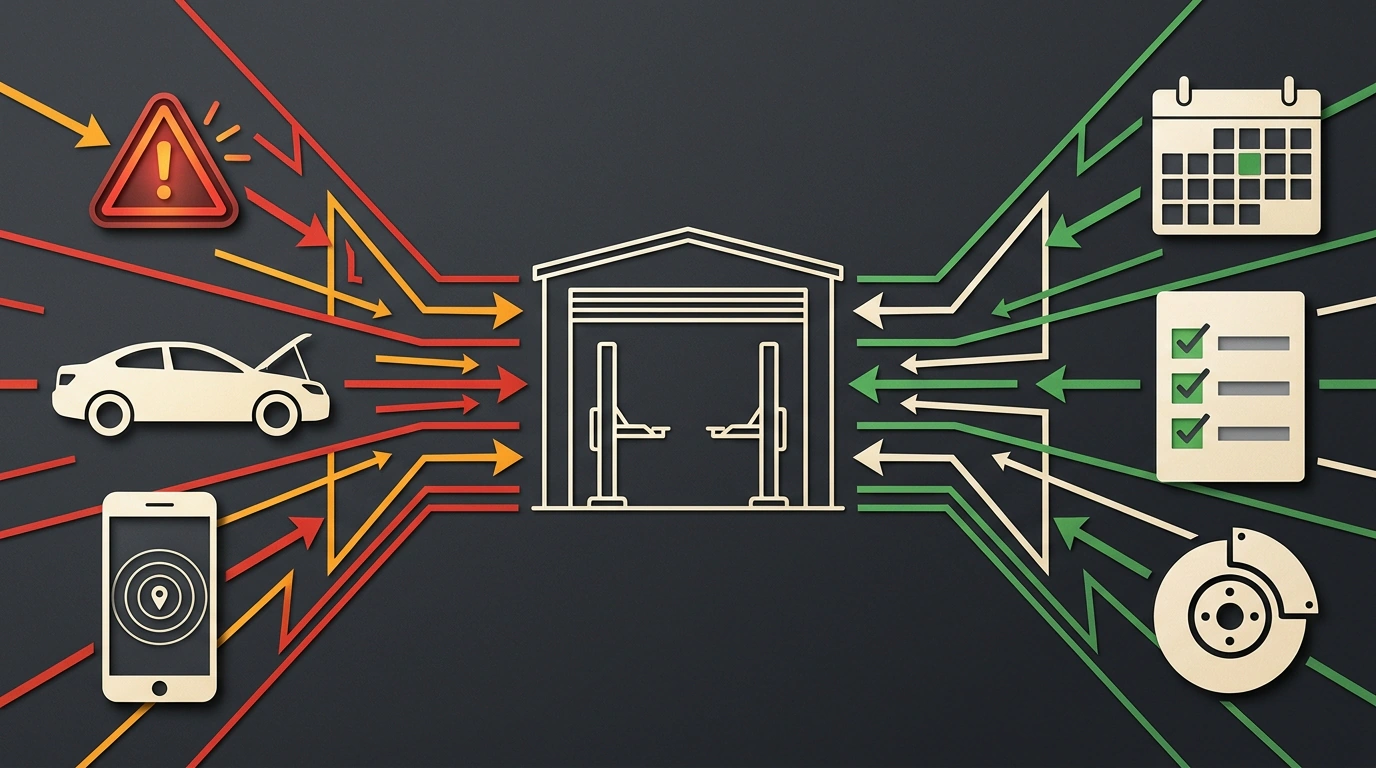
When launching search and display ads for an auto repair shop, owners and marketers usually pick one of two routes. The first looks fast and painless: dump every service into a single campaign, write a catch-all headline about servicing "all makes and models," and send all clicks to the homepage. The second takes twice the setup work—strictly separating drivers whose car just died on the side of the road from drivers shopping around weeks in advance for scheduled maintenance.
Both funnels lead through the exact same garage doors, so it's tempting to skip the extra structure. Yet in the Yandex Direct auction, a blended campaign burns budget on empty clicks and clogs your bays with low-margin errands, starving your techs of profitable jobs. Let's look at the real numbers behind why mixing these two intents breaks your ad economics—and how to split your traffic so you pay for high-ticket repairs instead of random clicks.
Two Mindsets of the Same Driver: Why Speed and Value Clash in One Ad
Depending on what's happening on the road, the exact same car owner turns into two completely different buyers. As practicing PPC specialist Denis Kremnev points out in his breakdown on vc.ru, auto repair ads shouldn't just mirror your list of shop services—they have to match the driver's state of mind at the moment of search.
Compare two scenarios. In the first, the oil warning light flashes on the morning commute, steam pours from under the hood, or the starter goes dead in a parking lot. The driver is sitting in a cooling car with a smartphone in hand, and their decision window shrinks to 5 minutes to 2 hours. They're buying speed: they need to know a shop is within 3–5 km, a specialist diagnostician or engine tech is on duty right now, a lift is open, and a tow truck can roll out if needed.
Planned demand works nothing like that. When the odometer hits a 10,000-km service interval, brake rotors need replacing, or the A/C needs a recharge before a road trip, choosing a shop takes anywhere from 3 days to 3 weeks. The driver opens a laptop in the evening, reads reviews, inspects photos of clean bays, checks parts brands, and compares estimates.
Inside a single ad, those motives collide. Someone with a blown radiator doesn't care about "10% off when booking a week ahead"—they'll bounce immediately. Meanwhile, a driver shopping for scheduled transmission service gets suspicious at "We'll take you right now with no wait!": why are the mechanics sitting idle in the middle of the day?
The "All-Purpose Repair" Campaign Trap: How Blended Ads Distort Bids and Stats
Many shops lump engine repair, oil changes, suspension diagnostics, and A/C service into one campaign. It feels easier to manage. The hidden price is inflated cost-per-click and blind analytics.
Broad keywords like "auto repair of any complexity" throw you into an overheated auction against every competitor in town. Even the word "repair" is deceptive in search: one user omits "urgent" even though their car won't start, another is pricing an engine rebuild three weeks out, and a third is hunting for fuse diagrams, used parts, or DIY tutorials.
A multi-brand auto service in Samara from Denis Kremnev's case study illustrates this clearly. Before restructuring, the shop promoted diagnostics, suspension work, engine service, and scheduled maintenance through generic ads. In March, Yandex Direct spend hit roughly 126,000 ₽: the shop got 94 inquiries, yet only 48 turned into actual bay visits.
Auditing the call recordings uncovered three leaks:
- Urgent callers dropped off over wait times: drivers with acute breakdowns couldn't get a same-day slot and booked elsewhere.
- Planned buyers couldn't find transparent pricing: visitors landed on a generic page with no clear breakdown of maintenance costs or included work and closed the tab.
- Reporting mixed completely different tickets: a cheap oil change and a complex assembly repair sat in the same bucket, hiding true lead margins.
Urgent Campaign Architecture: Tight Geo-Radius, Mobile Traffic, and Direct Bay Calls
To plug the leaks, you split Yandex Direct campaigns by customer intent. The first isolated track targets emergency repairs and immediate fault diagnostics.
Emergency demand is captured strictly on Yandex Search. Disable the Yandex Advertising Network (YAN / RSYa) here: chasing someone with display banners three days after they searched for a tow truck is pointless. I explained how separating Search and ad networks protects your spend in our step-by-step setup of a Unified Performance Campaign.
Build your keyword list around specific symptoms: "starter not cranking," "check engine light on," "brake repair today," "tow truck to shop." At the same time, aggressively add negative keywords for informational noise: "DIY," "video," "forum," "diagram," "part number," "catalog," "salvage," "jobs."
Three rules govern the urgent track:
- Lean into smartphones and a tight radius: apply a +50% to +80% bid adjustment on mobile devices and restrict geotargeting to a 3–5 km radius around your shop.
- Name the specialty and show real availability: call out the exact system in the headline (electrical, cooling, brakes), and promise same-day intake only when a bay is genuinely free.
- Use a stripped-down mobile landing page: skip long forms—put your address, hours, a tap-to-call button straight to the service advisor, and tow-truck dispatch above the fold.
Planned Maintenance Architecture: Cost Calculators, Parts Proof, and Calendar Booking
The second campaign targets scheduled maintenance. Instead of speed, you sell estimate transparency, parts quality, and peace of mind.
Use precise ad copy: "Oil and filter change matched by VIN," "Pre-purchase suspension inspection," "A/C recharge with leak check." Here, you do turn on YAN display ads alongside Search: since the driver spends up to three weeks deciding, banners showing your clean shop floor and diagnostic gear bring them back when they're ready to book.
On the landing page, skip the bait-and-switch "starting from" teaser price for a rare subcompact. Put a maintenance calculator by car make, spell out what's included, show customer reviews, and offer easy date selection.
Send urgent clicks to a fast mobile page for system-specific diagnostics with a direct tap-to-call button, and send planned clicks to a scheduled maintenance page featuring a VIN-based estimate calculator and a booking calendar.
Another upside of the planned track is retention: a happy maintenance customer comes back for seasonal inspections and wear-and-tear replacements without costing you another ad click.
Lift Economics: Judging Performance by Closed Work Orders, Not Raw Clicks
In June, the Samara shop from Denis Kremnev's case split its campaigns into urgent repairs and scheduled maintenance, built dedicated landing pages, and set up lead-status tracking to separate raw calls from actual visits and paid work orders. Ad spend came to roughly 121,000 ₽; total inquiries dipped from 94 to 86, yet actual bay visits jumped to 57—junk calls were filtered out, and advisors could book the right slots faster.
That's where your physical bottleneck kicks in: the number of lifts, bays, and mechanics on the floor. If you pack every lift with low-margin oil changes, there's nowhere to put a profitable engine overhaul. Conversely, if all lifts are booked solid on weekdays, running urgent ads just pays for turns-aways.
In the Samara case, ad pacing was synced with the shop schedule:
- Load balancing by bay capacity: when bays filled up, urgent campaigns were throttled back and budget shifted to scheduled maintenance in open future slots (for how to adjust limits without resetting algorithm learning, see our guide on restructuring budgets in Yandex Direct). By September, on roughly 132,000 ₽ in spend, the shop generated 98 inquiries and 69 visits, with repeat bookings climbing.
- Separate KPIs: judge the urgent stream by answer speed, connected calls, and profit per ticket; judge the planned stream by booking conversion, average check, margin, and repeat visits.
- Train algorithms on closed work orders: to steer automated bidding toward higher tickets, connect your CRM via uploading offline conversions to Yandex Metrica. The tag captures
ClientID(the_ym_uidcookie), and once a work order is paid, it sends back theTargetgoal,DateTime, andPricewithin Yandex's 21-day attribution window (see our breakdown of hidden traps of auto-strategies in Direct to keep junk goals out).
Before you launch a campaign or raise your daily cap, ask yourself one gut-check question: if a driver with an overheating engine two blocks away and someone planning Saturday maintenance both click your ads right now, will they land on different pages—and will your service advisor book each one onto an open lift without sacrificing margin? Split your keywords into urgent and planned tracks, tie bidding to paid work orders, and your ads will start funding net shop profit instead of vanity call logs.