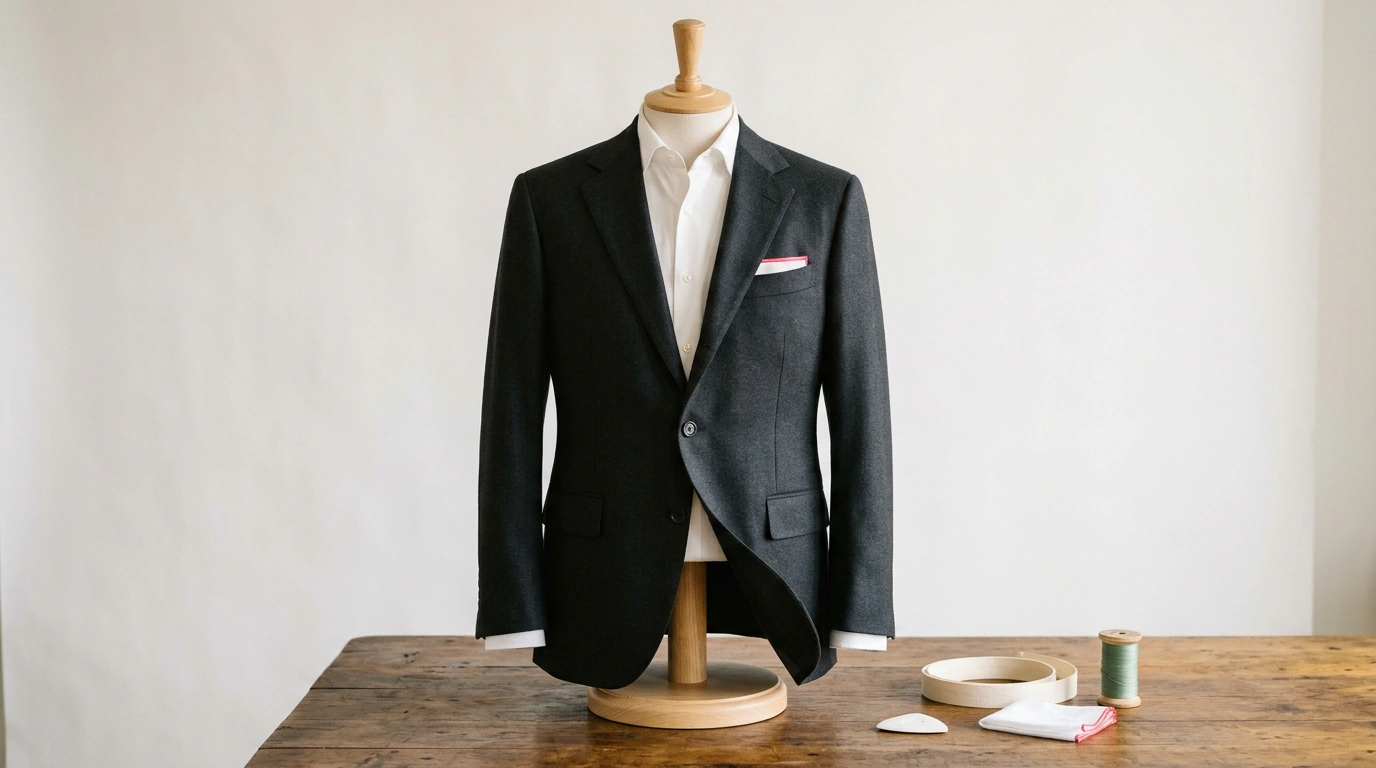
The world of men's style is buried under rules, bans, and rigid dogma. One self-proclaimed expert insists brown shoes in the city are strictly for country bumpkins. Another swears you can't wear light-colored trousers past September. Meanwhile, a third guy buys a pre-packaged shiny polyester tie-and-pocket-square set and thinks he's nailed peak elegance.
No wonder a normal guy's head spins. Putting on a suit starts feeling like walking through a minefield where one wrong move earns side-eye from the fashion police. Classic menswear expert and tailoring specialist Brian Sacawa (He Spoke Style) decided to cut through the noise. He took twenty classic rules of the male wardrobe and sorted them into an honest tier list—from S-tier (ironclad fundamentals dictated by human anatomy) all the way down to D-tier (century-old snobbery that belongs in the trash).
Let's put this tier list under an X-ray. We'll look at which rules genuinely save a man's silhouette—and which ones you can break without a second thought.
S-Tier: Ironclad Laws of Cut and Fit
Sitting at the very top are rules you simply cannot break without paying the price. They aren't driven by designer whims; they're governed by garment geometry and the anatomy of the human body:
- Never Button the Bottom Button of a Jacket: History pins this rule on Britain's King Edward VII, whose hefty waistline forced him to leave the bottom button of his waistcoat undone. Over the past century, though, jacket construction changed completely. Modern tailoring patterns are cut from the ground up with a gentle flare below the waist, assuming that bottom button stays open. Button it on a single-breasted jacket, and the fabric pulls into ugly X-shaped creases across your midsection, the back vent flares open, and your silhouette turns boxy. Remember the simple cheat code: for three buttons—"Sometimes, Always, Never." For two buttons—"Always, Never."
- Flawless Shoulder Fit: The shoulder seam of your jacket must land cleanly right on the edge of your acromioclavicular joint—where your shoulder meets your arm. The sleeve should drape smoothly with zero bunching, dimples (shoulder divots), or puffiness. With an off-the-rack suit, any decent tailor can shorten a sleeve or take in the waist for cheap. Rebuilding a jacket's shoulders, though, is virtually impossible—it costs nearly as much as making a whole new jacket.
- Unbutton Your Jacket When You Sit Down: The moment you slide into a restaurant booth or a car seat, pop your jacket buttons open in one smooth motion. Sitting increases tension across your chest: a buttoned jacket bunches up toward your chin, creases the lapels, and puts brutal strain on the button thread. Stand back up—button the top one again.
In our piece on 10 non-obvious style rules, we unpacked how shoulder-to-waist ratio transforms a man's posture. And in our review of 8 classic style rules worth breaking, we looked at why modern casualwear prizes relaxed freedom over stiff formality.
A-Tier: Key Visual Proportions
These rules keep your outfit looking sharp, balanced, and tailored to you—rather than borrowed from your older brother's closet:
- Tie Length: The pointed tip of your tie should kiss the exact center of your belt buckle or trouser waistband. Too short, and it makes your stomach look heavier while chopping your torso in half; dangling down past your fly, and it wrecks your vertical proportions.
- Never Wear Suspenders with a Belt: Both suspenders and belts exist to do the exact same job—keep your pants up. Wearing both at once is like wearing a baseball cap over a beanie. Plus, the hardware clashes visually with your belt loops and buckle.
- Show 1–1.5 cm of Shirt Cuff: Your jacket sleeve should end right at your wrist bone, letting a clean sliver of shirt cuff peek out. That gap creates a crisp, contrasting frame around your hand and protects expensive wool jacket cuffs from skin oils and fraying.
- Match Your Shoes to Your Formality: Sleek black closed-lacing Oxfords belong strictly with smooth worsted suits. Pairing them with blue jeans screams style blindness. With chinos, denim, and textured sport coats, reach for open-lacing Derbies, brogues, suede loafers, or clean minimalist leather sneakers.
Never buy those pre-packaged gift boxes where the tie and pocket square are cut from the exact same bolt of shiny fabric. That's a dead giveaway of an amateur. Your pocket square should echo a secondary color from your shirt or tie, but it needs a different texture—think matte linen or wool paired with a silk tie.
B-Tier: Context and Good Manners
Here live the traditions that work reliably in most settings, though they leave room for intentional personal twists:
A double-breasted jacket stays buttoned on its anchor button. Unbuttoned, that wide overlap of fabric flaps loosely at your sides, adding unwanted bulk around your hips. A classic jacket should also be long enough to fully cover your seat, dividing your body visually in half from collar to shoes. Those ultra-short, cropped jackets that trended a few years back throw a man's proportions completely out of whack.
In classic tailoring, your socks match your trousers—not your shoes—to elongate your leg line without chopping your silhouette with jarring stripes. And your tie should almost always be a shade darker than your shirt, anchoring natural visual focus right toward your chest and face.
C- and D-Tiers: Outdated Snobbery and Dead Taboos
Now for the fun part—rules you can happily toss straight into the bin:
- "No White After Labor Day": A late-19th-century American rule created by wealthy socialites to mark the shift from summer resort life back to gritty, soot-filled New York. Today, white jeans, heavy cream wool trousers, and chunky ivory sweaters look remarkably sharp and expensive in fall and winter.
- "No Brown in Town": A Victorian London dictate insisting gentlemen in the City wear strictly gray and black, saving brown tweed for country hunting estates. In the 21st century, rich chocolate, tobacco, and espresso tones are a benchmark of sharp taste in every major city on earth.
- "No Watch with a Tuxedo": An aristocratic Black Tie taboo claiming a gentleman at a ball shouldn't be checking the clock. Today, an ultra-slim dress watch on a black leather strap finishes off eveningwear effortlessly.
- "Leave Jacket Pockets Sewn Shut": Those factory basting stitches on your outer pockets are only there for shipping and to keep garments from sagging on store hangers. Snip them open carefully with small scissors. Just don't cram your pockets full of heavy keychains and thick wallets that stretch out the wool.
Trouser Break Checklist
- No Break: the trouser hem lightly grazes the top of your shoe with zero creases (ideal for slim trousers and loafers)
- Half Break: one soft, clean fold resting over your laces (the timeless classic standard)
- Zero Accordion Bunching: trousers never pool into 3–4 messy folds at the ankle, which visually steals 5–10 cm of height
Great style isn't about blindly memorizing dusty prohibitions—it's about understanding your own proportions and showing respect for the room you walk into. Nail the shoulder fit, leave that bottom button open, and wear your clothes with quiet masculine ease.