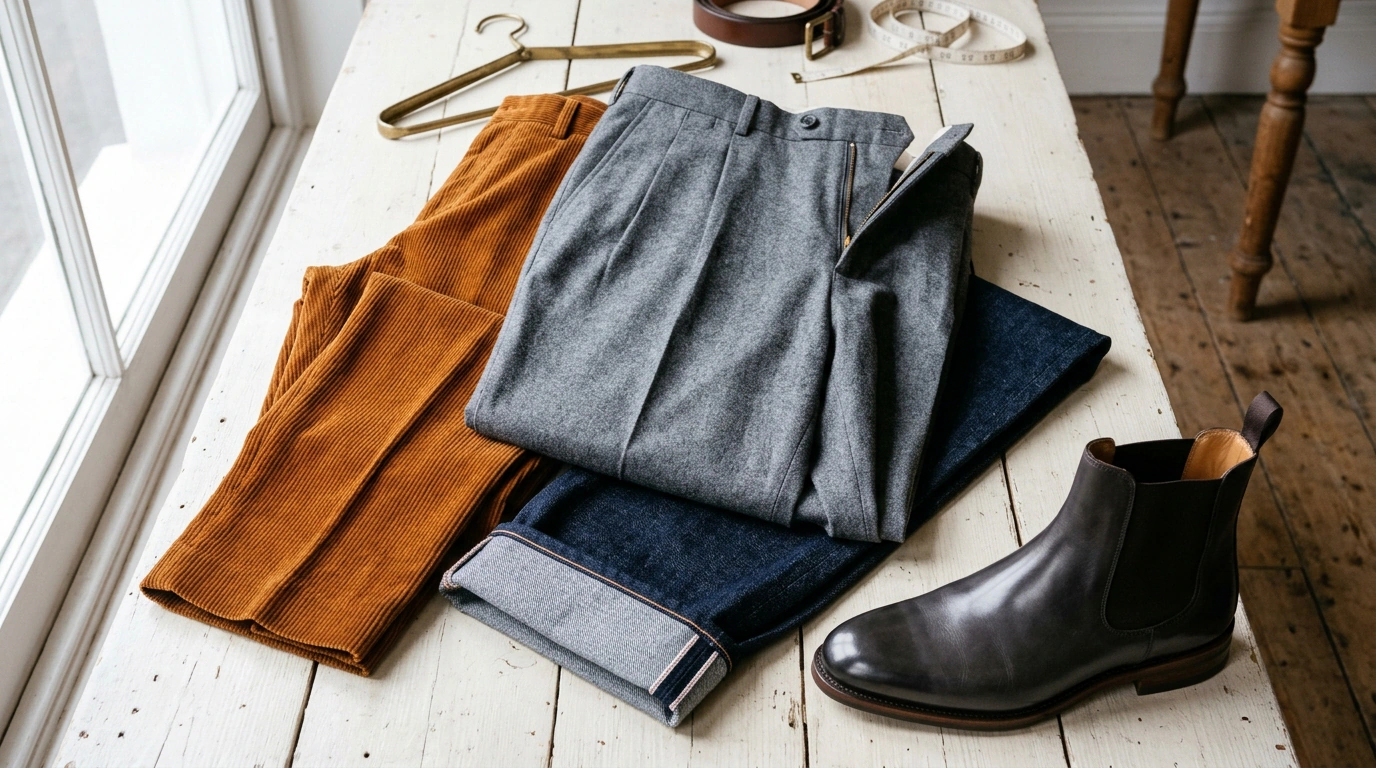
Fall and winter are prime time for men's style. Cold weather opens the door to rich layering: structured wool overcoats, leather jackets, chunky scarves, and solid leather boots. Yet this is the exact season when most guys make the same brutal mistake—one that wipes out every dollar they spent on the rest of their outfit.
They drop serious cash on a sharp wool coat or technical jacket, buy great leather boots, and then stubbornly pull on the same five-year-old skinny jeans. Just like that, their proportions are wrecked.
Stylist Andrey Mayfair sums up an ironclad rule of dressing well: your lower half sets the foundation for your entire silhouette. If your pants don't balance what you're wearing up top, the whole outfit falls apart.
The Inverted Triangle Mistake: Why Skinny Jeans Break Your Frame
Picture the geometry: a bulky overcoat or puffer creates a wide, heavy upper body. Pair that hefty top with thin, skin-tight fast-fashion jeans, and your frame turns into a cartoonish carrot—an inverted triangle balanced on toothpicks.
Your legs look short and spindly, your feet in heavy fall boots look like oversized clown shoes, and the whole silhouette loses its masculine weight. To look athletic and grounded, the fabric weight and leg width of your trousers have to match the volume of your outerwear.
In our breakdown of fall layers and textures, we noted that great style lives in contrasting materials. Here's a detailed guide to seven trouser styles that will take your cold-weather look to a completely different level.
Classic Wool, Gray Flannel, and Textured Corduroy
The first three options form a grown-up, tailored foundation built for restaurant dates, gallery openings, or evening city walks:
- Heavyweight Pleated Wool Trousers. Breezy summer suit wool won't cut it in the fall—the wind cuts right through it and it creases every time you sit down. For cold weather, you want dense worsted wool weighing 340 to 400 g/m². The key detail here is a single or double pleat at the waist. Pleats give your thighs room to move when you walk or sit, and create a crisp vertical crease that visually adds inches to your legs. Stick to a mid-rise or high-rise cut—a higher waist balances your torso proportions naturally.
- Gray Flannel. Flannel trousers are the undisputed king of tactile comfort. They feel as soft as your favorite lounge pants, yet read as pure class. Your best bet is mid-gray melange. It acts as a universal color anchor, pulling together tricky fall jackets like brown suede, a navy peacoat, or an olive trench without breaking a sweat.
- Wide-Wale Corduroy. Corduroy carries that effortless, smart-casual campus heritage. Fine summer wales look too thin for fall—go for medium or wide-wale cords instead. Deep autumn shades (dark chocolate, caramel, latte, forest moss) bring a rich, tactile depth that subtly invites a woman's touch.
Whenever you're unsure what to pair with a statement brown leather jacket, navy overcoat, or olive bomber, reach for gray flannel trousers. That neutral tone cools down color clashes and locks separate pieces into one cohesive, expensive-looking outfit.
Tailored Cargo Pants, Heavy Chinos, and Raw Japanese Denim
For casual days and active plans, you need rugged cottons and knits with real structure—something we also covered in our guide to textures and proportions:
- Tailored Wool or Twill Cargo Pants. Forget baggy, shapeless camo pants with bulging pockets—those kill any outfit instantly. City-ready cargos are cut from dense wool or a structured twill blend, with flat, recessed pockets that lie clean against the leg. They add subtle visual interest without bulk and pair effortlessly with turtlenecks and lug-sole boots.
- Heavyweight Winter Chinos. Thin summer chinos look flimsy in November and soak through at the first drizzle. Cold-weather chinos are cut from 300–350 g/m² cotton twill, often brushed on the inside for extra warmth. They block the wind and hold a clean leg line all day.
- Raw Japanese Selvedge Denim. If you're not ready to give up jeans completely, trade pre-ripped fast-fashion pairs for authentic Japanese selvedge weighing 14 to 16+ oz. A straight cut, deep unwashed indigo dye, and that crisp selvedge edge on a neat cuff create a sturdy vertical line. Over time, raw denim molds to your exact build and ages with real character.
Smart Joggers and Getting the Break Right Over Your Boots
The seventh option is a secret weapon for guys who refuse to sacrifice comfort:
- Smart Joggers with a Stitched Crease. These hybrid trousers are cut from heavy wool jersey. You get an elastic waistband with a hidden drawstring—pure comfort for long drives or walking all day—paired with a permanently stitched front crease running down each leg. That crease sharpens the silhouette so they never read like sloppy sweatpants.
The final touch is length and how the hem meets your shoes. The most common mistake guys make is letting extra fabric bunch up into a messy "puddle" over the tongue of their boots. In fall and winter, your hem should either barely graze the top of the boot with no stacking (no break) or form a single clean half-break.
Checklist for the Ideal Fall Trouser Fit
- Fabric weight is at least 300–350 g/m² to lock in warmth and hold a crisp drape
- Leg opening leaves the clean shape of your Chelsea, derby, or chukka boots visible
- Hem rests on the shoe with a neat half-break and zero messy bunching
- Mid-rise or high-rise waist visually lengthens your leg line
Investing in two or three solid pairs of trousers transforms your entire closet. Even a simple everyday jacket looks twice as sharp and masculine when anchored by quality gray flannel or corduroy.