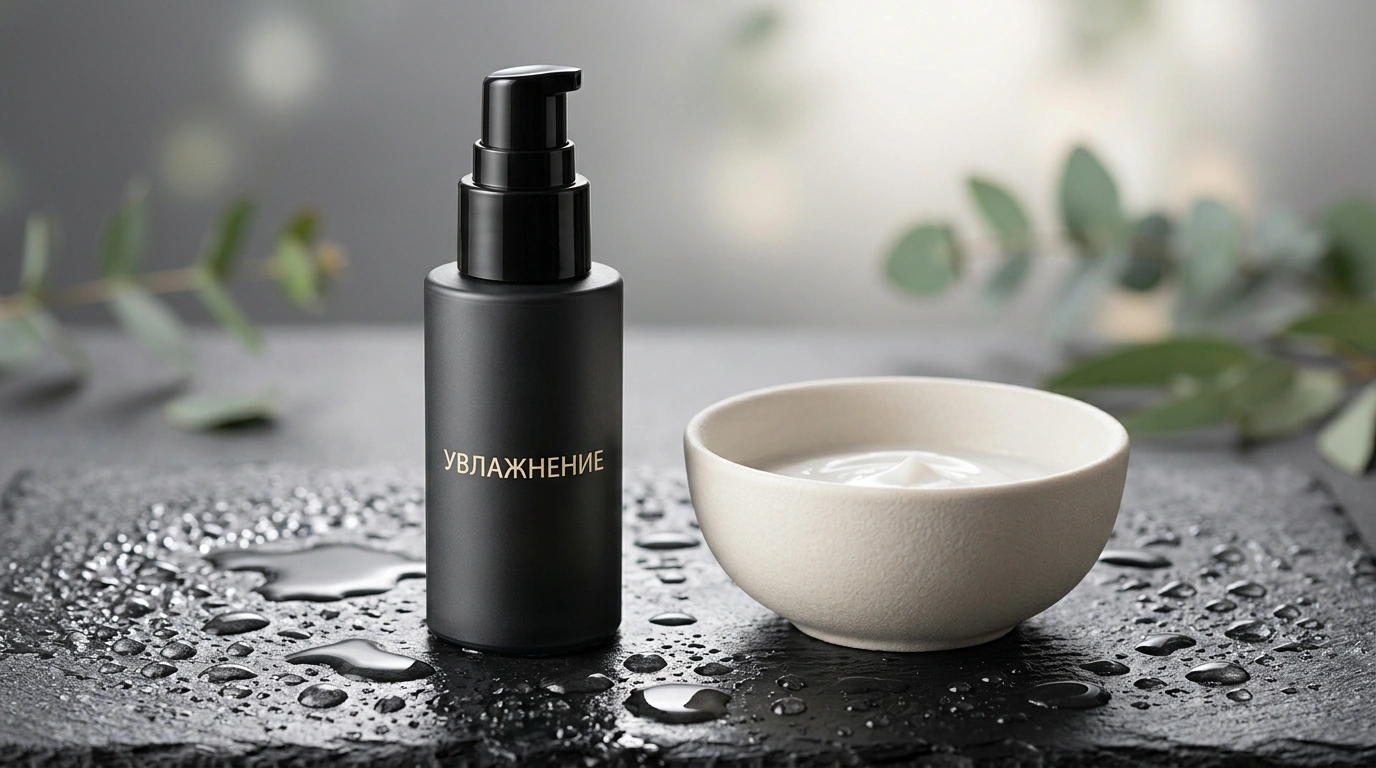
Before a big date or an important night out, plenty of guys notice rough patches, tightness, or flaking on their face and make the exact same rookie mistake. The logic sounds airtight: "My skin feels rough, so it must be covered in dead skin. Time to scrub it off!" Out comes the heavy artillery: gritty apricot-kernel scrubs, stinging alcohol aftershaves, or aggressive acid peels. They scrub their face raw until it's squeaky and bright red, expecting baby-smooth skin.
The payoff for all that elbow grease is always ugly. Within twenty-four hours, the flaking doubles down, followed by itching, tight discomfort, and angry red patches.
Board-certified dermatologist Dr. Andrea Suarez (Dr. Dray) breaks down the simple skin biology behind it: in most cases, rough, bumpy texture isn't caused by an excess of dead cells—it's caused by a shortage of free water in the skin's outer layer.
Stratum Corneum Biology: Why Scrubs Backfire
To see how to actually get smooth skin, let's zoom in under the microscope:
- Your outer skin layer (the stratum corneum) is built like a brick wall. Flat skin cells (corneocytes) are the "bricks," and intercellular lipids (ceramides and fatty acids) are the "mortar."
- Those bricks are locked together by tiny protein rivets called corneodesmosomes.
- Healthy skin quietly sheds millions of cells every day. That natural turnover is called desquamation, and it's driven by your skin's own enzymes—serine proteases (specifically kallikreins KLK5 and KLK7).
Here's the biological catch: those kallikrein enzymes can only dissolve the protein rivets when free water is present.
When fall wind, dry indoor heating, or hot-water washing dries out that outer layer, enzyme activity drops to zero. They basically go to sleep. Instead of shedding cleanly one by one, dead cells clump together into dry micro-flakes that peel off unevenly. Those clumped flakes are what feel like sandpaper under your fingers.
When you attack dry skin with a harsh scrub, you tear up the protective lipid barrier. Water evaporates even faster, the enzymes shut down harder, and the flaking snowballs.
A Simple Physiological Hydration Routine
Instead of waging mechanical war on your own face, dermatology offers a smarter move: give those enzymes the water they need so they dissolve the protein bonds themselves.
In our piece on ditching complicated skincare routines, we covered why minimalism wins. A solid guy's routine takes just three steps:
- Gentle cleansing: Use lukewarm (never hot!) water and a mild gel or foaming cleanser free of harsh sulfates and drying alcohol.
- Skip the towel rubdown: Don't saw your face bone-dry. Just pat off excess droplets lightly so your skin stays slightly damp.
- Lock in moisture: Apply a basic moisturizer with glycerin, hyaluronic acid, or ceramides. Humectants pull in water, while lipids form a thin protective seal that stops evaporation.
Put your moisturizer on damp skin within the first 60 seconds after washing your face. That traps water right inside the outer layer and immediately wakes up your skin's natural smoothing enzymes.
Within just 24 to 48 hours of steady hydration, your KLK5 and KLK7 enzymes kick back into gear, gently unglue the clumped cells, and leave your skin smooth and healthy—zero pain, redness, or pointless scrubbing required.