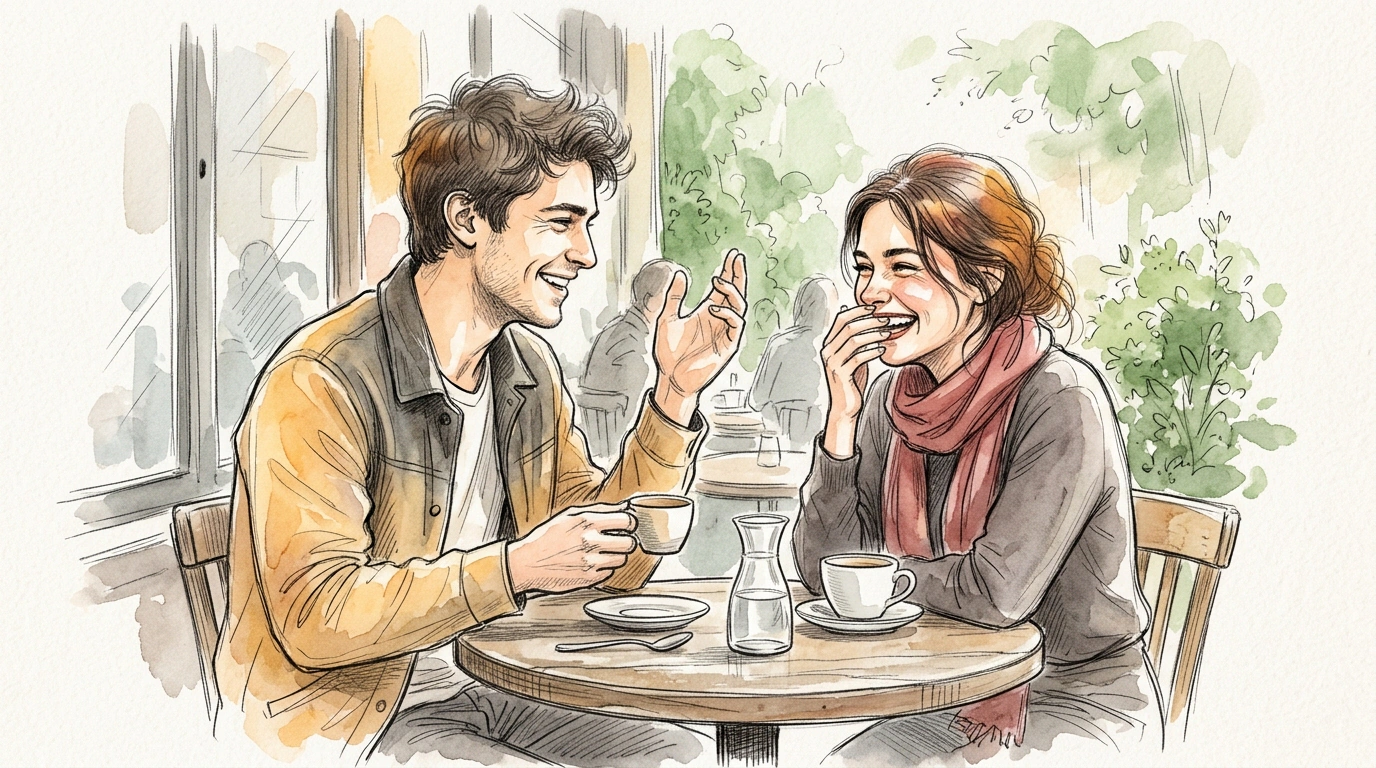
Friday night, a table at a cozy coffee shop. Twenty-one-year-old Vlad is on a first date with a great woman: conversation is flowing, he's animatedly telling a story, nudges the menu aside—and suddenly mispronounces a simple word with a ridiculous stress. His date calmly waits for him to go on, yet inside Vlad's head a siren is already wailing: for the next half hour he sits stone-faced, stares into his cup, and silently beats himself up over the stumble.
The date cools down in real time, even though nothing remotely bad happened at the table. Why does a split-second awkward moment on a date or in a group derail a guy for the entire evening—and how do you recover your composure fast instead of retreating into a shell?
Chain Reaction From Morning: Where the Illusion of Bad Luck Begins
That mental spiral often starts right in the kitchen after your alarm goes off. BroDude writer Mikhail Malakhov calls it "cascading failure": you pour boiling water into a mug, scroll short videos while the coffee cools, turn awkwardly—and spill the whole thing across the table. No time to brew another, so you wipe the puddle and walk out thinking: the day is ruined. Next, the bus pulls away, your headphones are still at home, and your phone battery creeps toward zero.
Your brain stitches random hiccups into a conspiracy, even though spilled coffee has zero impact on bus schedules. Small glitches happen every day, yet they only blow up into drama against a backdrop of built-up irritation—from routine, work, or the habit of putting up with daily annoyances for too long. When you're unhappy with your overall situation, a splash of coffee acts like a magnifying glass for hidden frustration, whereas a guy content with his life steps over it with a grin.
The Spotlight Effect: How Many People Actually Notice Your Slip-Ups
Alone, a slip just annoys you; in public, shame sticks to it instantly. You crack a flat joke or hit an awkward pause—and the "invisible disaster" begins: the group has long since moved on to talking about a TV show, while you're sitting stiffly, mentally deciding which witness to your humiliation to eliminate first. This always reminds me of the Cornell University psychology experiment led by Thomas Gilovich.
Students were asked to walk into a lecture hall wearing an embarrassing t-shirt featuring singer Barry Manilow's portrait and estimate their peers' reaction. Participants expected almost half the room—46%—to notice, whereas in reality only 23% remembered the print. The scale of self-deception in those numbers always sobers me up: people overestimate how noticeable their blunders are by at least a factor of two. That's the spotlight effect: you stay trapped inside your own head waiting for stage lights, while the woman across from you is busy worrying about how she looks and sounds.
Stone-Wall Defense vs. Self-Deprecation: Two Reactions to a Verbal Slip
Knowing there's no strict jury brings us to the evening's main fork in the road. Everyone stumbles—from interns to business owners—and what kills attraction isn't a mispronounced word, it's your reaction in the first few seconds. Compare two endings at Vlad's table.
In the first scenario, the guy decides to "atone" with silence: he cuts his story short, avoids eye contact, and clips his answers, terrified of saying something else stupid. In the second version, tripping over the exact same word, Vlad smiles and says out loud: "Looks like I just invented a new rule of grammar—give me a second take, the ending is worth it."
The outcomes split sharply. In the first case, the woman didn't even notice the slip, yet she read the cold wall and assumed he wasn't into her—connection died. In the second scenario, self-deprecation dissolves the tension in two seconds: his date laughs along with Vlad, sees masculine steadiness, and leans in for the rest of the story.
The Twenty-Minute Rule and a Fast Tension Reset
To stop spiraling into self-sabotage after a minor slip, keep three steps in mind:
- Separate the events. Detach a random moment from your self-worth: spilled coffee, a dead phone, or a clunky joke don't add up to a cursed streak.
- Remember other people's memory span. Within 20 minutes, no one at the table will remember the stumble, and by tomorrow you'll forget it too. Asking "So what?" quickly shrinks a minor blip back to its real size.
- Shift focus into action. Name the awkwardness with a smile and turn attention back to her—ask a question or pick the thread back up.
If the habit of policing every word regularly locks you up, check out our breakdown on switching off your inner critic in live conversation.
And don't demand broadcaster-level poise from yourself on the first try. A date isn't a speech exam, and if you got flustered today or cracked a joke that didn't land, the sky hasn't fallen. Confidence isn't built on flawlessness—it's built on giving yourself permission to be a real guy who can laugh off a miss and keep moving calmly forward.