Issue November 12Daily digest · 9 items
In this issueReviewed 68 sources, gathered 9 items
Infographic blueprint of a web interface featuring the Baseline specification and the native dialog tag
ArticleDevelopmentAI AgentsWeb StandardsAutomation

Modern Web Guidance 1.0: Teaching AI Agents to Write Modern, Standards-Compliant Web Code

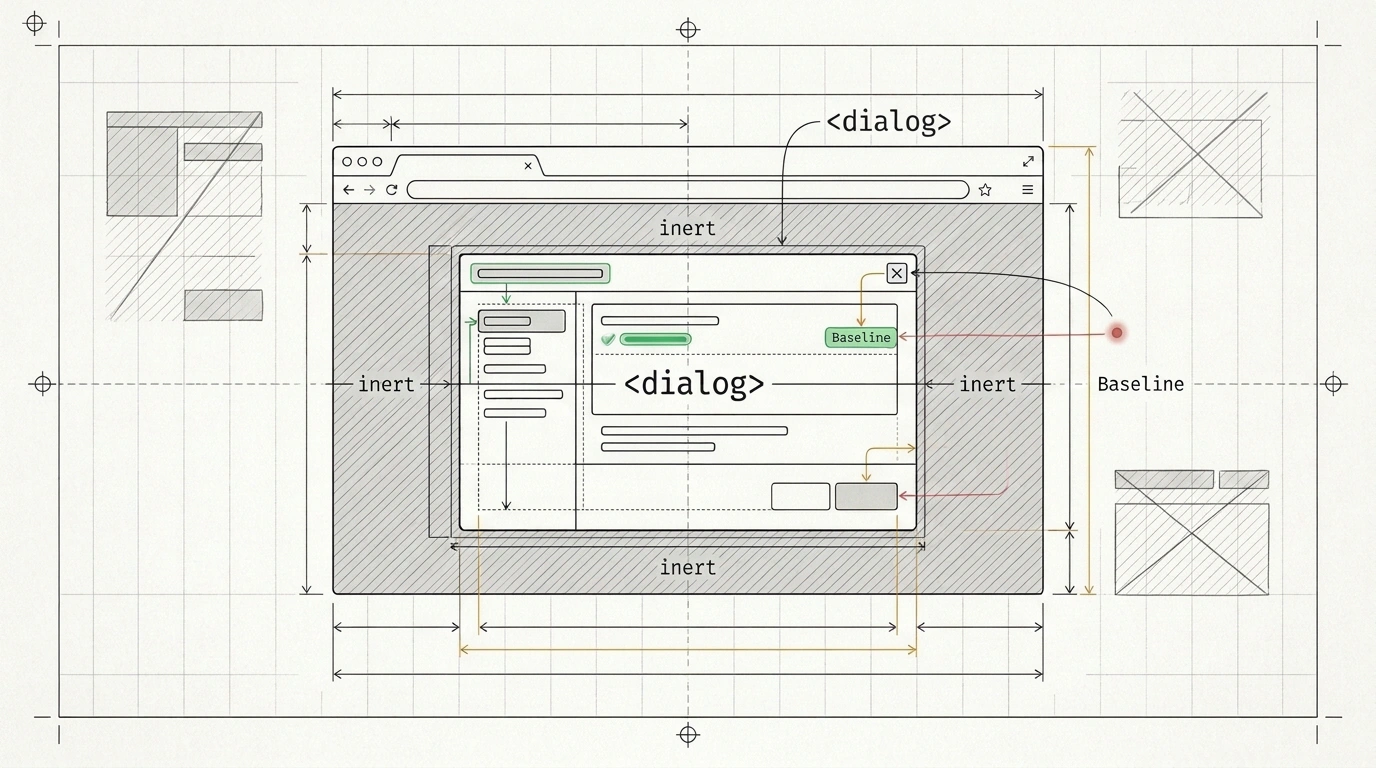
When you trust an AI assistant with UI markup, you expect cutting-edge solutions, yet models trained on older repositories habitually pull bulky scripts into your project, breaking keyboard navigation and form autofill.

In the stable Modern Web Guidance 1.0 release, the Chrome, Firefox, and Edge teams combined the Baseline compatibility database with the /modern-web-guidance audit command, raising native standard adoption in note inc.'s code from 61% to 94%. However, the rule base alone only sees static patterns in files and misses live-page freezes in the browser.

👍 27
Веб-стандартыFrontend FocusLea VerouModern Web Guidance 1.0 — Chrome for Developers+1
November 12
Still life on an engineer's desk with neat dist module boxes and a build terminal
ArticleDevelopmentPackagesNPMJavaScript

Publishing a Subfolder to npm: Removing /dist from Import Paths Without Breaking Your Package

Trying to drop the extra /dist from import paths, it is easy to go to extremes—configuring .js and .d.ts builds straight into the repository root and turning the Git working tree into a dumping ground. The built-in npm publish ./dist command solves this cleanly by making the build folder itself the root of the archive.

Yet if you simply copy the root package.json into ./dist, the old paths in exports will start looking for files at the doubled path ./dist/dist/index.js. And one habitual npm publish from the root will push the entire project to the registry again.

👍 35
Библиотека фронтендераShip cleaner packages by publishing a subfolder to NPM — Bramusnpm-publish documentation — npm CLI
November 12
Physical miniature of a server rack with glowing heat flows representing a load profile
ArticleDevelopmentPerformanceGoProfiling

PGO in Go: Speeding Up a Production Binary Using a Real Load Profile

You can feed the Go compiler a default.pgo profile to speed up a service by 2–14% without changing code in two ways: quickly capture a sample from a local go test -bench, or collect pprof at peak production traffic. The first option is easier to start with, but it makes the compiler inline synthetic loops detached from networking and JSON serialization.

A live slice from net/http/pprof targets the real hot functions accurately, though it slows down the first build and loses matches when methods are renamed. Yet a single profile line in go version -m does not by itself prove the binary actually got faster.

👍 18
Библиотека Go-разработчикаProfile-guided optimization — The Go Programming Language
November 12
Graphic illustration of a protected network gateway with closed locks and data streams
ArticleSafetyDevelopmentNodeJSVulnerabilities

Coordinated Node.js Security Patch: Fixing HTTP/2 Vulnerabilities and mTLS Isolation

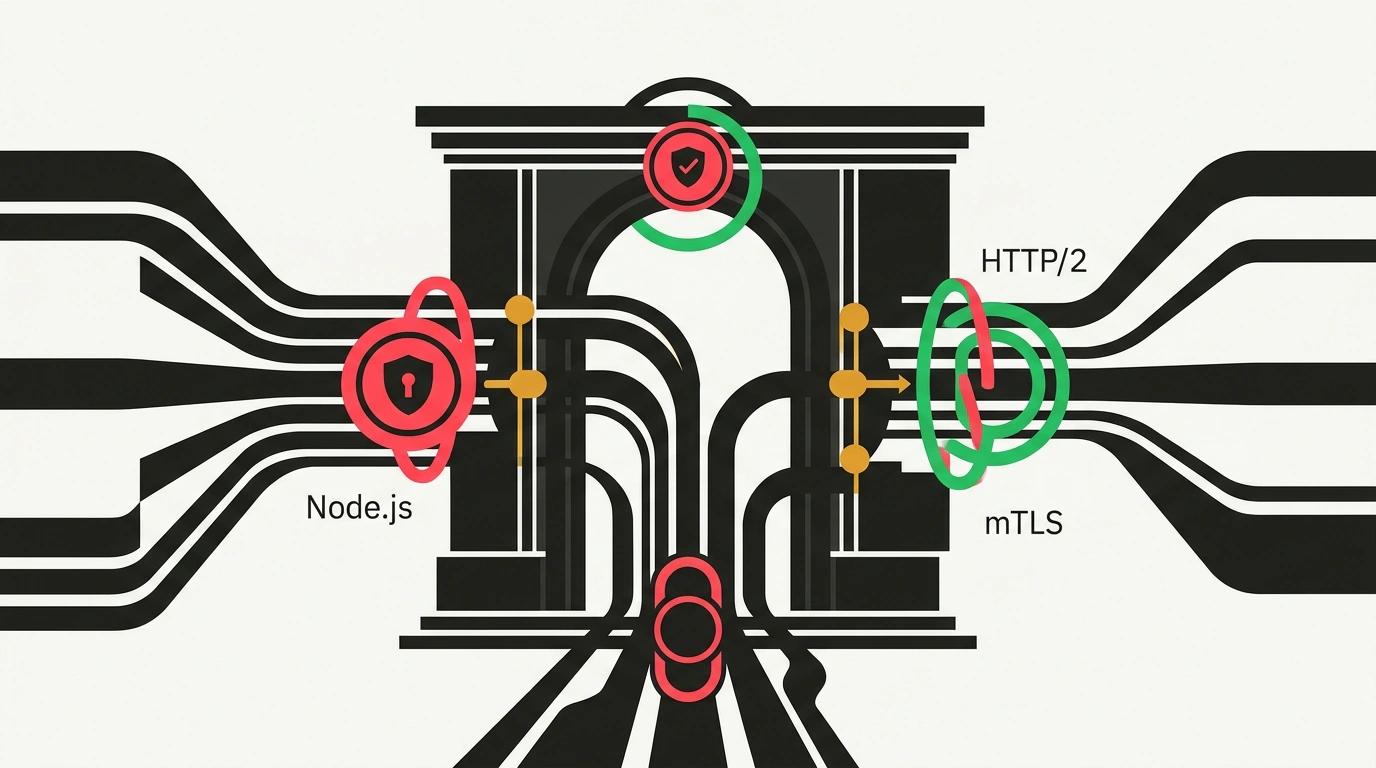
Is it worth urgently rebuilding production containers for yet another minor runtime patch? Node.js 22.23.5, 24.22.3, and 26.13.1 close High-severity vulnerabilities: reset nghttp2 streams no longer hold headers in memory bypassing maxSessionMemory, and tls now blocks SNI domain spoofing during session resumption.

The update protects gateways from denial of service and mTLS client certificate bypasses. Without an explicit sessionIdContext parameter, however, a patched server will quietly disable the session cache and increase CPU load.

👍 21
Node.js BlogNode.js 24.22.3 (LTS) Release Notes
November 12
Conceptual duo of a neat stack of chronological cards and a scattered fan of entries
ArticleDatabasesDevelopmentPostgreSQLOptimization

UUIDv4 vs. UUIDv7 in PostgreSQL: Why a Random Primary Key Drops Write Speed by a Third

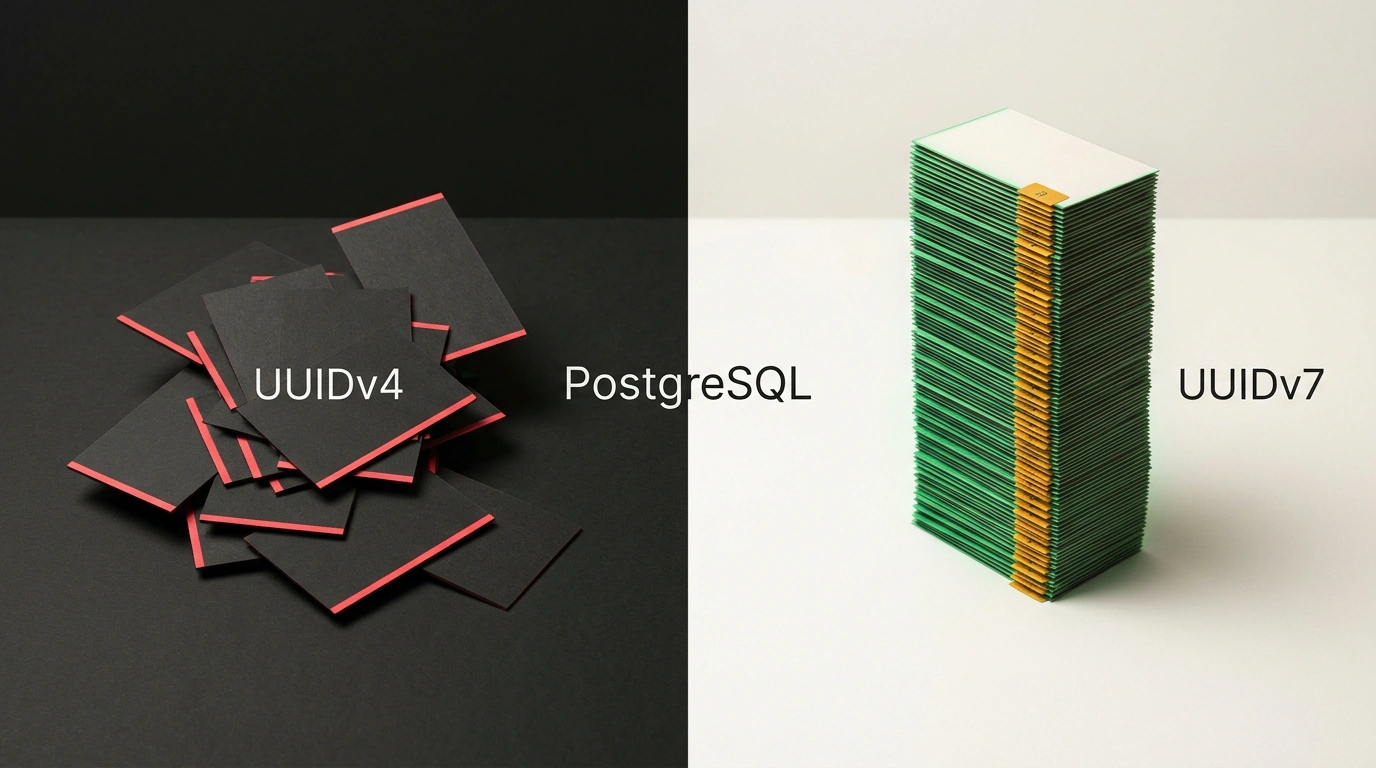
As long as a PostgreSQL B-tree index fits in RAM, you don't notice the catch with random UUIDv4 keys. Once the table outgrows the Shared Buffers pool, every new write hits scattered pages on SSD.

  • insert throughput drops to 62–69% of an ordered key;
  • WAL log volume jumps 1.5–1.9x due to page splits;
  • the built-in uuidv7() function with a 48-bit time prefix returns writes to the right edge of the tree.

However, generating UUIDv7 on application servers instead of the database itself easily breaks this ordering due to clock drift.

👍 39
Postgres WeeklyUUIDv4 vs UUIDv7: What a Random Primary Key Costs — PostgresAI
November 12
Architectural axonometric projection of a microservice graph and team ownership zones
ArticleDevelopmentDevOpsArchitectureManagement

Backstage Service Catalog: Linking Code Ownership, On-Call Rotations, and Failure Blast Radius

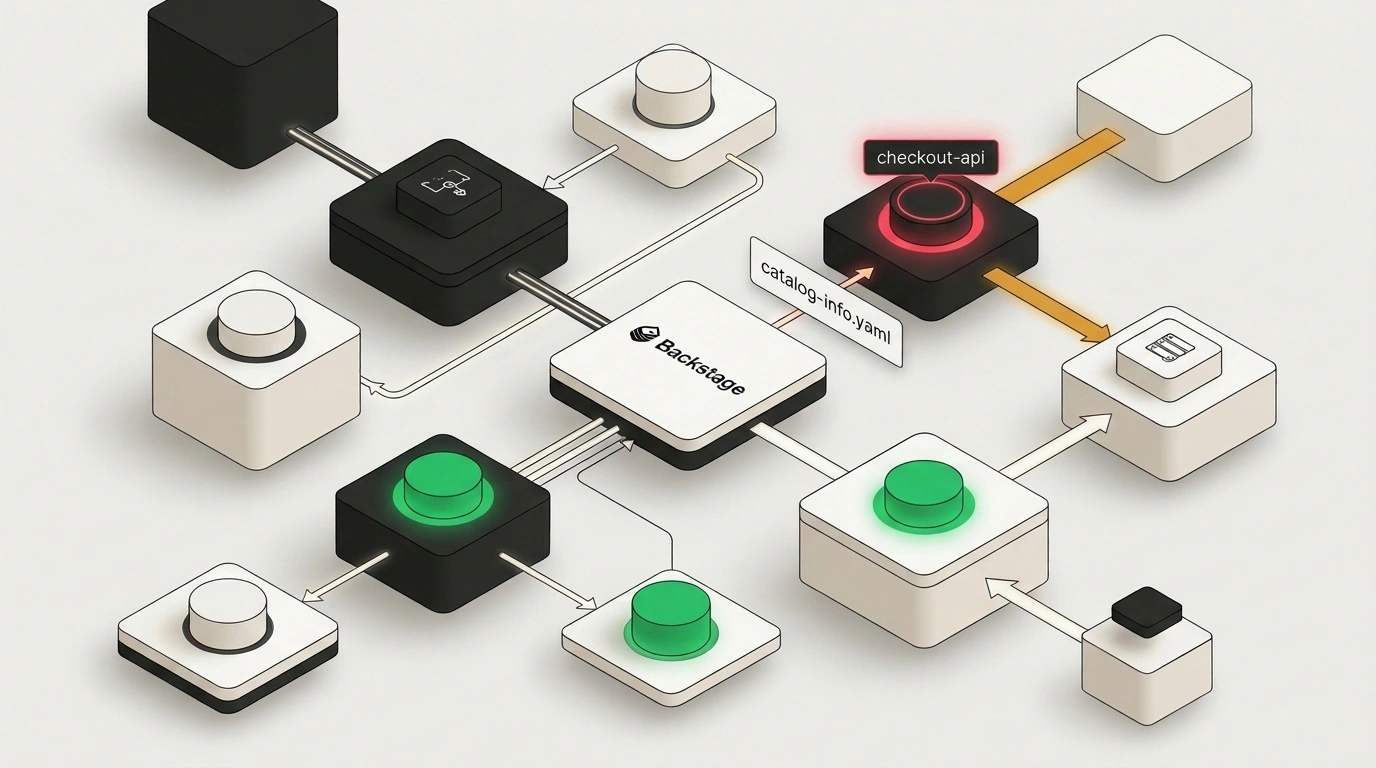
It feels like a CODEOWNERS file and a detailed wiki protect infrastructure from chaos. Yet during an outage a paradox emerges: commit history only shows who edited code six months ago, not the team currently responsible for live production and its dependencies.

Engineer Bill Duncan broke down how a 15-line catalog-info.yaml manifest in Backstage links code, on-call rotations, and failure blast radius into a single graph. Still, a catalog launched by SREs without product-team participation will go stale just as fast as the old wiki.

👍 28
DevOps&SRE LibraryBackstage #1: Who Owns This? Why SREs Want a Service Catalog — Bill DuncanBackstage Software Catalog Overview
November 12
Photorealistic 3D render of a transparent API contract matrix forming typed blocks
ArticleDevelopmentAPITypeScriptFrontend

OpenAPI as a Frontend Power Tool: Generating Typed Clients and Mocks

Copying interfaces by hand from web docs and waiting for a staging environment slow development down at the start of a sprint. Even when a team generates types from OpenAPI via openapi-typescript and spins up a Prism mock server in 5 minutes, the first backend typo like type: int in the schema breaks the build.

Editing the downloaded openapi.yaml or .d.ts file by hand is pointless—any spec update from the server overwrites your fixes and brings compiler errors right back. To avoid depending on someone else's bugs, the frontend needs a contract-sanitizing pipeline before running the generator.

👍 39
Node.JS [ru]OpenAPI спецификация как инструмент frontend-разработчика — Хабрopenapi-typescript documentation
November 12
Strict top-down view of a neatly arranged set of specialized engineering tools
Thematic roundup4 sectionsDevelopmentToolsEcosystemOpen Source

Engineer's Toolkit: File Typing with Motherload, Layout Checks with Site Seeing, Kubey Dashboard, and the Exact Agent Runtime

At the seams between configs, layouts, and clusters, you choose between two paths: maintaining custom schema generators and handing out kubeconfig, or delegating the routine to focused utilities. Custom scripts give control, yet burn hours on parsers and comparing versions between staging and production.

Fresh tools remove that tax: Motherload types YAML, CSV, and .env in tsc, Site Seeing checks layouts under virtual keyboards and in split view, Kubey brings pod logs to the browser, and the Exact runtime refreshes UI in 100 ms. Yet each tool carries a hard threshold—from a beta compiler to CI build failures.

👍 20
Best of JSFrontend FocusDevOps&SRE LibraryThis Week In React+3
November 12
AnnouncementsEducationDevelopmentMeetupsConferences

November Meetups and Lectures: AI in Production at DevOps Lounge and Open IT & Security Talks

A roundup of practical free November events for engineers: experts from Центральный университет will examine attack vectors against modern AI systems and the evolving role of product managers, while the DevOps Lounge meetup by Orion soft and Онтико will share lessons from deploying an AI Gateway and agent teammates in production.

👍 8
DevOps&SRE LibraryNode.JS [ru]Митап DevOps Lounge: AI в проде и в задачах DevOps-инженеров
November 12