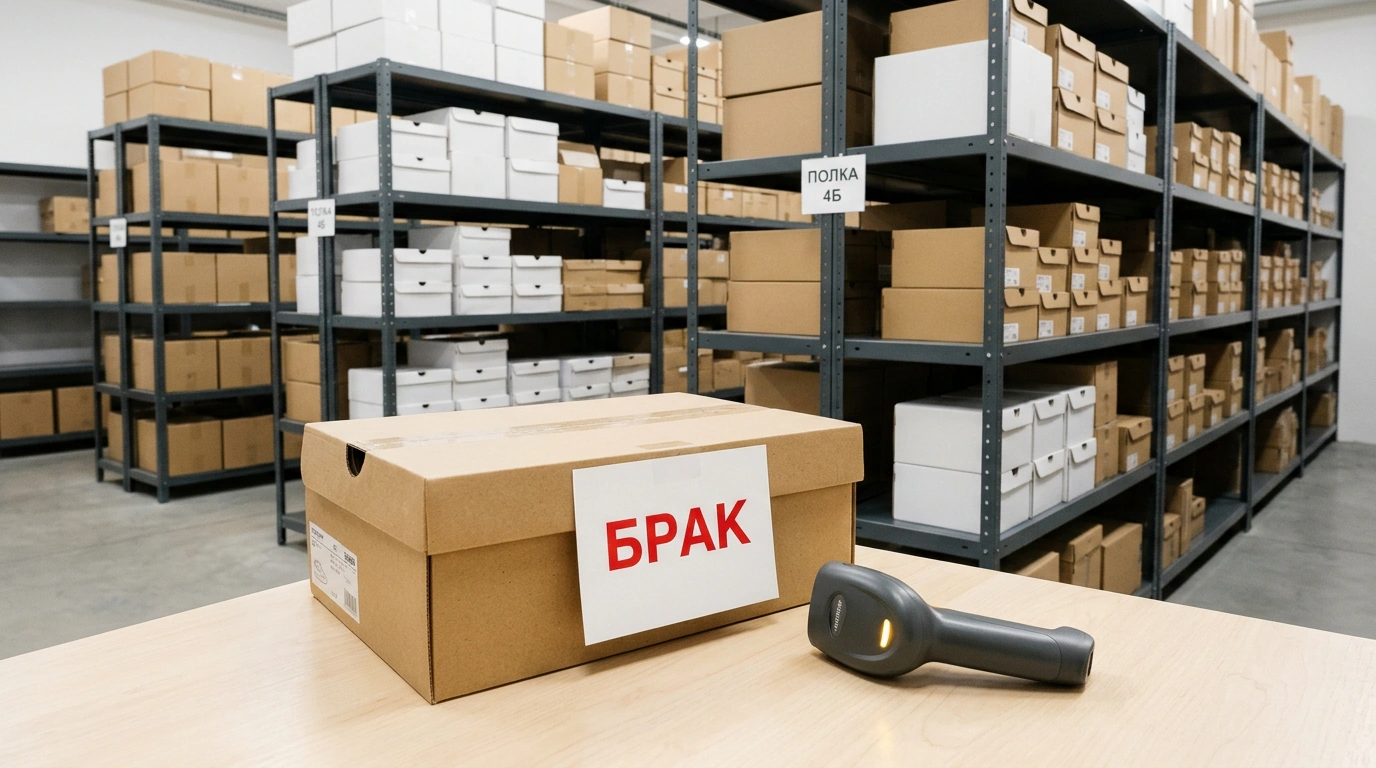
When a shopper at a pickup point tries on two pairs of boots, keeps the one that fits, and hands the second box back to the clerk, the transaction is over for the customer. Look behind the counter a second later, though: instead of logging a size refusal, the clerk selects "product issues" in their terminal. In your seller reports, a brand-new pair of boots turns into defective stock and heads out on a paid tour of sorting centers. Why have pickup points started mass-flagging good seasonal inventory as damaged, and how does the math behind this work?
Why Pickup Points Can't Turn Off "Ozon Shelf" Since November 9
Let's look at how "Ozon Shelf" (Ozon Polka) operates. In standard logistics, a refused order immediately ships back to the central warehouse. Under Ozon Shelf, unbought items stay in the pickup point's backroom as a mini-warehouse for fast resale to neighbors nearby. We covered the legal side of this setup in our breakdown of how Ozon is turning 80,000 pickup points into mini-warehouses and bypassing Civil Code storage rules.
Previously, owners of cramped locations could pause the feature when they ran out of space. On November 10, however, the Overheard on OZON community shared a notice from the platform's official bot: starting November 9, pausing Ozon Shelf is prohibited, and opt-out requests are ignored.
Inside Turbo PVZ—the software clerks use to receive parcels, track bins, and hand out orders—a hard minimum of three shelves is now locked in. By rule, the algorithm can assign up to 55 liters of inventory per shelf. In a tight pickup point where 40 items are already sitting on three shelves, boxes run out of rack space and end up stacked on the floor.
16 Rubles in Revenue vs. a 50-Ruble Fine: The Math of Fake Defects
When I cross-checked pickup point owners' numbers from a second Overheard on OZON post against the Ozon Seller Knowledge Base, the ratio between point income and penalties jumped right off the page:
- Storage income: for keeping unbought items, a pickup point earns 0.2 ₽ per liter per day (plus 5 ₽ per item for binning and prep). Over a month, one liter on the shelf brings the location just 16 ₽ in revenue.
- Overdue penalty: if a clerk misses the deadline to process a shelf item or delays dispatch, the platform charges a 50 ₽ fine per item for every day it is overdue.
Apply that math to a box of winter boots in a pickup point capped at 55 liters per shelf. A single day's 50 ₽ fine is 3.1 times higher than the entire month's storage revenue per liter (16 ₽). Holding bulky boots, puffer jackets, or vacuums in the backroom for weeks is a losing proposition for the pickup point.
That's where a loophole in the rulebook kicks in, as detailed on VC.ru: items marked "defective" ("product issues") are barred from Ozon Shelf storage and ship back to the marketplace warehouse right away. So when a customer refuses bulky boots, it's far safer for the clerk to flag a defect than to eat up shelf space and risk 50 ₽/day fines.
What Sellers Risk and How to Protect Stock From False Rejections
For you as a seller, that flag triggers "joyrides"—paid round-trips of your inventory bouncing between pickup points and sorting centers on your dime. Your boots disappear from the storefront at the height of the season, reverse logistics fees drain your balance, and after a few trips the box gets torn or falls under Ozon's new automatic return disposal rules.
To protect your margin, I recommend setting up a strict return-inspection routine:
- Watch for defect spikes in reports. A sudden jump in "product issues" returns on bulky shoes or jackets from a vetted batch is a telltale sign of pickup points clearing out Ozon Shelf.
- Film every unboxing. When picking up a flagged return at a pickup point or warehouse, record continuous video: show the barcode, seals, outer box, and the intact item inside.
- Dispute logistics within 30 days. From the date the return is received, you have up to 30 days to file a claim with Ozon support along with your video proof and recover the shipping fees on undamaged goods.
Just keep a cool head: there's no point picking fights with every clerk or spending hours filming cheap smalls. Pickup points flag items as defective because they're caught between a 16 ₽ tariff and a 50 ₽ fine. Save video evidence and disputes for bulky, high-ticket SKUs where empty round-trips take a real bite out of your net profit.