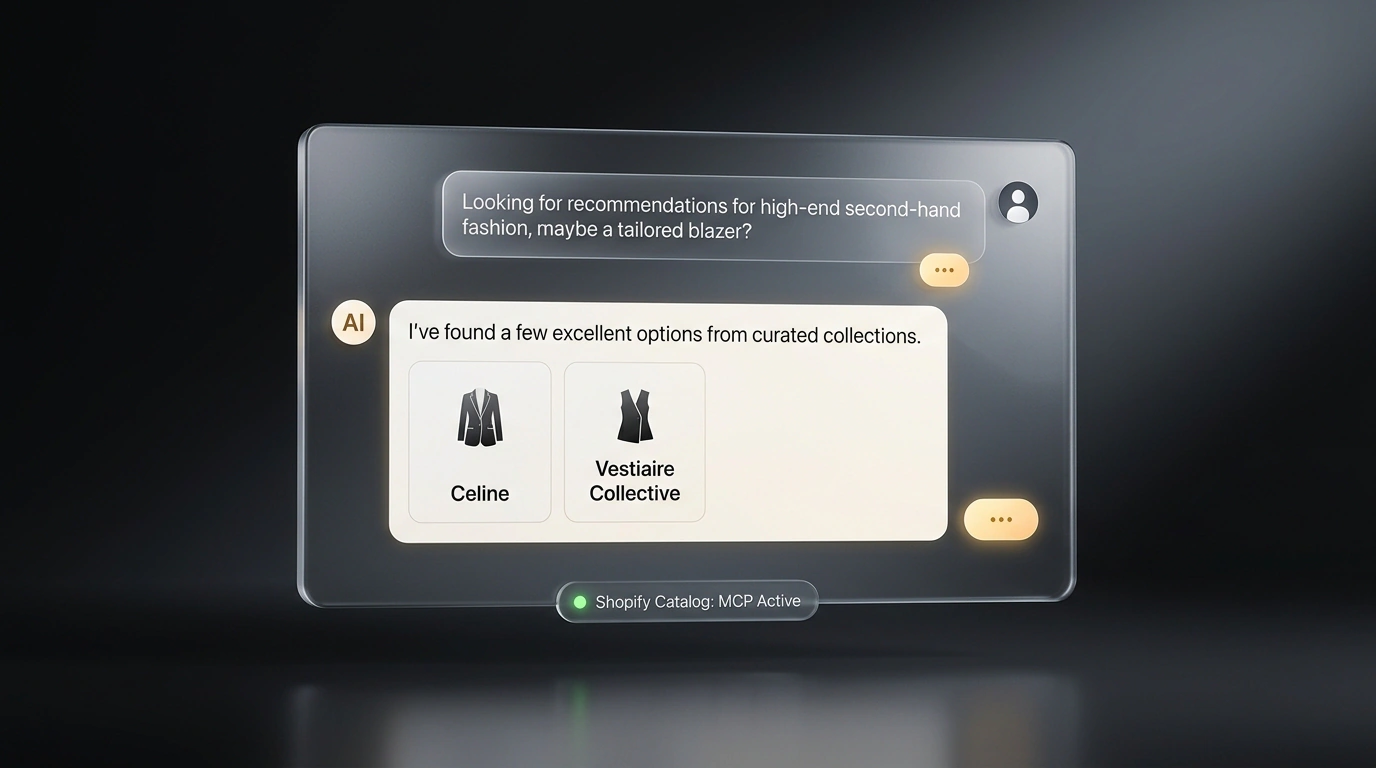
Think back to the last time you shopped online—how many filter checkboxes for size, fabric, and delivery did you have to click before finding the right item? Shoppers are tired of digging through menus and are increasingly handing the search to AI: they type a plain-English request into ChatGPT and expect a curated shortlist.
For sellers and store owners, this opens up a fresh traffic channel, but it raises an obvious question: how do you plug your catalog into conversational AI without rebuilding your website from scratch? I dug into two recent releases highlighted by the "AI & Marketplaces" channel to see how chat-based commerce actually works.
Conversational Search Instead of Filters: Vestiaire Collective in ChatGPT
The gap between a traditional storefront and AI search is crystal clear in the rollout by French luxury resale platform Vestiaire Collective. The company launched an app inside ChatGPT wired into a catalog of nearly 6 million items.
Instead of toggling dozens of filters, a shopper types a natural request—say, asking for a vintage Celine lambskin bag in good condition under 80,000 ₽ with shipping from Europe. The assistant pulls 2–3 matching listings from the database and compares their price, condition, seller rating, and authentication badge right inside the chat.
What caught my eye is the clean split in roles: the plugin acts as a personal shopper, but doesn't process payments inside the chat. Once a buyer picks a bag, they click through to Vestiaire Collective's website to check out—giving the platform a high-intent buyer while keeping its own payment perimeter intact.
How Shopify Agentic Works: Connecting a Store Without Migrating
A major resale platform can build a custom plugin, but what about an independent clothing brand running on 1C-Bitrix, WooCommerce, WordPress, or Magento? Previously, tapping into Shopify integrations meant migrating your entire store onto Shopify's engine. The new Shopify Agentic plan, broken down by analysts at ThinkCommerce, removes that hurdle.
A standard Shopify storefront isn't even part of the plan. A fashion brand on WooCommerce keeps its existing site, customer database, and warehouse, and uploads only its product feed to the Shopify Catalog gateway. From there, AI services index the listings via open protocols—Model Context Protocol (MCP) and Universal Commerce Protocol (UCP)—allowing models to read live prices and stock counts.
Inside Shopify Agentic, merchants get two checkout modes:
- Referral mode: links on product cards in the AI chat send the shopper to the brand's own website to pay in the cart.
- Native in-chat checkout: the purchase is completed right inside the AI window, which requires merchant verification and separate setup of a payment gateway (Shopify Payments or Stripe), taxes, and shipping rules.
From Keywords to Semantic Attributes: Prepping Listings for AI
To get an AI model to include your brand's item in a two- or three-option shortlist, old-school SEO—stuffing Title and H1 tags with keywords—won't cut it. Language models weigh semantic completeness, reviews, and certifications, a practice now called Generative Engine Optimization (GEO). We covered feed requirements in our guide on product feeds for ChatGPT visibility, and storefront setup in our piece on business profiles in OpenAI Business Hub.
When building a feed for Shopify Catalog, our clothing brand needs to replace vague copy with structured Schema.org/Product attributes: fabric composition, fit, multi-standard size charts, country of origin, delivery timelines, and return terms.
Right now, native checkout inside ChatGPT is limited to a small pool of merchants in the US and EU, and neither Wildberries nor Ozon has announced timelines for agentic protocols. Still, the direction is unmistakable: with UCP and MCP, AI assistants are becoming the "first shelf," intercepting shoppers before they ever open a marketplace search bar. Sellers who clean up their product attributes today will be the first to capture that high-intent AI traffic.