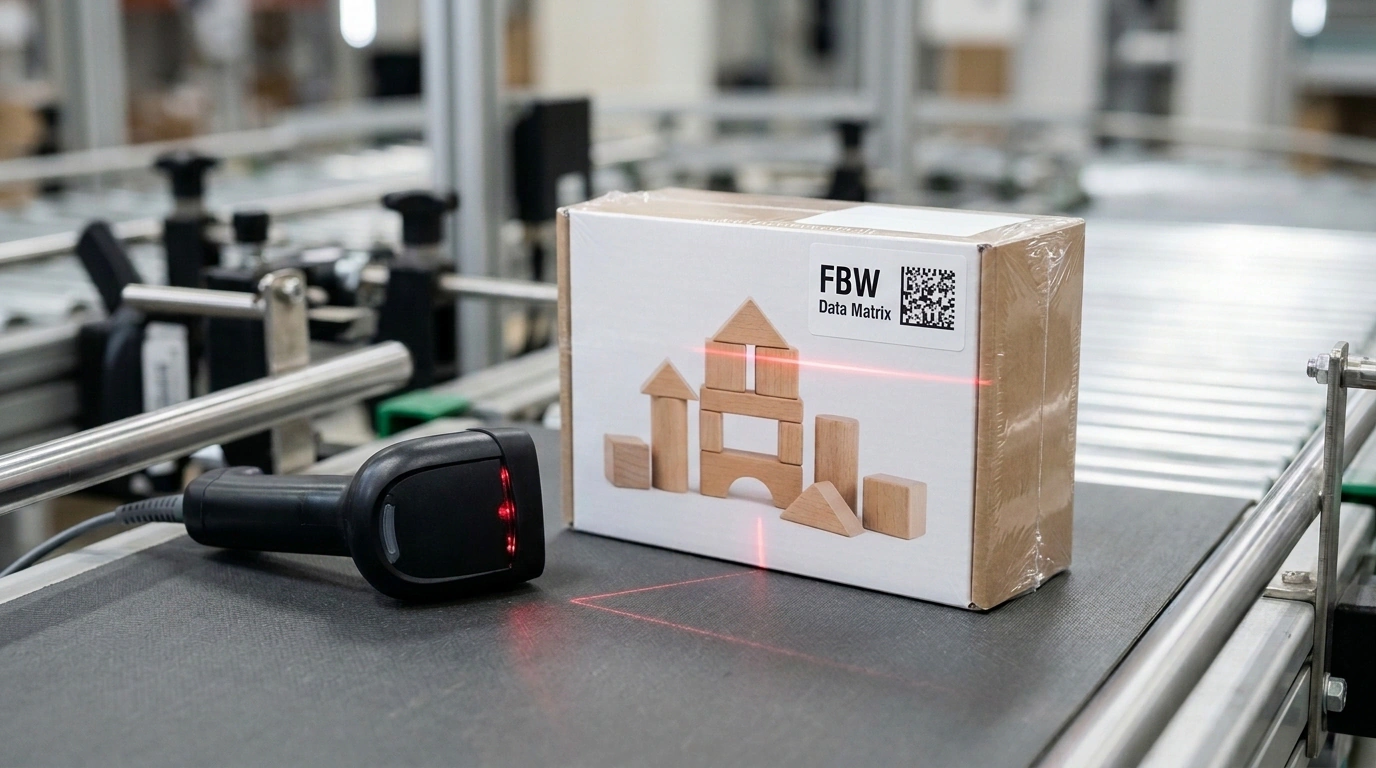
On November 16, 2026, Wildberries updated its warehouse service rules—a change spotted by analysts at MarketGuru | Wildberries Secrets: the platform added the "Toys" category to paid packaging at its sorting centers. Sellers can now hand off full packaging or extra protective wrapping to warehouse staff for dolls, building sets, toy cars, and plush toys.
Right in the middle of the pre-New Year shipping rush, that's a welcome way to take pressure off your own warehouse. I checked the offer terms and ran the batch unit economics—let's see whether outsourcing toy prep to a sorting center pays off, what box and labeling rules apply, and how the fee affects your net margin.
The Indivisible-Batch Rule and Restrictions for "Box" Shipments
According to Wildberries' official instructions, sorting center (SC) staff provide this service strictly for "Box"-type shipments under the FBW ("WB Warehouse") model, where the marketplace handles storage and delivery. It is not available for mono-pallets or seller-fulfilled (FBS) orders—only for batches packed in corrugated shipping cartons sent to designated SCs.
Warehouse packaging is open to just six categories: "Toys," "Beauty," "Household Chemicals," "Underwear," "Adult Goods," and "Health" (limited strictly to dietary supplements). Not every item inside those categories qualifies, so always check your SKU against the eligible-items list in the seller portal before assembling a shipment.
Eligible SKUs are also bound by an indivisible-batch rule. Suppose you are shipping 500 wooden building sets to the Koledino SC. If half are already shrink-wrapped at your warehouse and you want the SC to wrap the remaining 250 inside the same shipment, the system won't allow it. You can't pick 50 out of 100 identical units either—the toggle applies strictly to the entire quantity of that SKU in the shipment. The reason comes down to conveyor-line speed: a receiving operator won't sort through a carton guessing which box needs wrapping and which one is already shelf-ready.
Barcodes, Unidentified Stock, and Chestny ZNAK Codes Ahead of the 2027 Mandate
The SC conveyor handles protective shrink-wrapping, but product identification and government marking remain 100% on the seller. Before your truck reaches the gate, verify three requirements:
- Intact factory packaging with no dents or torn corners.
- A crisp seller barcode linking the physical item to your listing. If the scanner fails to read the barcode, the toy goes into unidentified surplus (obezlichka—depersonalized stock). I covered how to keep unit and carton labels straight in my guide on Wildberries shipment labeling rules.
- Chestny ZNAK tracking code (KIZ). Starting March 1, 2027, children's toys fall under mandatory Data Matrix serialization with reporting via UPD over electronic document interchange (EDI). SCs do not print Data Matrix labels: the seller must activate the codes and apply them beforehand, or the shipment will be rejected with fines.
In our 500-piece wooden building set example, the seller applies both the WB barcode and a test Data Matrix label to every factory box in advance. At Koledino receiving, two cartons turn out crushed from transit—those get rejected, while the 498 intact sets are shrink-wrapped on the line.
Batch Unit Economics and the 24-Hour Cutoff Rule
The portal displays an estimated price when you book your slot, then bills you after receiving—strictly for the units actually accepted and wrapped. I broke down the math line by line: with a wholesale cost of 400 rubles and a retail price of 1,100 rubles, the 35-ruble-per-unit SC fee applies to the 498 intact boxes (17,430 rubles for the batch). Baking that cost into landed unit cost still leaves you with a 28% net margin without paying for an in-house packing crew (I unpacked the fixed overhead of running your own packing line in my breakdown of Wildberries partner fulfillment center economics).
If a third-party fulfillment center turns out cheaper, you can edit or cancel the service in the portal no later than 24 hours before your scheduled ship date. Missing that deadline risks a slot block and a penalty for reserving SC capacity.
Bottom line: paid FBW packaging makes sense in peak season when you need to move fast-selling toys without hiring extra packers and your margin easily absorbs the SC fee. Before confirming the service in your draft shipment, ask yourself one simple question: are a clean barcode and a Data Matrix code already sitting on every box so the warehouse scanner reads them on the first pass without you there?