You open your Wildberries dashboard in the middle of fall trading and spot an unwelcome surprise. Your base price hasn't changed, your warehouses are stocked, yet the personal customer discount (SPP) suddenly dropped by several percentage points. The storefront price jumps, and orders slow down. Your first instinct is that the platform slapped you with hidden penalties or your listing lost rank, so you rush to slash your own price to win sales back.
In practice, panic discounting misses the real problem and wastes your margin. To separate an issue on your specific listing from platform-wide policy, let's look at MarketGuru's study of Wildberries financial reports.
What comparing two unrelated stores revealed
Before diving into the numbers, here is a quick refresher on how it works. In Wildberries' official agreement, SPP is called the "WB Discount." It is a platform subsidy: Wildberries lowers the storefront price for the buyer and compensates you by reducing its own commission rate (KVV) proportionally. For sellers, this co-investment feels like a free conversion boost that is easy to take for granted.
It seems logical that the subsidy size depends only on your store's metrics, like turnover, redemption rate, and price. In MarketGuru's breakdown, analysts tested that assumption across more than 427,000 sales rows from weekly Wildberries financial reports over 18 months, from May 25, 2025, to November 7, 2026. They picked two completely independent accounts—a clothing store and an everyday-goods store—and grouped transactions by order date.
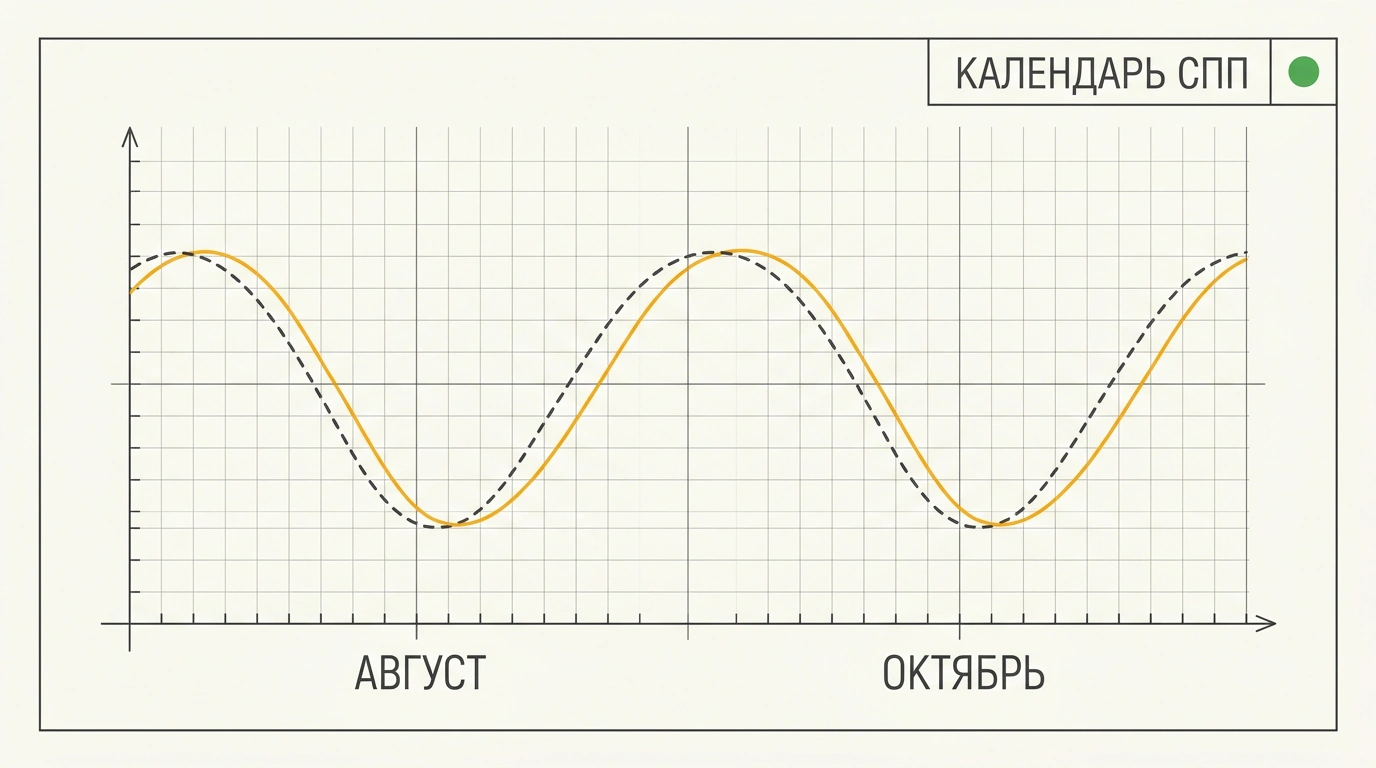
The charts showed unmistakable synchronicity. Apparel and everyday goods follow very different demand patterns, yet the SPP curves for both stores rose and fell during the exact same weeks. In statistics, a match like that rules out coincidence: two unrelated businesses can't move in lockstep for a year and a half by accident, which means the platform's own algorithm is flipping the switch.
The 2025–2026 calendar formed a clear recurring cycle:
- In January and February 2026, the platform discount hit its peak, then drifted steadily downward through spring until May.
- After a summer rebound, both years saw a synchronized dip in August followed by an equally sharp bounce in September.
- In October and early November, the algorithm squeezed SPP again right before the big 11.11 and Black Friday sales.
The numbers shatter any hope that the marketplace will automatically boost its discount ahead of November's shopping rush. Instead, the platform dynamically pulls back its subsidy, nudging sellers to cut their own base prices to enter promo campaigns.
When the algorithm is responsible vs. when a price hike triggers it
Still, blaming every discount drop on seasonal weather is risky too. On those same MarketGuru charts, one noticeable split appeared in late 2025: SPP climbed smoothly for the everyday-goods store, while it suddenly crashed for the apparel seller.
When analysts checked the clothing account's details, the cause was obvious. The seller had sharply raised retail prices. Shoppers naturally pulled back on orders, turnover fell, and Wildberries' algorithm automatically cut the platform subsidy. The previous SPP level only returned a few weeks after sales stabilized.
That isolated glitch gives you a simple diagnostic rule. If SPP drops right after you aggressively rewrite your price list or during a slump in orders, look inside your own store. If your prices and shipment pace stayed steady while storefront prices jumped in August or before November promos, you are looking at systemic platform policy.
How to calculate unit economics and plan restocks
Building today's SPP into your baseline unit economics is dangerous. As soon as the marketplace trims its subsidy in the next off-season pullback, your retail price spikes, conversion drops, and trying to fund the gap out of your own pocket pushes the batch into a loss or a cash crunch. Always base your purchasing and margin math strictly on your seller price before any platform subsidies.
According to MarketGuru analysts' late-2026 outlook, don't expect a noticeable SPP rebound before December. In winter, the platform discount typically climbs again on its seasonal cycle before cooling off toward May. Check your weekly Wildberries financial reports by order date against this calendar so you can tell a market-wide wave apart from your own pricing mistakes and stop cutting margins on impulse.
