Ozon launched 'Ozon Polka' to stop shipping refused orders back to giant warehouses and instead hand them directly from the pickup point to the next buyer living nearby. In practice, the opposite happened. At the peak of the season, intact oversized items suddenly come back from pickup points marked 'defective' and travel to a sorting center at the seller's expense. The root cause lies in floor space and cash math at the pickup point itself.
How 'Ozon Polka' Works and Why Pickup Point Economics Break Down
Under Ozon Seller rules, two groups of items land on Polka: customer non-purchases (plus orders left unclaimed at the point for two weeks) and stock that sellers drop off at pickup points and reception centers as mini-warehouses. A refused item's listing returns to the storefront, and when a new order comes in, staff hand it out straight from that point at standard FBO rates.
Under Ozon's contract tariffs dated September 24, 2026, storage costs 0.2 ₽ per liter per day, while initial placement into a bin or order prep costs 5 ₽ per item. If Ozon transfers an item to Polka itself, the platform covers the costs; if a seller drops off stock voluntarily, the seller pays. Starting January 2, 2027, the Turbo PVZ staff app will introduce automatic tracking: unclaimed orders will stay in their regular shelf bin without moving or paying the 5 ₽ fee. However, daily fines apply per item for processing delays.
On paper, the model looks lean. In a typical neighborhood pickup point, the math falls apart. According to pickup point owners themselves (this is not official Ozon data), the network has around 100,000 points, and roughly 85% of them physically have no extra space. When a daily shipment brings 450–500 barcodes (parcels), shelves are already packed to the limit. By owners' calculations, earning around 10,000 ₽ a week from Polka requires giving up half the backroom and hiring an extra worker whose salary eats the entire revenue. Points cannot opt out of the program, while fines and financial liability hang over them nonstop.
The Fake Defect Loophole: How Clearing a Backroom Hurts Sellers
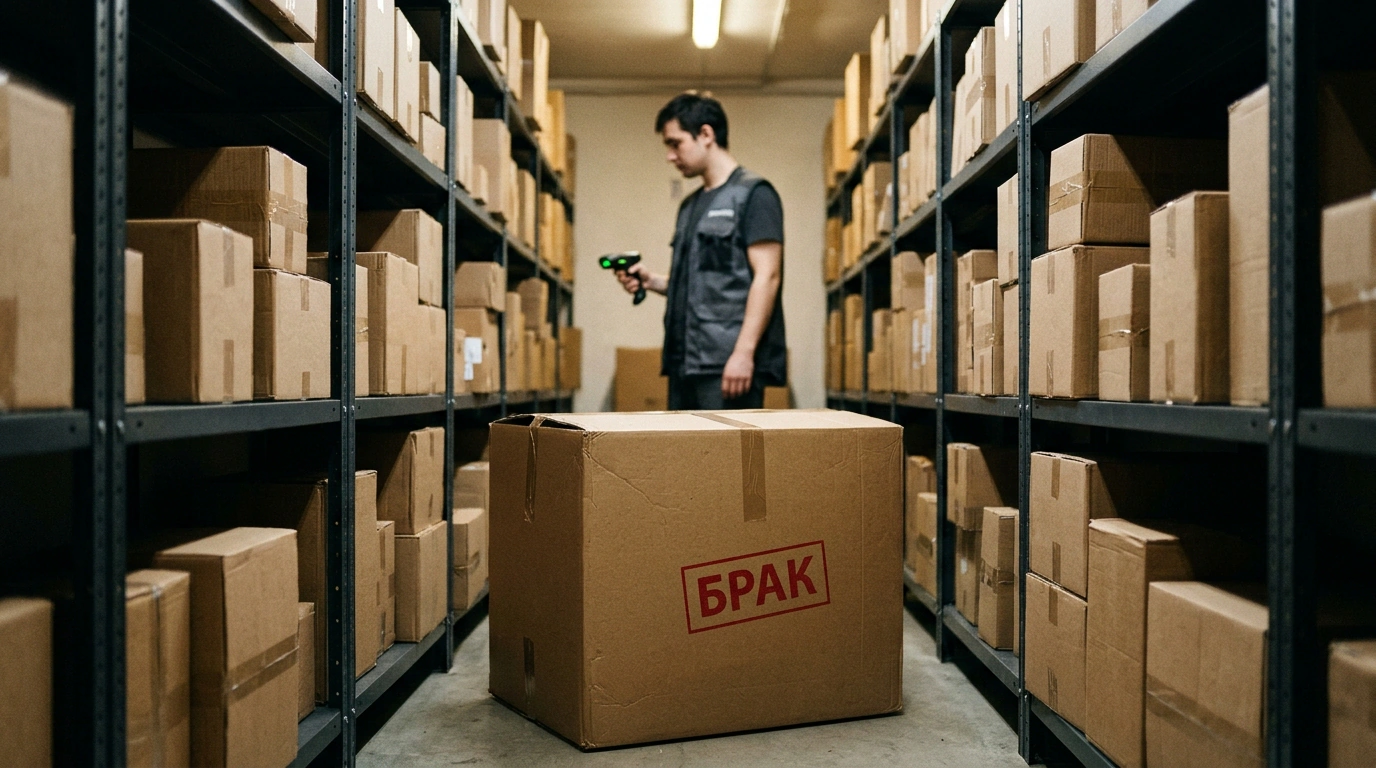
When the backroom is buried and one bulky box takes the space of five regular parcels, staff use the platform's own rule: items marked 'defective' or 'product issue' are banned from 'Ozon Polka'.
An employee cancels an unbought oversized item as defective, and the system routes it back to a sorting center or another point. The shelf is free, and there is no delay fine. For you as a seller, though, a perfectly good item drops out of stock during peak season, travels back and forth, and adds return-logistics costs to your batch.
Partner chats are full of rumors about fines for 'wrong cancellation reasons'. Yet according to point owners, the November 17 pickup point agreement has no separate fine with that wording. Even if Ozon starts punishing points en masse without fixing the space issue, partners end up trapped: they cannot opt out, they have no room, they get fined for delays, and they get fined for clearing shelves. That will only sharpen the conflict.
Opting Out via Support and Protecting Margin in Peak Season
Some pickup point owners bypass the problem with a support ticket along this path: 'PVZ Management' → 'Edit PVZ Description and Parameters' → 'Change Legal Entity on PVZ' → 'Cannot Start Transfer Due to Ozon Polka'. Partners report that a manager then files a request to disable Polka, and the items queue up for return. This is an unofficial loophole, and Ozon can close it at any time.
Check your return and cancellation breakdown for bulky SKUs once a week. A sudden spike in cancellations marked 'defective' or 'product issue' without buyer photo claims often means your item was simply evicted from an overloaded pickup point.
When you receive that return, always take photos and video of the intact factory packaging and the item itself. Those shots will help you dispute the false defect status and extra fees with Ozon Seller support, while building a small return-logistics buffer into your seasonal unit economics will protect your batch margin from nasty surprises.