'Immediately after the new requirements take effect, delivery services will be virtually paralyzed for many months.' In November 2026, direct rivals signed onto that statement: Ozon, Wildberries & Russ, X5, VkusVill, Yandex Lavka, Yandex Eda, Kuper, Samokat, Magnit, and Lenta. Through the Association of Transport, Logistics, and Postal-Courier Companies, they sent a letter to Prime Minister Mikhail Mishustin, the heads of the Ministry of Industry and Trade, the Transport Ministry, the Economy Ministry, and Moscow Mayor Sergey Sobyanin.
The reason is simple: the Transport Ministry drafted traffic-rule amendments for courier e-transport, and businesses want them delayed until at least 2029. Today, no new fines are in force, the final wording is not approved, and there is no official government reply or start date without a delay yet. Still, if the draft passes as written, urban delivery economics will flip fast.
What Rules the Transport Ministry Is Preparing and Who Gets Hit
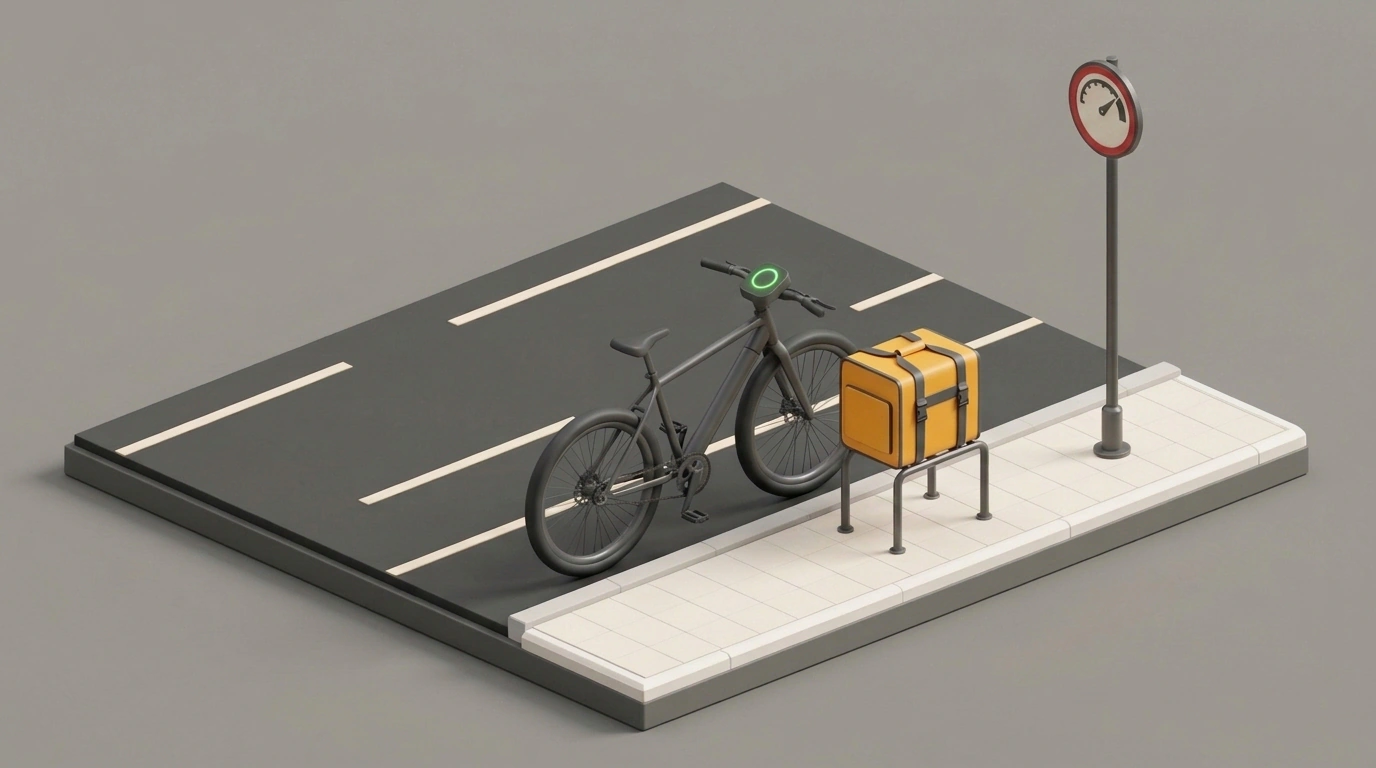
The ministry proposes banning couriers on e-bikes and e-scooters (PMDs—personal mobility devices such as scooters and monowheels) with 0.25 to 4 kW motors and speeds starting at 25 km/h from riding on sidewalks and pedestrian zones. Under Russian traffic rules, such vehicles are effectively classed as mopeds (power over 0.25 to 4 kW, design speed up to 50 km/h). The second requirement is a mandatory Category 'M' driver's license (moped license) and a medical exam.
Almost the entire courier fleet is exposed. According to the Association, only 15–20% of couriers currently hold a Category 'M' license or another category that covers mopeds. Four out of five workers simply wouldn't be able to start a shift on their usual e-bike. One region alone shows the scale: over 50,000 bike couriers work in Moscow and the Moscow region.
The Cost Question vs. Promised Safety
On paper, a sidewalk ban looks logical: pedestrians feel safer. In practice, an e-bike going 25 km/h gets pushed into the same lane as cars and buses moving at 60–80 km/h. That gap in size and speed sharply raises the risk of severe crashes and collisions with couriers.
Transition economics also hit the industry hard. Driving school for Category 'M' costs 20,000–30,000 ₽ per person, plus study time and a medical check. With high turnover, few couriers will pay that out of pocket, and pushing tens of thousands of people through training in a couple of months is unrealistic. Switching en masse to lightweight regular scooters runs into a vehicle shortage. Demand will spike purchase and rental prices, some workers will leave the job, and pay rates for the rest will climb. Ultimately, the market will pay for the logistics overhaul and worker shortage through higher delivery fees.
What Businesses Propose and Where Sellers Will Feel It
The Association proposes a three-step alternative: install IoT speed-control modules on courier vehicles (telematics sensors that automatically slow bikes in crowded areas), introduce slow zones, and build cycling infrastructure together with businesses through 2029.
| Parameter | Transport Ministry Position | Association Alternative |
|---|---|---|
| E-bike movement | Classify as mopeds, ban sidewalks | Allow access with IoT speed control |
| Courier eligibility | Category 'M' license and medical exam | Transition period delayed until at least 2029 |
| Pedestrian safety | Move couriers onto roadways | Slow zones and phased cycling infrastructure |
A seller of clothing or home goods might think this is purely a food-delivery headache. Yet the 'last mile' (the final leg from a dark store, pickup point, or warehouse to the buyer's door) is already the most expensive part of logistics. Ozon and Wildberries courier delivery, express orders, and DBS (delivery by the seller or partner couriers) all draw from the same labor pool. When couriers are scarce and vehicle rentals rise, express and door-to-door rates creep up first. In your DBS and express unit economics for 2027–2029, build in a margin buffer for higher last-mile costs, or express orders will start losing money.