Does this sound familiar? You buy a gym membership, sweat it out on the treadmill three times a week, skip dessert—and the number on the scale refuses to budge. It's the exact moment frustration sets in and you start wondering if your metabolism is permanently broken.
Endocrinologist Maxim Kuznetsov points to three classic physiological traps that trip up almost everyone trying to lose weight. We tend to rely on sheer willpower and extra cardio while completely overlooking how human bioenergetics and brain chemistry actually work.
Trap One: Trying to Outrun Your Dinner
One of the most stubborn fitness myths is treating the gym as a penance for last night's croissant or pizza. The math feels simple: overeat by 400 calories, hop on the treadmill for half an hour, and break even. Unfortunately, your body doesn't run on simple arithmetic.
First, a solid hour of moderate jogging burns only about 250–350 kcal—an amount you can erase in two minutes with a couple of sandwiches or a handful of nuts. Second, prolonged cardio strongly ramps up hunger signals in the hypothalamus. You walk through the front door exhausted, a quiet voice whispers, "You crushed that workout, you earned a treat," and you end up eating twice what you burned.
Strength training and cardio are essential for your heart, bone density, and muscle mass. But a calorie deficit is built in the kitchen, not on the gym floor.
Trap Two: Fighting Your Brain on Empty Sleep
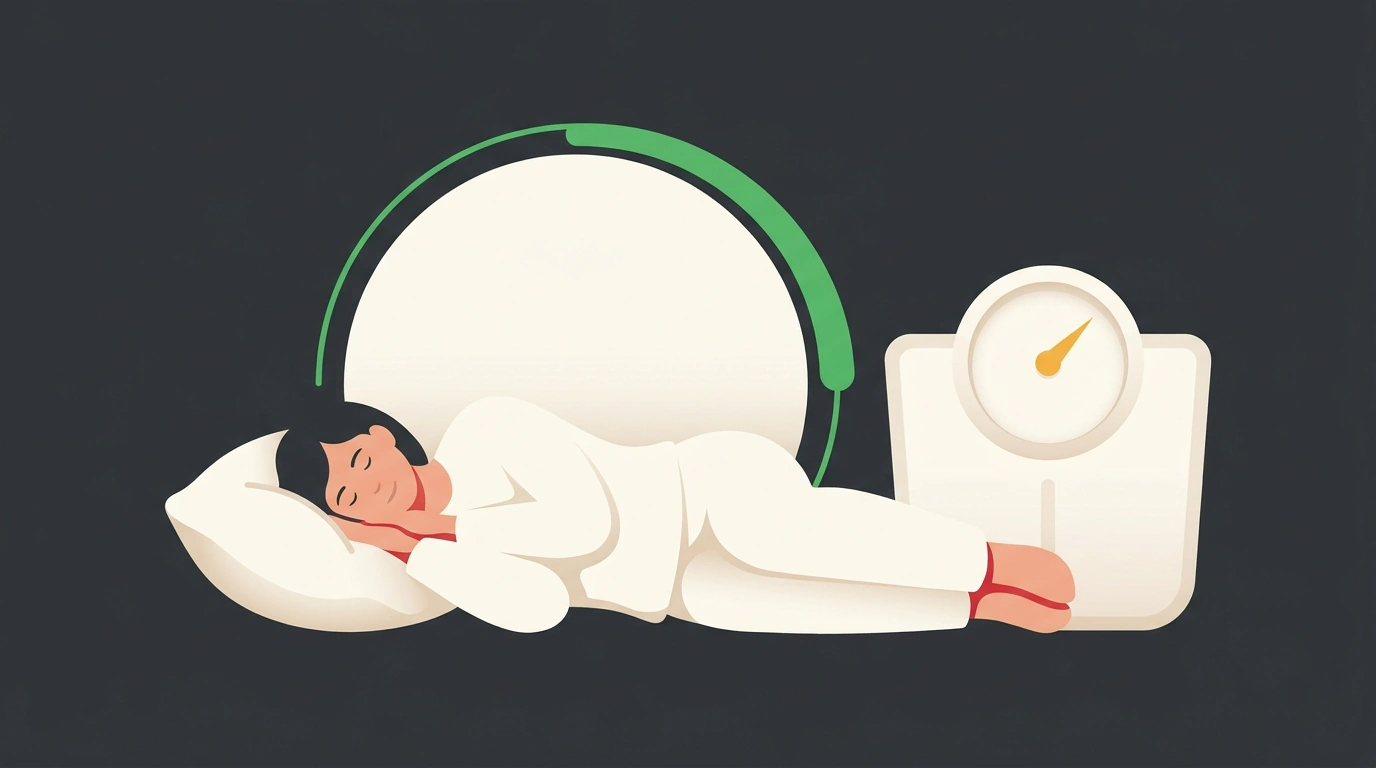
Trying to lose weight while chronically sleep-deprived is like playing a brutal video game on the hardest difficulty—blindfolded.
Neuroimaging studies using functional MRI—including well-known research in Nature Communications led by Dr. Greer—show clearly what happens to your brain after a short night. Activity drops sharply in the prefrontal cortex, the region in charge of self-control, planning, and level-headed decisions. Meanwhile, deeper subcortical areas like the amygdala and the reward center go into overdrive.
A tired brain sounds an energy alarm. Levels of the fullness hormone leptin fall, while the hunger hormone ghrelin surges. Suddenly, grilled chicken and broccoli have zero appeal; your brain specifically demands fast, dense fuel—refined sugar and fats that deliver an instant dopamine hit. If you're sleeping less than 7–8 hours a night, appetite control breaks down at the biochemical level.
Trap Three: The Emotional Rollercoaster of Daily Weigh-Ins
Stepping on the scale every morning can rattle even the calmest person. Yesterday you were down 400 grams; today you're up 800. Did you somehow gain nearly a kilo of body fat overnight? Of course not.
It comes down to glycogen and water balance. Your body stores carbohydrates in muscles and the liver as glycogen—around 400–600 grams total. By osmosis, every gram of glycogen holds onto 3 to 4 grams of water. Have a slightly carb-heavier dinner or a tough workout, and your muscles refill those glycogen tanks, pulling in an extra liter of water along with them. Add a pinch of salt—which can retain water for 24–48 hours—plus normal hormonal shifts during the luteal phase of the menstrual cycle (which can add 0.5 to 2.5 kg of temporary water weight). Body fat simply cannot be gained or burned at a rate of a kilogram a day.
Ditch daily weigh-ins. Step on the scale 3–4 times a week first thing in the morning after using the bathroom, and track your weekly rolling average. Or check in just once a month on the same day of your cycle.
In our earlier piece on staying active while working remotely, we talked about how much everyday non-exercise movement matters. Plain walking, 8 hours of solid sleep, and a balanced plate will do far more for your body than punishing treadmill sessions followed by midnight raids on the fridge.