Picture the scene: a hockey rink, a soccer pitch, a schoolyard, or just a slippery bathroom tile. One awkward fall, an accidental elbow, a hard collision—sharp pain, the metallic taste of blood in your mouth, and sitting on your palm or the pavement is your own front tooth. Intact, white, with its long yellowish root still attached.
Your first panicked thought: "That's it, disaster, I need an expensive implant, my smile is ruined."
New Jersey Devils forward Jack Hughes lost teeth on the ice twice in a single year—first in the Olympic final, and again during the regular season from a high stick. Both times, team dentists put the knocked-out teeth straight back into his jaw, and he finished the season with his own natural smile.
In dental traumatology, this is called complete avulsion (a fully knocked-out tooth). Contrary to popular belief, a knocked-out permanent tooth isn't dead. You can put it back in place and it can heal for decades—as long as you and the people around you avoid a few fatal mistakes in the first thirty minutes.
The Anatomy of Impact: Living Ligaments and Avulsion
To understand how to save a tooth, look just below the gumline. A tooth isn't cemented rigidly into your jawbone:
- Its root is wrapped in a paper-thin shock-absorbing cushion just 0.2 millimeters thick—the periodontal ligament;
- That ligament is woven from tough Sharpey's collagen fibers, tiny capillaries, and millions of living specialized cells called fibroblasts and cementoblasts;
- When a sharp blow knocks the tooth out, those fibers tear down the middle: half stays on the socket wall, and the other half clings as an invisible film right on the root surface.
Keeping those microscopic root cells alive is the single key to saving the tooth. If they survive, your body will knit the torn fibers back together within weeks after replantation, restoring blood supply and support.
If those root cells die from drying out or harsh antiseptics, your jawbone treats your own tooth like a dead foreign object. Ankylosis sets in (the tooth fuses directly to bone with no cushion), and osteoclasts trigger replacement resorption—gradually dissolving the root away over a couple of years.
Water Kills, Milk Saves: How to Transport a Tooth
The #1 enemy of a knocked-out tooth is Extra-Oral Dry Time. The International Association of Dental Traumatology (IADT) highlights a "golden window":
- First 15–20 minutes: Up to 90% of periodontal cells stay alive. Odds of full healing are at their peak;
- Up to 60 minutes in a moist medium: Cells are starved of oxygen, yet still stand a strong chance of survival;
- Over 60 minutes dry in open air: Periodontal cells die irreversibly.
This is right where people make the worst mistake: wrapping the tooth in a dry tissue, stuffing it in a jeans pocket, or dropping it into a glass of tap or bottled water.
Tap or bottled water is hypotonic, with extremely low osmolarity (under 50 mOsm/kg). Root cells are packed with salts. When they hit fresh water, osmosis forces water rushing into the cells under pressure. Fibroblast membranes can't withstand the surge—they swell and burst (osmotic lysis). Plain water reliably kills the ligament in minutes!
Here's what actually keeps a tooth alive on the way to the clinic:
- Best-case option: Hanks' Balanced Salt Solution (HBSS). A balanced salt-and-glucose fluid that keeps cells viable for up to 24 hours. It comes standard in professional "Save-A-Tooth" sports kits.
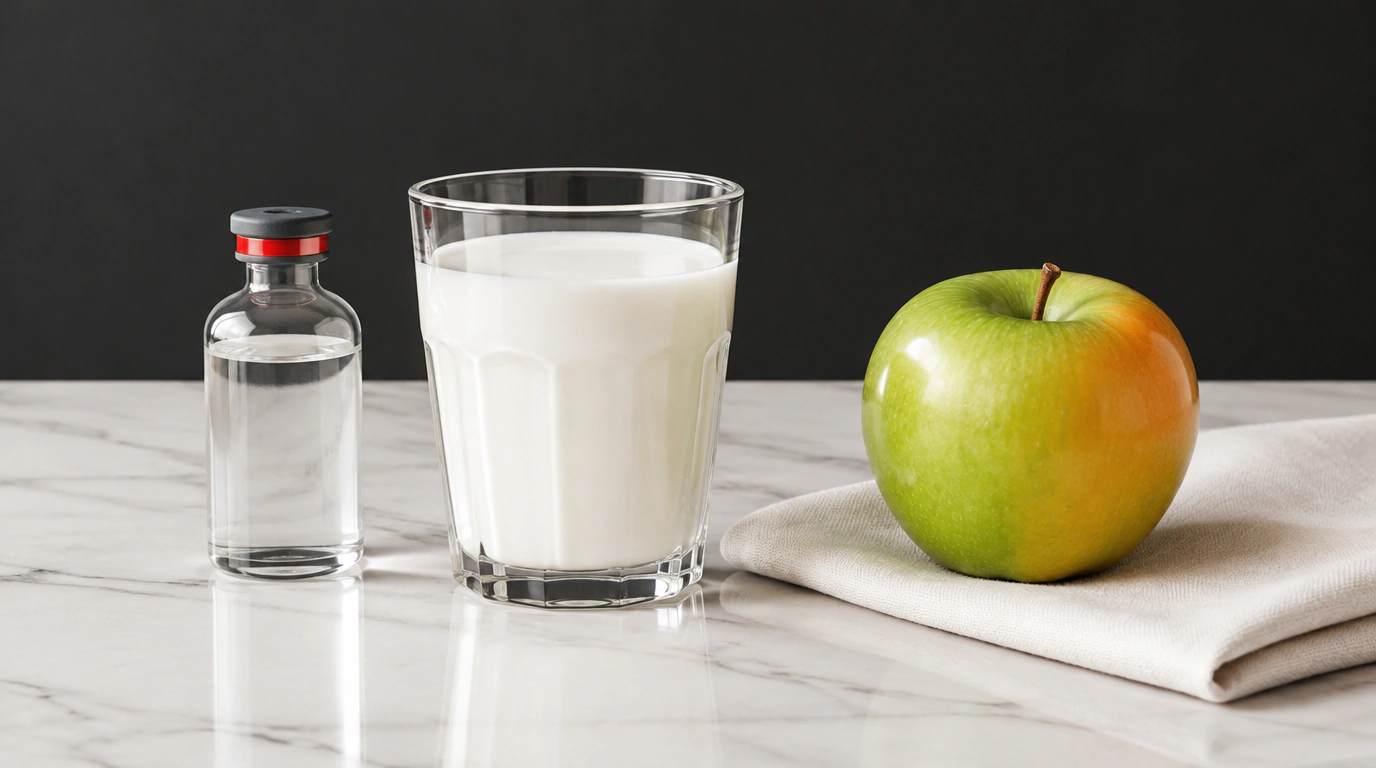
- Best everyday option: Plain pasteurized milk (2.5–3.2% fat). It has near-ideal osmolarity (270–300 mOsm/kg), neutral pH, plus free calcium and proteins. In cold milk, a tooth survives 2 to 6 hours! You can grab a carton of milk at any café, grocery store, or sports complex.
- Saline (0.9% NaCl): Maintains osmotic balance for 1–2 hours.
- Your own saliva: If milk isn't around, spit into a clean cup and submerge the tooth for up to 30 minutes.
Never use rubbing alcohol, iodine, hydrogen peroxide, or wet wipes—they cause instant chemical burns to the living cells.
Pre-Hospital Protocol: Five Steps in the First Thirty Minutes
At the scene, you need to move fast and stay calm:
- Find the tooth and hold it ONLY by the white crown. Never touch the yellowish root with your fingers or a tissue. Handle it like a piece of crystal.
- If it's covered in dirt or dust: Gently rinse it under a stream of cold milk or saline for 5–10 seconds. Never scrub the root with your fingers, scrape it with fingernails, or wipe it with cloth! That physically strips off living ligament fibers.
- Try putting it back in right away. Yes, it sounds intimidating, but immediate replantation on the spot is the global gold standard. Face the smooth front side outward, gently guide the root back into the socket, and press lightly with a finger. Bite down softly on a clean handkerchief or folded gauze to hold it steady.
- If you can't reinsert it (severe pain or a blood clot in the way): Drop the tooth straight into a cup of cold milk.
- Get to an emergency dentist immediately. Ideally, you want to be in the dental chair within 30–60 minutes.
Never tuck a knocked-out tooth inside a child's cheek to transport it! A crying, panicked child can easily inhale it into their airway (choking hazard). Always use a cup of milk. And remember: never replant baby teeth—pushing a baby tooth back into the gum can damage the developing permanent tooth bud underneath.
In the Dental Chair: Flexible Splints, Root Canals, and Red Lines
What does a skilled sports or emergency dentist do next?
They gently flush the socket with saline—without scraping it with a curette, so remaining socket fibers stay intact—and ease the root back into place.
Next comes a crucial step: flexible splinting. The dentist bonds the tooth to neighboring sturdy teeth using a thin, flexible titanium or fiberglass wire with composite resin for about two weeks. Rigid splints of the past are out: the ligament needs tiny, natural micro-movements to heal properly.
You'll also typically get a 7-day course of antibiotics (often doxycycline for adults) to curb bacteria, an antiseptic mouthwash (chlorhexidine), and a tetanus shot if the tooth hit dirt.
Within 7–10 days—before the splint comes off—an adult patient needs a root canal to remove the severed nerve (pulp) and seal the canal; otherwise, dying nerve tissue triggers internal inflammation. In adolescents with immature roots, there's a chance the nerve can revascularize, so dentists often monitor them first before doing a root canal.
Knowing this simple protocol turns a potential lost tooth and thousands of dollars in implants into a manageable incident fixed in a couple of dental visits.
