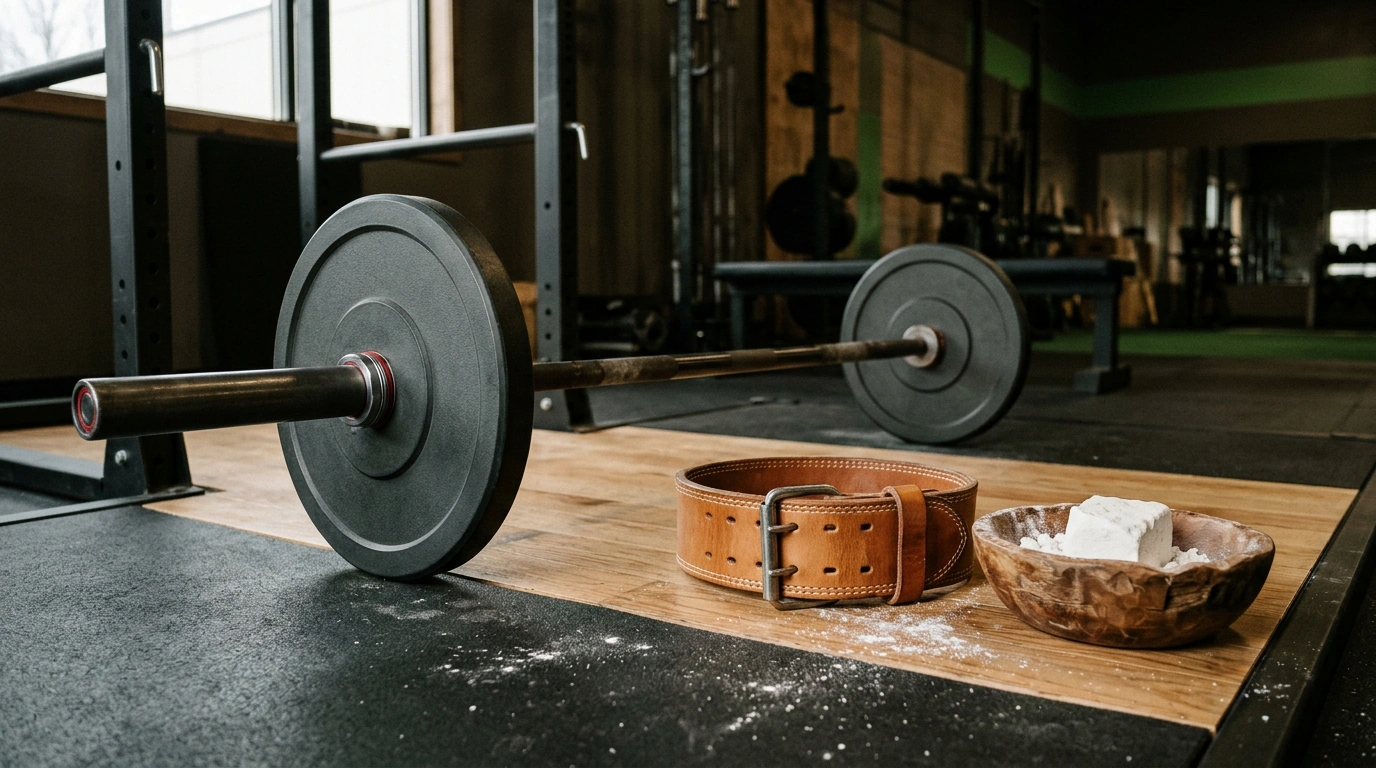
If you have been going to the gym regularly or following strength training for even a couple of months, you have surely come across viral social media clips with spine-chilling warnings. The plot always follows the same script: a stern-faced doctor or media trainer appears on screen and flatly declares that heavy squats, deadlifts, and straining under a barbell are a guaranteed one-way ticket to a proctologist's operating table.
At first glance, the reasoning in these videos sounds frighteningly convincing. Athletes supposedly eat huge amounts of protein that turn their gut into concrete. To protect their backs, lifters cinch up a belt and hold their breath, intra-abdominal pressure skyrockets, blood rushes to the pelvis, their faces turn purple, and vascular cushions literally shoot outward. Some bloggers even go so far as to claim that "almost every second strength athlete suffers from hemorrhoids, they are just too embarrassed to talk about it."
For any sensible person, such horror stories create an understandable stalemate. On one hand, compound strength exercises are the best proven tool for strengthening ligaments, increasing bone density, preserving muscle mass, and protecting against age-related sarcopenia. On the other hand, nobody wants to pay for a strong physique with chronic pain and delicate surgeries.
I decided to get to the bottom of this topic, set emotions aside, and test every single accusation against strict scientific standards. That meant pulling the original clinical guidelines of the American Society of Colon and Rectal Surgeons (ASCRS), digging into biomechanical studies of intra-abdominal pressure, examining cohorts of tens of thousands of people, and dissecting pelvic anatomy. And you know what turned out? Real human physiology and evidence-based medicine paint a picture that is radically different from internet myths.
Let's take this issue apart piece by piece—from dubious statistics to the biomechanics of every breath under the bar.
Anatomy of a Viral Myth: Why the Internet Scares Lifters With the Proctologist
Where did the alarming figure come from that nearly half of people doing strength sports supposedly have hemorrhoids?
When I began untangling the chain of primary sources behind these viral clips, something amusing emerged: almost all of them cite a single recent study by an Italian research group led by Dr. Romano (Romano, Giuliani et al.), published in January 2025 in the International Journal of Colorectal Disease (DOI: 10.1007/s00384-024-04797-3). The paper carried the bold title "Sports practice and hemorrhoidal disease: results of a self-assessment questionnaire among athletes."
At first glance, there it is—a fresh academic publication in a reputable European journal. But let's look inside the methodology, as evidence-based medicine requires. And right away, massive methodological flaws come to light:
First, this was not a clinical examination, but an ordinary online survey conducted via Microsoft Teams. Only 312 people took part (average age 38), exercising at least twice a week.
Second, the researchers performed no objective physical exam, anoscopy, or sigmoidoscopy. Participants simply checked a box on a form answering whether they felt they had ever had hemorrhoidal inflammation. Most telling of all: 52% of the respondents who reported symptoms candidly admitted they had never been to a proctologist in their lives! In other words, people self-diagnosed based on occasional discomfort, an anal fissure, mild skin irritation, or simple itching after prolonged sitting.
Third, there was severe selection bias. The link to this online questionnaire was distributed through the official channels and social media of the Italian Society of Colorectal Surgery (SICCR). Stop and think for a second: which athlete clicks a colorectal surgery society link and spends time filling out a detailed questionnaire about their rectum? Obviously, mostly someone who already has issues in that area or was actively looking for medical help.
Even with such a skewed sample, the numbers were far from sensational. The overall rate of self-diagnosed hemorrhoids across all 312 athletes was 34%. But the most interesting part appeared when broken down by sport. The highest rate of complaints (57%) was recorded not among weightlifters, but among cyclists and horseback riders—where there is hours-long mechanical compression of the perineum by a saddle and impaired local blood flow.
Among amateur bodybuilders, 48% of men reported symptoms, whereas in women in this group no statistically significant association was found at all. In multivariable analysis, the odds ratio (OR) for bodybuilding was 2.88. At the same time, however, the researchers recorded a pronounced protective effect from other sports: hiking, cross-country skiing, and alpine skiing reduced the likelihood of problems fourfold (OR = 0.24)!
Extrapolating the results of an online poll of three hundred Italians to millions of people training regularly with free weights worldwide is completely unscientific. This paper merely reflects subjective complaints in a narrow group; it does not prove that the barbell is the root cause of vascular breakdown.
High-Protein Diets and Bowel Motility: Analyzing a Cohort of 14,000 People
The second pillar supporting the myth of inevitable bowel trouble in athletes is high protein intake. In sports, 1.6–2.2 grams of protein per kilogram of body weight per day is considered standard. Critics of lifting claim: "Protein has no fiber, it rots in the gut, stools turn rock-hard, chronic constipation sets in, and you spend hours straining on the toilet, pushing nodes out."
As "proof," people often point out that in the locker rooms of hardcore gyms you sometimes spot bottles of high-mineral therapeutic water containing magnesium sulfates (Donat Mg, Stelmas). Supposedly, if lifters drink magnesium water for its osmotic laxative effect, they can no longer go to the bathroom without it.
To test this hypothesis, scientists turned to the massive US National Health and Nutrition Examination Survey (NHANES) database, analyzing diet and bowel habits in 13,898 adults in detail (results of the large-scale population study were published in specialized gastroenterology journals, including the European Journal of Nutrition).
The results left dietary myth-makers stunned:
- Pure protein intake by itself showed no statistically significant link to constipation. Neither grams of meat eaten, nor whey protein, nor cottage cheese turns intestinal contents into solid concrete.
- The sole and absolute independent culprit behind constipation (types 1 and 2 on the Bristol Stool Scale) was an acute deficit of dietary fiber.
The carbohydrate factor showed an interesting nonlinearity. Constipation really did spike in people following extreme zero-carb diets and harsh contest preps, living solely on dry chicken breast and egg whites while completely ignoring vegetables and greens. When daily fiber drops below the critical threshold of 12–15 grams, stool simply has nothing to build bulk from. Peristalsis has nothing to grip, transit slows down, the colon absorbs all the water from the mass, and the result is dry, hard fragments.
Yet as soon as people on high-protein diets added an adequate fiber intake (25–35 grams per day from vegetables, berries, and whole grains) and drank enough fluids (30–40 mL per kilogram of body weight), all motility issues vanished completely. Moreover, when fiber intake was normal, increasing the share of quality protein actually improved stool consistency.
As for magnesium-sulfate mineral waters, their mechanism is simple and physiological: magnesium ions and sulfates are poorly absorbed in the small intestine and create an osmotic gradient, drawing water into the colon lumen and softening the fecal bolus. Still, a healthy athlete has no need to use them as a daily crutch—it is enough simply not to forget a bowl of salad with every meal. Protein has nothing to do with it.
Physics of the Valsalva Maneuver: Why the Body Needs Intra-Abdominal Pressure
Now let's turn to the main biomechanical argument: straining. When an athlete squats with a heavy barbell on their shoulders, they perform the Valsalva maneuver: taking a deep breath to roughly 75–80% of lung capacity, tightly closing the glottis, and forcefully contracting the abdominal muscles, diaphragm, and pelvic floor.
At that moment, intra-abdominal pressure (IAP) surges to enormous levels:
- Lying at rest, intra-abdominal pressure is only 2–5 mmHg.
- Standing, it stays around 10–16 mmHg.
- During an ordinary cough or a hearty sneeze, pressure jumps to 50–100 mmHg.
- During maximal straining under a heavy barbell, intra-abdominal pressure reaches 150–250 mmHg (equivalent to 20–35 kPa).
Critics of strength sports point to these huge numbers and cry in horror: "Look at that insane pressure—it's tearing pelvic blood vessels apart!" Yet they overlook a fundamental law of evolutionary biomechanics.
Why did nature invent the Valsalva maneuver in the first place? This mechanism appeared millions of years before the first barbell was forged. When our ancestor needed to lift a heavy tree trunk, pull out a trapped tribe member, or haul a carcass, the spine was subjected to dangerous compressive and shear forces. Left on its own without muscular support, the spinal column would buckle under a load of just 20–30 kilograms.
By drawing in air and trapping it with the diaphragm and abdominal wall, our body turns the abdominal cavity into a rigid, incompressible pneumohydraulic cylinder (an "internal belt"). This cylinder absorbs 20% to 40% of axial load, unloading the lumbar vertebrae and protecting intervertebral discs from protrusions and herniations. It is an essential protective reflex!
And what about a lifting belt? A systematic review of 16 biomechanical studies showed that a stiff leather belt 10–13 cm wide does increase peak intra-abdominal pressure by another 15–25% compared with lifting beltless. The belt gives the abdominal wall a rigid external brace, allowing core muscles to contract with maximum force and stabilize the torso.
Now here is the key fact that settles the matter: how long does that peak pressure spike last during a heavy squat? Exactly 1.5–3.5 seconds!
It is a brief, acute physiological impulse. The human vascular system has an enormous reserve of elasticity and strength to absorb such second-long peaks. That is fundamentally, radically different from sitting on a toilet for 15–20 minutes staring at a phone screen while continuously bearing down with the full weight of your abdominal wall. Comparing a three-second barbell lift to a twenty-minute toilet siege from the standpoint of vascular physiology is utter nonsense.
What Actually Happens Inside: Cavernous Bodies and Parks' Ligament
To put your mind completely at ease, let's look inside human anatomy. What are hemorrhoidal cushions in the first place?
Architectural anatomical cross-section of the vascular cushions and Parks' suspensory ligament in the style of a precise medical atlas
Most people carry a distorted mental image: that these are pathological veins that one day burst and pop out. In reality, it works quite differently. Hemorrhoidal structures are an entirely normal, innate anatomical feature that forms in every human being while still in the womb.
In clinical anatomy, they are called the cavernous bodies of the rectum (corpus cavernosum recti). These are specialized vascular cushions (anal cushions) located in the submucosal layer of the distal anal canal. Normally, they sit in three constant zones (if you picture a clock face while lying on your back: at 3, 7, and 11 o'clock).
These vascular structures consist of a dense network of arteriovenous anastomoses (direct connections between arteries and veins without capillaries), thin-walled cavernous veins, smooth muscle fibers (known as Treitz's muscle), and elastic connective tissue.
Why does the body need them?
- Seal: when filled with blood, these cavernous cushions close together, providing 15% to 20% of resting anal sphincter basal pressure. They are what ensure reliable continence for gas and liquid bowel contents.
- Cushioning: when a formed fecal bolus passes through, the cushions flatten slightly, protecting the internal sphincter and bowel wall from mechanical trauma.
So how does hemorrhoidal disease actually develop? Coloproctology has established that the disease arises not from a temporary rush of blood, but from a combination of two factors:
- Hemodynamic factor: an imbalance between blood inflow and outflow. During heavy straining, pelvic veins are compressed by muscles, outflow temporarily slows, and the cavernous bodies briefly engorge with blood.
- Degenerative-dystrophic factor (the main one!): gradual breakdown and weakening of the connective-tissue framework that anchors these cushions to the anal canal wall. This framework is formed by smooth muscle fibers of Treitz's muscle and a crucial structure—Parks' ligament.
It is Parks' ligament, like sturdy elastic cables, that holds the vascular cavernous bodies in their anatomical place, preventing them from sliding downward.
What destroys Parks' ligament? Three things destroy it: genetic weakness of connective tissue (systemic dysplasia), age-related collagen degradation, and years of mechanical trauma from hard, dry stool in chronic constipation.
A brief barbell lift lasting a couple of seconds, causing a transient rush of blood, cannot mechanically tear Parks' ligament in a healthy person. A weightlifter's flushed face and bulging neck and forehead veins during a heavy single merely reflect elevated intrathoracic pressure and temporary slowing of venous return through the jugular veins. Yet the rectal vessels are reliably supported by the smooth musculature of the pelvic floor. If Parks' ligament is intact and there is no constipation, the barbell alone does not create disease.
Facial flushing and bulging neck veins when lifting a heavy weight are a normal vascular response to the Valsalva maneuver that vanishes without a trace three seconds after exhaling. The rectal cavernous plexuses work the exact same way: they fill briefly with blood and empty immediately as soon as the lifter sets the bar back on the racks. Without chronic trauma from hard stool, vascular tissue does not undergo degeneration.
Practical Safety Protocol: How to Breathe and Train Without Risk
Does all of the above mean you can ignore technique in the gym and strain until you see stars? Of course not. Even though the barbell is not the root cause of the disease, sloppy technique and extreme overstraining can aggravate preexisting hidden issues or trigger pelvic blood stasis.
Sports physicians and evidence-based proctologists have put together a clear, practical safety protocol that lets you train with any working weights without the slightest health risk.
1. Modifying Your Breathing Pattern
The classic "closed" Valsalva maneuver—where the glottis stays locked shut from start to finish of a rep—is justified only in competition when lifting maximal record weights (1RM). In regular training for sets of 5–10 reps, using it continuously is not only unnecessary but counterproductive: it overloads the vascular system and can cause blood pressure spikes.
Use a controlled exhale against resistance:
- During the lowering phase (the eccentric phase of a squat or press), take a deep, bracing breath through your nose and mouth, filling your lungs to 75–80%.
- At the bottom position, lock your core for half a second to absorb the transition.
- As you push past the "sticking point" on the way up, begin a strong, smooth exhale through tightly pursed lips with a "pfff" or "hsss" sound.
This exhale maintains ideal torso rigidity and lower-back safety while bleeding off excess peak intra-abdominal pressure, reducing pelvic venous congestion by 30–45%.
2. The Myth of Voluntary "Sphincter Clenching"
Online, you often run into the absurd advice: "When you squat, consciously squeeze your anus as hard as you can so your hemorrhoids don't pop out."
Examining this tip through biomechanics and neuromuscular coordination reveals how completely misguided it is. Trying to isolate and tense the external sphincter while moving a 100–150 kg barbell breaks natural muscle synergy. The pelvic floor muscles (levators) are meant to work in reflex harmony with the transverse abdominis and diaphragm.
Isolated sphincter clenching disrupts the pelvic stabilization pattern and can lead to compensatory rounding of the lower back. All you need is unified, whole-core bracing without any sensation that your internal organs are being pushed downward. If you feel pronounced bulging pressure in the perineum, your working weight is too heavy or you are bearing down through the pelvic floor instead of bracing with your diaphragm.
3. Golden Rules of Toilet Hygiene
The paradox is that the health of your blood vessels is decided not in the weight room, but in your own bathroom at home. That is where 95% of people make the fatal mistakes that destroy Parks' ligament.
Remember three ironclad rules:
- The three-minute rule: time spent on the toilet should not exceed 3–5 minutes. A standard toilet fixes the body at a 90-degree angle at the hips. In that position, the puborectalis muscle kinks the rectum, venous outflow is blocked, and gravity stretches the tissues. The toilet is a place for quick physiological relief, not a reading room.
- Strict ban on smartphones: if you bring your phone with you, average sitting time automatically jumps from 3 to 15–20 minutes. That is the worst thing you can do to your cavernous plexuses.
- Use a footstool: place a small 15–20 cm stool in the bathroom. When your knees rise above hip level (a hip angle of around 35 degrees), the anatomical bend of the rectum straightens out, and emptying happens quickly with no straining at all.
Safety Checklist for Lifting Weights
- Diet includes at least 25–30 grams of fiber daily for soft stools
- Baseline daily water intake is met (30–40 mL per kilogram of body weight)
- Active pursed-lip exhale is performed on the concentric lifting phase
- Time on the toilet is strictly limited to three minutes with no smartphone
- A footstool is placed under your feet for a physiological defecation angle
Disease Stages, Red Flags, and Training Boundaries
What should you do if unpleasant symptoms have already appeared in the past, yet you refuse to quit sports and lose your fitness? Here evidence-based medicine offers very clear, balanced guidelines grounded in the international Goligher classification of internal hemorrhoids.
Four stages are recognized:
- Stage 1: vascular cushions are enlarged but do not protrude outside the anal canal. A person may occasionally notice painless streaks of bright red blood on toilet paper after a bowel movement.
- Stage 2: cushions may prolapse outward during heavy straining or exertion, but retract back on their own without manual help.
- Stage 3: cushions prolapse during defecation or exertion and require manual reduction.
- Stage 4: cushions remain outside permanently, mucosa is everted, and they cannot be pushed back in. Very high risk of strangulation and thrombosis.
How should you train depending on the stage?
- In Stages 1 and 2 during stable remission (when there is no pain, inflammation, or bleeding), strength training is completely permitted! There is no need to give up squats or deadlifts as long as you stay hydrated, eat enough fiber, and control your breathing. Modern coloproctology guidelines confirm this.
- In Stage 3, training requires sensible adaptation. Temporarily cut out near-maximal heavy singles and doubles (1–3 reps at max weight) as well as movements creating huge standing axial pressure. Swap barbell squats for moderate-weight leg presses (without deep pelvic tuck at the bottom), use chest-supported machine rows, and rely on isolation exercises.
- During any flare-up (acute cushion thrombosis, anal fissure, active bleeding), weighted strength training must be paused completely until the flare subsides or minimally invasive treatment is performed (rubber band ligation, HAL-RAR dearterialization, or laser coagulation).
Self-treatment and a wait-and-see approach are unacceptable if warning symptoms appear:
- Heavy discharge of dark venous blood or clots (this requires ruling out inflammatory bowel disease and colorectal cancer);
- Sharp, throbbing pain in the perianal area unrelated to bowel movements (a sign of hemorrhoidal plexus thrombosis);
- Appearance of a firm, bluish, non-reducible lump outside;
- Fever, chills, and pulsing pain (risk of paraproctitis—purulent inflammation of surrounding tissue).
The Bottom Line for a Sensible Lifter
Once you strip away pseudoscientific internet noise and look at the facts soberly, the conclusion becomes crystal clear: the barbell is not to blame for problems created by poor lifestyle habits outside the gym.
Hemorrhoidal cavernous bodies are a healthy part of every person's anatomy. They do not break down from a couple of seconds of controlled effort under a barbell, provided your connective-tissue support isn't subjected to daily torture from constipation, half-hour smartphone sessions on the toilet, and extreme zero-fiber diets.
Train with enjoyment, dial in your breathing technique, watch what goes on your plate, and don't let viral scare stories rob you of strength, muscle, and the joy of active movement. If you are interested in related questions about how peak loads affect the body, I also recommend reading our piece on the risks of competitive bodybuilding and the biomechanics of deep core muscles, where we broke down safe abdominal wall mechanics in detail. A rational approach and scientific fact-checking always defeat any myth.