Ask any veteran Avito strategist which product niches move the biggest money, and auto parts—specifically complete internal combustion engines—will be near the top of the list. Average tickets run from 150,000 to 450,000 rubles, and net profit on a single deal easily beats a whole month of selling small retail goods.
For a long time, though, this niche came with massive headaches. The classic route—selling used "contract" engines pulled from foreign salvage yards—turned business into a minefield. A buyer installs the engine, and two weeks later calls furious: scored cylinders, heavy oil burn, or a cracked block. A 14-day installation warranty meant endless disputes, refunds, and trashed reviews.
Serob, author of the "PRO Business on Avito" channel, took a look inside a major wholesale warehouse in Moscow and showed how the engine market has transformed over the past year. Let's see how you can dropship brand-new engines without tying up millions of rubles in your own inventory.
The market shift: why new engines are replacing used salvage units
The biggest shift in the niche is buyers moving en masse to brand-new engines and factory-remanufactured (reman) units.
Take the hottest commercial segment: diesel engines for Ford Transit 2.0 EcoBlue and 2.2 (front- and rear-wheel drive). For a fleet owner or independent courier, every day a van sits in the shop costs tens of thousands of rubles in lost revenue. They don't have time to play roulette with old salvage yards. A zero-wear factory engine backed by an official 6-to-12-month warranty removes every objection. Call-to-payment conversion on these units is multiples higher, and returns drop close to zero.
Dropshipping with a Moscow warehouse: how the split works
To make money on engines, you don't need to rent a warehouse or buy stock worth millions. A Moscow distribution hub run by veteran operator Egor (over 5 years in the niche) handles 90% of the physical legwork:
- Direct import and official customs clearance;
- Warehousing and pre-sale inspection;
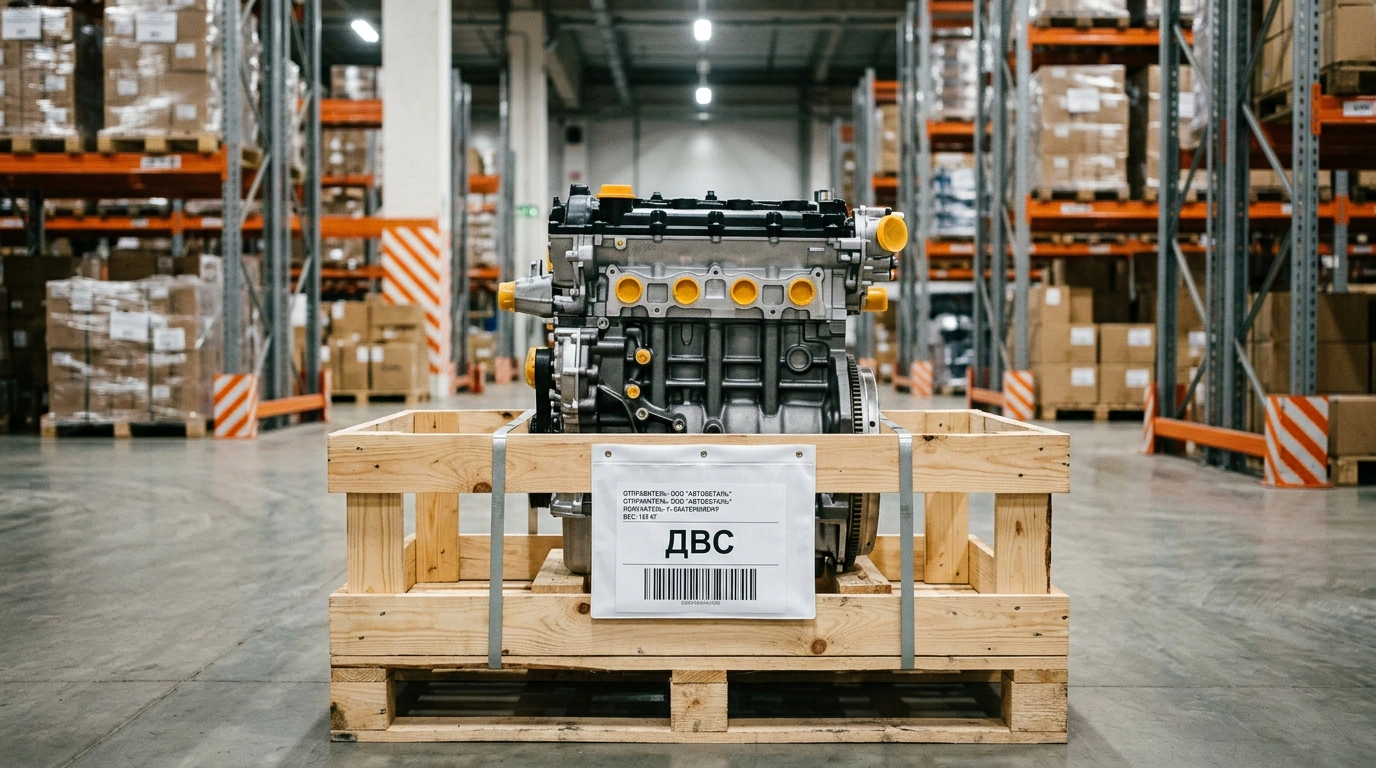
- Heavy-duty crating in rigid wooden frames;
- Shipping via national freight carriers (Delovye Linii, PEK, CDEK) to any city in Russia.
Your job as the seller is pure Avito marketing. You track demand by make and engine code, publish listings, take incoming calls, ask buyers for their VIN to confirm exact fitment, and close the deal on prepayment.
Partners get a dedicated Telegram bot for fast quoting. In a couple of taps on your phone, you can check live Moscow warehouse stock, shipments currently clearing customs, and pre-order slots with exact arrival dates.
An engine is a serialized component. While the engine number is no longer printed on the vehicle registration card (STS), it is still recorded in the vehicle title (PTS) and the federal traffic police (GIBDD) database. Under the 'model-for-model' rule, if the new engine matches the factory spec, horsepower, and emissions class, you don't need prior GIBDD approval. However, the supplier must provide three documents: a purchase and sale agreement (DKP) listing the engine serial number, a certified copy of the customs declaration (GTD), and a warranty card.
Unit economics and dropshipper take-home pay
A seller's net margin averages 15,000 to 50,000 rubles per engine sold.
Even working solo and closing just 5–10 deals a month brings in 150,000 to 400,000 rubles in net profit—no inventory loans, no warehouse staff, and zero risk of getting stuck holding a defective used engine.