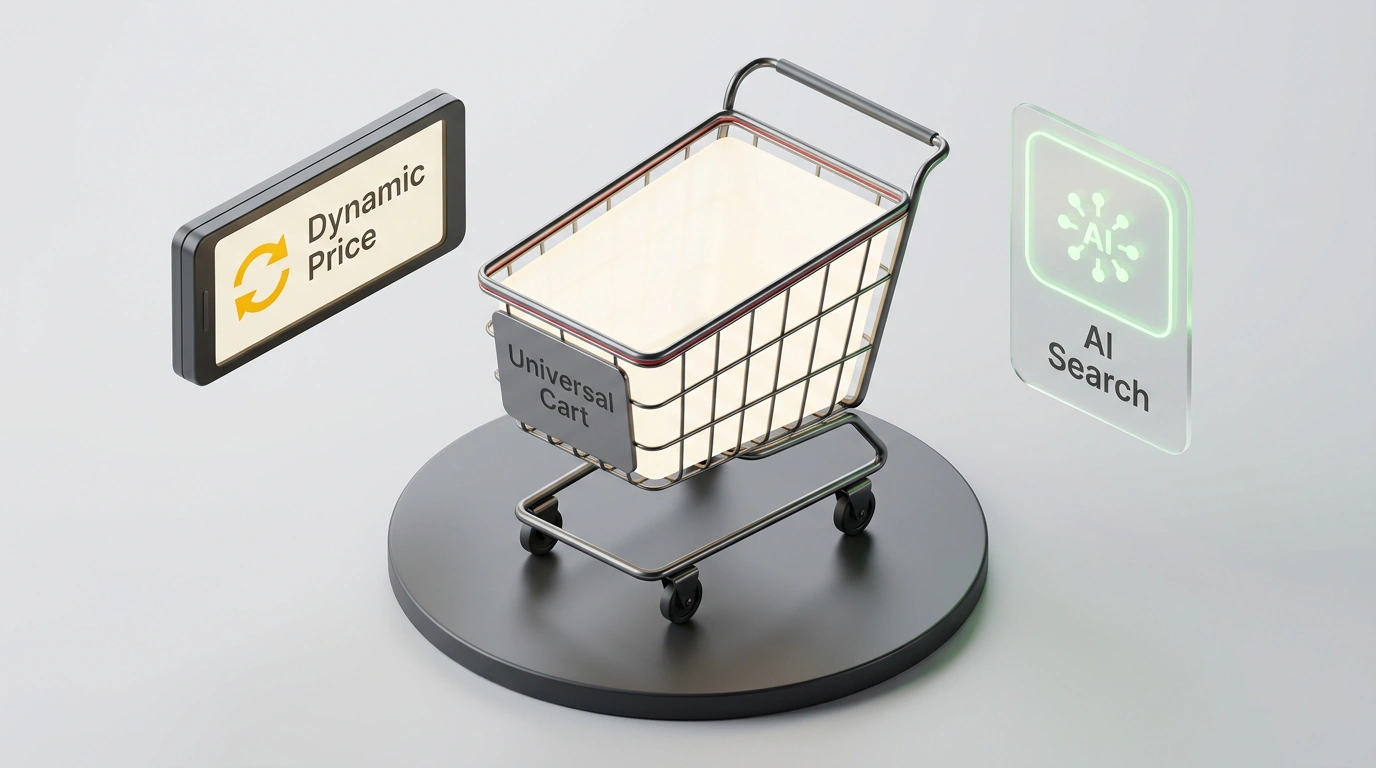
If you follow e-commerce closely, you can see how fast the walls between traditional retail formats are crumbling. Just a couple of years ago, the map looked neat and divided: big-box retail aisles in one corner, brand DTC websites in another, and walled-garden marketplaces with their own search bars and ad auctions in a third. Today, generative AI and autonomous agents are merging that entire landscape into a single, seamless shopping layer. Shoppers no longer need to open twenty tabs to compare product pages—AI assistants do the legwork for them.
Let's walk through four key developments from this week that show how artificial intelligence is reshaping the sales chain from shelf tags all the way to the checkout button.
Electronic Shelf Labels and Dynamic Pricing in US Retail
Major US retail chains—Walmart, Best Buy, and grocery giant Kroger—are accelerating the rollout of digital Electronic Shelf Labels (ESL). On the surface, it looks like routine store-ops automation so clerks stop running down aisles with paper price stickers. Under the hood, a much bigger shift is taking place.
Electronic shelves plug directly into dynamic pricing algorithms. Brick-and-mortar prices now recalculate automatically in real time based on demand spikes, weather forecasts, warehouse stock levels, and competitor moves. If rain starts pouring outside, umbrellas can jump in price immediately, while perishables mark down toward evening.
That tech leap has triggered sharp pushback from shoppers and lawmakers alike. Americans worry about Uber-style surge pricing on everyday groceries and are demanding legislation against algorithmic price discrimination. For marketplace sellers, the signal is clear: the real-time repricing algorithms we already live with online are becoming the baseline for all omnichannel retail.
Amazon Seller Assistant
While brick-and-mortar chains experiment with shelf tags, Amazon is rolling out generative AI on the seller side. Inside Seller Central, the company has launched its conversational Amazon Seller Assistant (built under Project Amelia) powered by Amazon Bedrock.
Sellers no longer have to spend hours exporting bloated CSV files and stitching funnels together by hand. You can ask the assistant in plain English: "Why did sales drop for SKU X last week?" or "How many units are sitting in warehouses with aged-inventory surcharges?" The assistant pulls sales reports, return rates, FBA stock levels, and policy updates, returning a structured summary with direct links to the source data.
Amazon is upfront about the caveats: the tool is experimental, its answers carry no legal weight in disputes, and hallucinations still happen. Even so, it marks a concrete step toward turning routine store management into a conversation with a personal AI analyst. We covered similar moves by retail giants in our roundup on Amazon auto-buy price triggers and Google seller filtering.
Consumer Trust in AI Shopping and the Rise of GEO
How are shoppers actually reacting to AI entering the checkout flow? At the Brand Day 2026 conference, Sbermarketing CEO Dmitry Orchenko presented fresh comparative data on consumer trust across markets.
The gap between regions remains wide:
- Product discovery via AI: fewer than 33% of Russian internet users turn to AI for shopping recommendations, compared with 62% in the US and a massive 75% in China;
- Willingness to let AI buy with manual approval: 17% of respondents in Russia say yes, versus 45% in the US and 86% in China;
- Full autonomous checkout without approval: only 8% in Russia are ready to let an agent charge their card automatically, compared with 23% in the US and 45% in China.
The loudest wake-up call for brands, however, is how easily people switch loyalties. According to the study, 37% of consumers are ready to drop a favorite brand simply on an AI's recommendation, and 81% of retail executives expect brand loyalty to erode by 2027. In the US, traffic to online stores coming from AI interfaces jumped 8x over the past year.
Classic SEO is giving way to GEO (Generative Engine Optimization)—optimizing product listings for AI-powered search engines. Models do not recommend whoever bought the most backlinks; they pick sellers with cleanly structured specs, authentic customer reviews, and reliable fulfillment. For a deeper look, read our piece on agentic commerce in Russia and site-free checkout.
Google Universal Cart
Closing out the week, Google launched Universal Cart in the US, baked straight into classic Google Search and the Gemini mobile app on top of its Shopping Graph and the open Universal Commerce Protocol (UCP).
Universal Cart breaks the isolated-storefront model. A shopper can search for Nike sneakers, Sephora cosmetics, Target home appliances, or items from independent Shopify stores—and drop them all into one shared cart right inside Google's interface.
- For authorized partners, checkout is seamless: payment goes through Google Pay in one click without ever leaving for external websites;
- For other merchants, the cart automatically syncs and hands off to the retailer's site;
- Google does not act as the seller: the merchant remains the full merchant of record, handling warranties and fulfillment.
For more on how storefronts are evolving, check out our breakdown of Google Merchant Center text filters and AI search.
What Sellers Need to Prepare For
Global retail is no longer just a fight for the top organic slots inside one marketplace's search bar. When shoppers buy through a cross-platform Google cart or take advice from an AI assistant, structured product data, open APIs, and genuine social proof take center stage. The winners will be the sellers whose listings make just as much sense to an AI agent as they do to a human buyer.