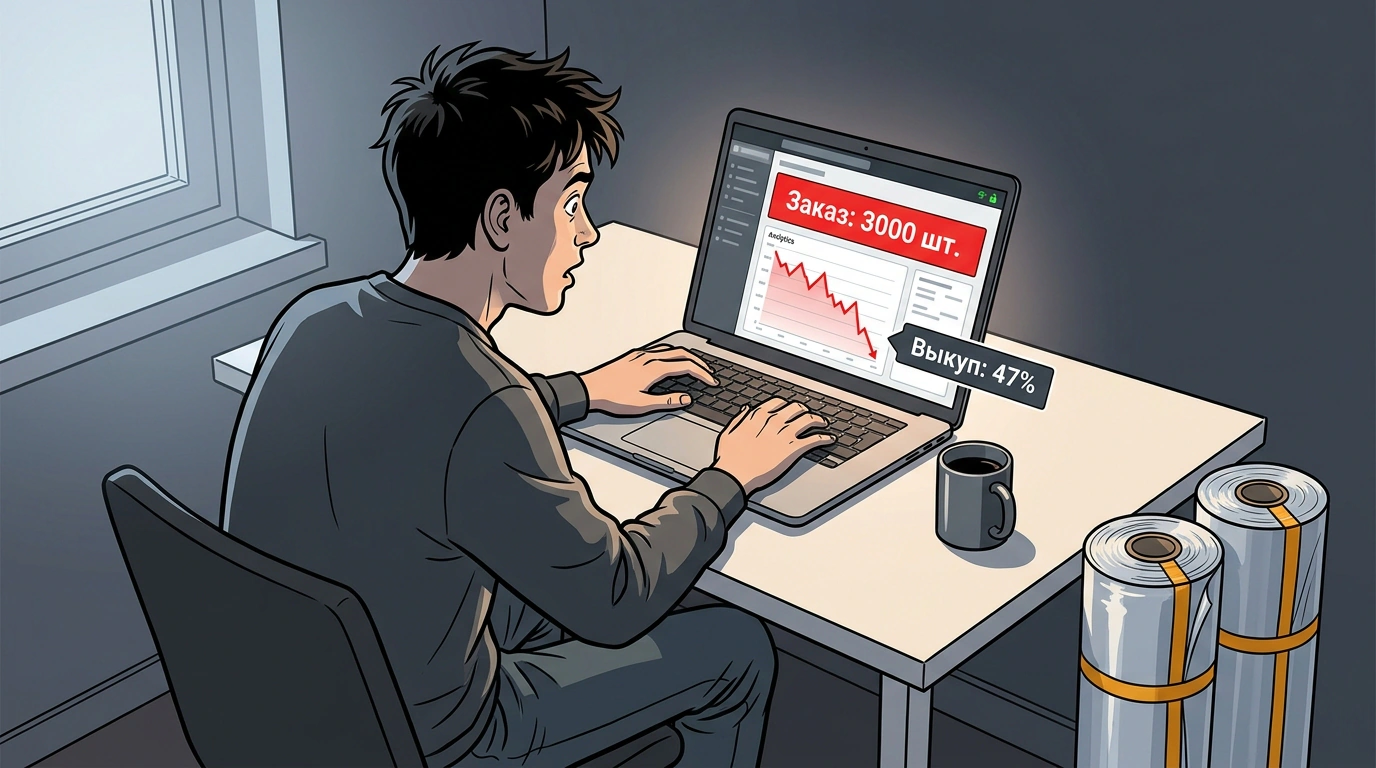
Imagine spending months pushing a product listing into Ozon's organic top spots, pouring money into ads, collecting stellar reviews, and keeping your buyout rate above 90%. Then one morning you open your seller dashboard and see an overnight order for your entire warehouse inventory—worth 3 million RUB—addressed to a tiny pickup point (PVZ) in Irkutsk.
A newcomer's first thought is: "Jackpot, a big wholesale buyer!" An experienced seller feels a cold sweat immediately. Because in 2026, that is no lucky break—it is a classic "phantom buyout" attack designed to drive a competitor into bankruptcy in a single month.
The Yekaterinburg Case: 7 Million RUB Worth of Joyrides
Details of this destructive scheme surfaced in an investigation by Business FM. A woman entrepreneur from Yekaterinburg had built a thriving Ozon business selling polyethylene construction film. It is a fast-moving retail staple: normal DIY buyers order 2–4 rolls for a cottage or apartment renovation, maybe 10–12 rolls at most.
The attack unfolded in a calculated two-step strike:
- First strike: From an empty, brand-new buyer account, someone placed a single unpaid order for 3,000 rolls of film totaling over 3 million RUB, bound for a remote pickup point in Irkutsk. The shipment traveled across the country, sat through the mandatory storage window, and bounced back as unclaimed;
- Second strike: Exactly three weeks later, while the first batch was still winding its way back through sorting centers, the playbook repeated. Another account ordered 4 million RUB worth of stock to Murmansk—and again, 100% of it went uncollected;
- The fallout: The listing's buyout rate crashed from a benchmark 93% down to a toxic 47%.
The Double Trap: Search Erasure and Million-Ruble Freight Bills
What happens to a store next is pure, automated brutality from the marketplace engine.
First, Ozon's search ranking algorithms are tightly wired to buyout rate. Once that metric drops below a critical threshold, the algorithm flags the SKU as illiquid or problematic and buries the listing from page one into the depths of the catalog. Organic sales flatline overnight.
Second, all of the seller's working capital gets physically locked inside inventory bouncing around the country for weeks. It is a textbook manufactured out-of-stock that clears the digital shelf for whoever orchestrated the attack.
Third comes the direct cash hit: for every kilometer of round-trip shipping, the marketplace bills logistics fees straight to the seller's balance. On bulky, heavy goods like rolls of construction film, cross-country "joyrides" rack up millions of rubles in charges.
The paradox is that Ozon publicly boasts about blocking 11.4 billion RUB in fraudulent transactions—yet the simplest anti-fraud trigger imaginable, blocking a single unpaid order for 3,000 units of one SKU, somehow fails to fire. After complaints, support acknowledged the attack and banned the fake buyer accounts, but flatly refused to refund the millions charged for round-trip shipping. Twelve affected entrepreneurs are now preparing a joint lawsuit against the platform's legal entity.
We previously covered how to defend a store against unfair pressure in our breakdown of targeted sabotage on Ozon and how to fight fake negative reviews.
How to Protect Your Store Right Now
Until the platform can automatically block raids like this, you have to set up your own guardrails inside your seller dashboard:
- Cap order quantities per buyer: Open your listing settings, find "Order quantity limit," and set a sensible cap (say, 5–10 units for retail SKUs). Honest shoppers will not notice, while bots will be technically blocked from sweeping your entire stock;
- Watch for overnight spikes: Turn on alerts for abnormally large orders. If you fulfill via FBS and spot a bulk order heading to a distant region, message support immediately and hold shipment until the buyer is verified;
- Document every piece of evidence: At the first sign of a targeted buyout attack, take notarized screenshots of the orders, tracking numbers, and support threads. They form the backbone of a pre-trial claim and an unjust-enrichment lawsuit.
As long as marketplaces push the cost of imperfect anti-fraud onto sellers' shoulders, staying vigilant is the only real insurance policy for your business.
