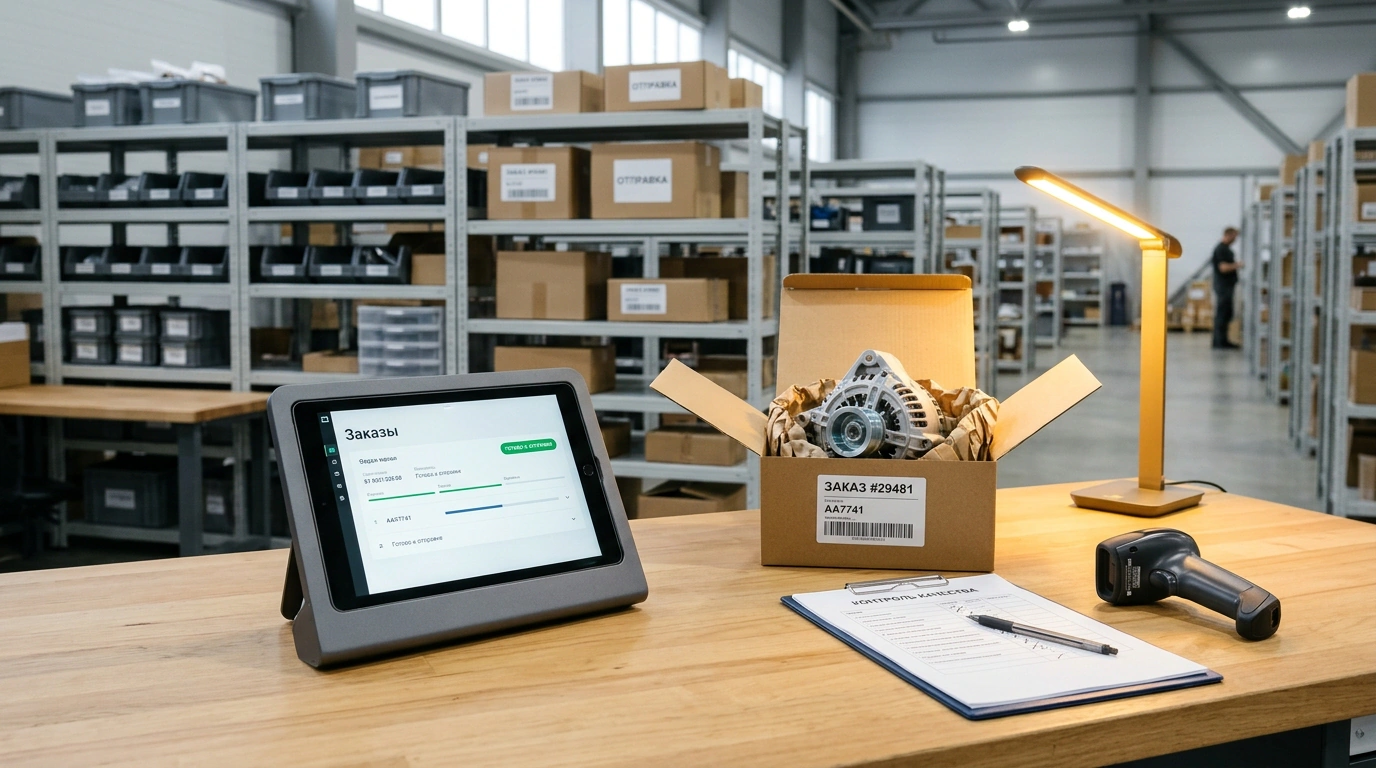
Picture the classic nightmare of a first-time seller: you spend your last cash on a batch of trendy goods, stack boxes down the hallway of your apartment, and two weeks later demand drops, your listings sit with zero views, and your money is locked up in dead stock. The worst part is how many newcomers genuinely believe that without a million rubles for inventory, a damp storage unit, and hired packers, product sales are off-limits.
In reality, you can enter the platform with a completely different risk profile. Entrepreneur Serob, who has worked with classifieds for over 10 years and tested more than 50,000 SKUs, runs his business on a partner model. Instead of buying shipping containers on a hunch, he operates a network of 11 own stores on Avito plus partner dropshipping for hundreds of sellers. Let's unpack how this works: how a shared warehouse operates, how much an auto parts store brings in on a modest budget, and how to avoid account bans.
Why Buying Wholesale Blindly Burns Through Working Capital
The biggest trap in traditional wholesale is the illusion of control. It feels like having stock within arm's reach means business is moving. In practice, you carry every cost alone. You have to inspect for defects, shoot product photos, buy packaging, haul boxes to drop-off points, and put your own working capital on the line.
In a partner model, those risks disappear. As we covered in our breakdown of working with wholesale warehouses without buying stock, your real asset on a classifieds site is knowing how to attract targeted traffic and close deals in chat. The inventory sits at the partner's warehouse, fed by regular factory deliveries. You create the listing, talk to buyers, and pass confirmed orders along for fulfillment. You don't pay the supplier upfront: settlement happens out of the revenue after the customer picks up the parcel.
Inside the Partner Warehouse: From Packing to 4 Dispatches a Day
For this setup to run like clockwork, the listings have to be backed by tight warehouse discipline. Serob's central hub operates seven days a week from 10:00 to 19:00. Roughly half the volume comes from suitcases and travel bags—a year-round niche with solid margins. The rest is split across auto parts, electronics, and home and garden goods.
Responsibilities are cleanly divided:
- Warehouse infrastructure: receives shipments, checks for defects, shoots clean product photos for listings, applies labels, and packs orders to carrier standards.
- Shipping windows: couriers pick up parcels 3–4 times a day. Avito Delivery is connected via CDEK, Russian Post, Boxberry, and Yandex Delivery, alongside a local pickup zone in Moscow.
- The seller's job: you get ready-made photos, descriptions, and the wholesale price. Your job is to publish the listings, tune promotion, and reply fast in chat.
The spread between the warehouse wholesale price and your retail listing price is your net margin. The warehouse gets distribution through partners, and you get a product business without the operational grind.
The Auto Parts Case: 20,000 Rubles on Ads and 250,000 Rubles Net
A telling example is an active auto parts store inside Serob's network. The niche looks intimidating at first glance, yet the numbers speak for themselves:
- Seller's spend on promotion and ads: 20,000 rubles per month;
- Net profit after commissions and expenses: 250,000 rubles per month;
- Return on ad spend (ROAS): over 1,250%.
Auto parts are in constant demand: when a driver's alternator or wheel bearing gives out, the repair can't wait. Buyers look for specifics—exact factory OEM part numbers, body and engine compatibility, and sharp photos of nameplates. When a listing includes the catalog number and confirms fast dispatch, conversion to a sale hits its peak. In our reality test of a product business without upfront inventory, we already saw that steady utilitarian demand beats flashy seasonal fads.
Pay-Per-Order Tariff and Delivery Rules Without Getting Banned
For dropshipping, Avito's pay-per-order tariff is the ideal fit. Publishing listings is free, and the commission is charged only once the buyer picks up the parcel. The rate depends on category and price—from 2% to 10–13% (5–7% on average), with a minimum of 1 ruble. If the customer refuses the item at the pickup point, the commission is refunded to your balance in full.
The platform requires at least 90% of orders to go through Avito Delivery or online payment. Trying to steer a buyer onto a direct personal card transfer triggers a forced switch to the pay-per-view tariff or an account ban.
You also need to stay inside the platform's deadlines:
- Handover window: the rules give you 3 business days to drop an order off, with a one-time 4-day extension available. Warehouse dispatches 3–4 times a day ensure shipments leave on time.
- Payouts: once the parcel is delivered, you have 7 days to hit the "Receive Payment" button, after which funds arrive on your card or bank account via the Fast Payment System (SBP).
The weak spot in this model is an item suddenly selling out at the warehouse. Check fast-moving stock levels with the warehouse manager every morning. If a part is out, pause the listing immediately so order cancellations don't drag down your seller rating.
A partner warehouse turns classifieds into a predictable business: you invest your time in listings and buyer chats, while the partner handles the logistics.
