If you sell machine tools, generators, or commercial equipment, you've probably noticed how the market shifted this fall. Not long ago, industrial buyers insisted on brand-new factory deliveries and steered clear of pre-owned gear. Today the picture looks very different: factories and logistics hubs are lining up for vetted used machinery.
Two forces are driving that demand: long lead times on imports and steep savings on upfront costs. At the same time, new rules are taking shape—from a government labeling pilot for power units to a shortage of containerized data centers. Let's look at the biggest shifts in Avito's equipment category and how to structure your listings to close high-ticket deals without endless back-and-forth.
Why Businesses Are Switching en Masse to Pre-Owned Machinery
According to a report from Expert RA, roughly 20% of all new leasing deals in Russia in Q1 2026 went to pre-owned equipment. A fifth of the entire portfolio is now built on used machine tools, generators, and production lines.
The math is straightforward: Baltic Leasing estimates that buying pre-owned machinery cuts upfront capital expenditures (CapEx) by 30–70%. Still, the decisive factor has been time:
- A new imported machine tool or compressor takes anywhere from 3 to 6–8 months to arrive because of complex supply chains.
- A vetted unit on Avito is ready to ship and commission in 2–3 days.
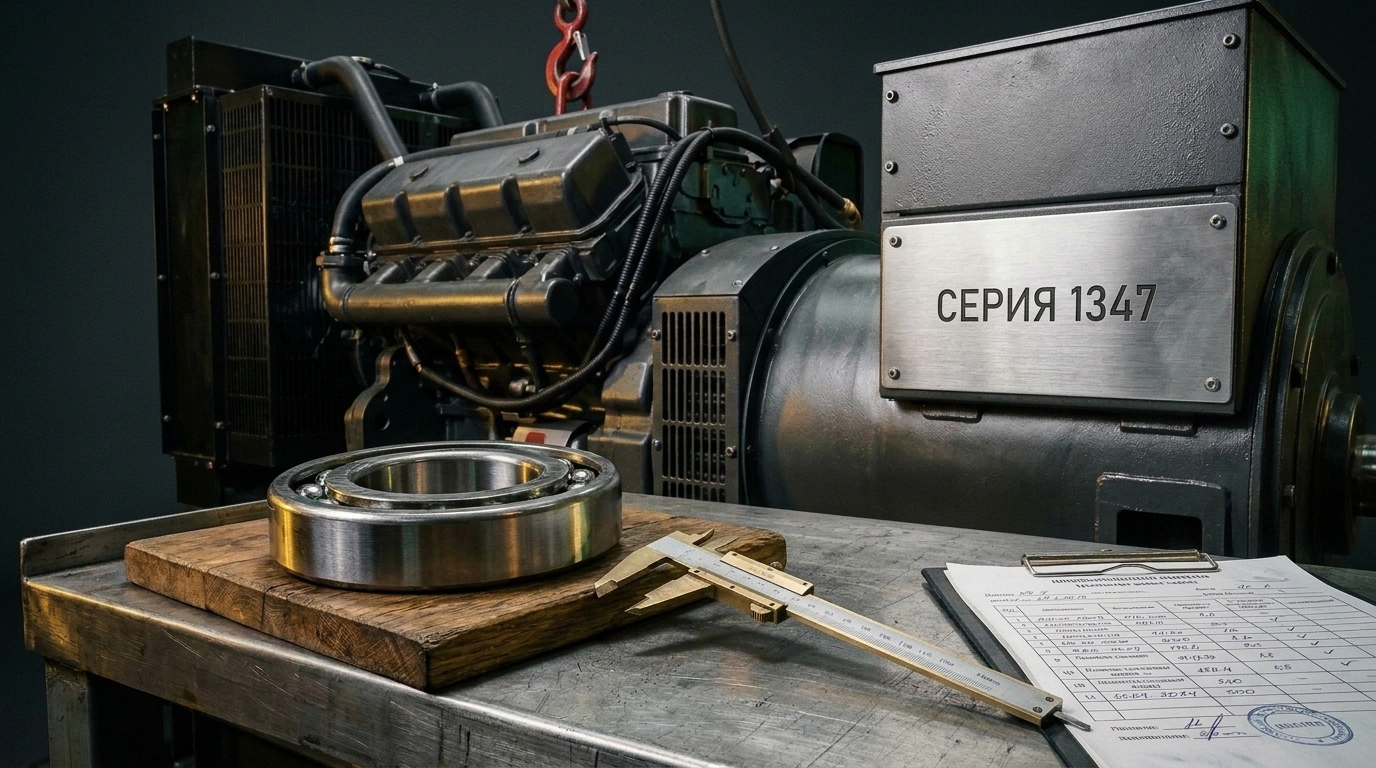
When an idle assembly line costs millions in lost output, deployment speed settles the debate. As we noted when preparing listings for the fall equipment season, buyers of heavy hardware no longer care about glossy brochures—they want unedited photos of mechanical assemblies and clean paperwork.
Decree No. 1347: What the November 1 Labeling Pilot Changes
A major milestone is coming for sellers of power and industrial equipment. The Russian government has adopted Decree No. 1347 of October 14, 2026, launching a tracking and labeling pilot in the Chestny ZNAK system.
The pilot runs from November 1, 2026 through August 31, 2027, managed by Operator-CRPT. The HS code (TN VED) list covers core categories:
- Diesel generators and generating sets with piston engines;
- Internal combustion engines (industrial, automotive, and marine);
- Synchronous AC generators;
- Rolling bearings of all types;
- Elevator equipment assemblies and safety devices.
The pilot is voluntary and free of charge: DataMatrix codes are issued at no cost. For Avito sellers, though, it's a clear signal that the state is building end-to-end tracking for machinery. Check the TN VED codes in your inventory database and test electronic document exchange (EDO) ahead of time, before mandatory rules kick in.
Containerized Data Center Shortages and Appetite for Coffee Gear
Two fast-moving niches have emerged across the equipment market.
In the corporate sector, demand has surged around containerized data centers. Banks and industrial holdings are locking in IT capacity: according to Ultimatek, incoming client requests have tripled, and manufacturer YADRO expects delivery peaks toward the end of the year. Lead times for containerized units have stretched from two months to six. Sellers holding ready-to-ship modules are closing deals at strong margins. Meanwhile, the Ministry of Industry and Trade is wrapping up applications for Commercialization-Machine Tool Building grants of up to 50 million rubles for CNC equipment manufacturing.
On the mass-market side, appetite for coffee equipment remains steady. A joint study by Avito Goods and Avito Ads surveying 10,000 Russians found:
- Coffee and tea tie for the top spot among beverages at 56% each;
- The average budget for coffee gear sits at 14,083 rubles (30% spend up to 5,000 rubles, 21% spend 5,000 to 10,000 rubles, and 15% go up to 20,000 rubles);
- Meanwhile, 45% of buyers influenced by ads find their machines directly on classifieds and marketplaces.
In our breakdown of shifting demand in vending and warehouse equipment, we pointed out how coffee demand is fueling self-service coffee corners—from home espresso machines to 250,000-ruble automated kiosks.
How to Package a Heavy Equipment Listing for Fast Deals
Anyone buying a complex lathe or generator thinks pragmatically. To keep deals from stalling in endless approvals, answer the key questions upfront:
Pre-Sale Equipment Prep Checklist
- Photographed the nameplate showing the factory serial number, year, and power rating
- Captured a close-up of the operating hour meter reading
- Recorded a short video of the unit starting up and running under load
- Stated the deal terms, including whether 20% VAT can be itemized
- Listed exact dimensions, weight, and crane or boom-truck loading requirements
For B2B buyers, the ability to deduct 20% VAT often matters more than a small price cut. And spelling out loading logistics prevents disputes on pickup day. Transparency and quick adaptation to platform rules remain a seller's sharpest edge.
