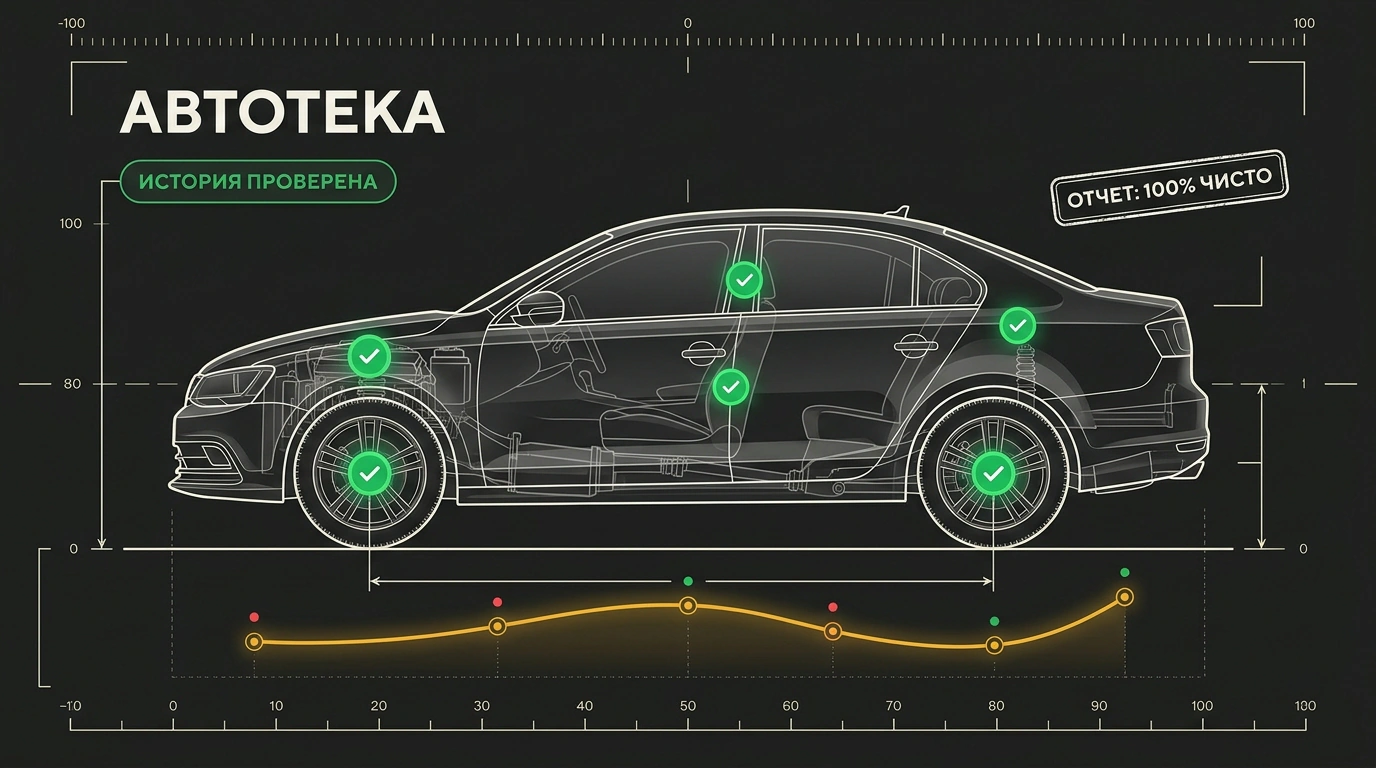
Think back to buying a used car ten or fifteen years ago: pure Russian roulette with a paint-thickness gauge in your hand. You took the seller's word on faith, listened to heartwarming stories about "a grandpa who only drove it to the pharmacy once a month," and prayed the car didn't turn out to be two totaled halves welded together or still under a bank lien.
By 2026, that Wild West market is history. Marking the 10th anniversary of Avtoteka, Avito Auto analysts published the results of a large-scale study of the secondary car market. The numbers capture a massive behavioral shift: today, 96% of Russians check a car's history online before buying. Database checks have stopped being a niche tool for professional car inspectors and turned into basic consumer hygiene for everyday drivers.
The 96% Habit: Why Buyers Pull Reports Before Calling
The most telling shift happens before the first phone call: 61% of buyers purchase and read a full Avtoteka report BEFORE ever calling the seller or heading out for an in-person viewing. Where shoppers used to call first, listen to a sales pitch, and drive across town, the report now acts as a strict gatekeeper. If red flags pop up — an odometer rolled back by a hundred thousand kilometers, a million-ruble body-shop estimate with deployed airbags, or a court seizure — the listing gets swiped straight into the trash without a single message.
According to the study, a prospective buyer reviews an average of 10 detailed reports across different cars before shortlisting one or two solid candidates to inspect in person. For 40% of drivers, this digital habit locked in over the past five years, and the share of used-car transactions involving an Avtoteka check has reached a record 55% of the entire secondary market.
Here is what buyers check first inside a report:
- Archived photos (69%): seeing how the car looked in previous owners' listings one or three years ago, including insurance auction photos after crashes;
- Repair and damage estimates (57%): an interactive body diagram listing replaced structural components (frame rails, pillars);
- AI recommendations (54%): a built-in AI module scans thousands of data points and gives a plain-English summary of legal status and risks;
- Verified mileage timeline (53%): odometer readings logged across service-center work orders and inspection databases;
- Listing history (48%): price changes over time and regions where the car was operated.
From 20 Databases to China: Why a "Green" Report Sells Cars Twice as Fast
The service's data reach has scaled dramatically over ten years. In 2016, Avtoteka launched with just 20 sources (traffic police GIBDD registries and closed databases from a handful of dealers). Today, official data sources exceed 2,000, pulling from mandatory (OSAGO) and comprehensive (KASKO) insurers, the Federal Notary Chamber, banks, and taxi aggregators.
Better yet, the service has gone cross-border. Roughly 1.8 million Chinese cars have entered the country in recent years, and in the first nine months of 2026 used-car imports topped 334,000 units, a quarter of them from China. Avtoteka launched cross-border checks by connecting to China's Traffic Management Bureau and Insurance Bureau — catching flood damage, mileage rollbacks, and past Asian taxi-fleet service before a car even crosses the border.
For sellers on Avito Auto, attaching an open report to a listing has become a prime sales lever. As we noted in our guide to packaging classifieds listings, removing basic buyer doubts speeds up closing. Listings with a verified green history get a dedicated badge and higher search placement, and buyers arrive at the viewing without aggressive haggling by the hood — cutting average time-to-sale by 2 to 2.5x.