Issue October 22Daily digest · 6 items
In this issueReviewed 55 sources, gathered 6 items
Infographic blueprint of generative search architecture comparing AI ranking factors.
Thematic roundup4 sectionsSEOAIMarketingAI

GEO vs. Classic SEO: How to Land in AI Recommendations Without Buying the Hype

Whenever a contractor proudly shows me a screenshot where ChatGPT supposedly "recommends only your brand," my skepticism kicks in immediately. Today, over two dozen tools sell generative visibility tracking, yet almost none take a baseline measurement before work begins. Without a baseline, proving that an AI mentioned you thanks to an agency's magic—and not by pure chance—is physically impossible.

Real research tears those marketing fairy tales to shreds. In an academic test across 10,000 queries, expert quotes and hard numbers boosted citation rates by 30–40%, while old-school SEO keyword stuffing cut visibility by 8%. Meanwhile, a massive PromoPult study of 4,000 sites proved that without a strong classic SEO foundation in the top 10, your odds of appearing in Alice or Google AI answers drop below 7%. Building lasting presence in generative answers only works at the intersection of authoritative sources, real-world facts, and honest analytics.

👍 0
Cossavc.ru — Маркетинг (PromoPult)arXiv:2311.09735 — GEO: Generative Engine Optimization
October 22
Conceptual ad control console with a locked toggle switch for disabling placements in AI chats.
ArticleYandex DirectTrafficAdvertisingAI

Ads in Alice AI: Hundreds of Thousands of Advertisers With No Opt-Out and Zero Transparency

"Can I just flip a toggle in Direct and turn off Alice AI placements since there's no separate analytics?" Several colleagues hit me with that exact question this week. Here's the blunt truth: there is no off switch in the interface.

Yandex rolled out contextual ad placements inside Alice's conversational chat and AI search summaries to hundreds of thousands of advertisers. The AI generates ads on the fly, rewriting your headlines to match user prompts and charging you at hot search auction rates.

The biggest headache for marketers is total opacity. In Direct's Report Wizard, this traffic is lumped together with regular search, making it impossible to calculate an isolated CPL. For now, you can only spot these placements indirectly—by hunting for ultra-long conversational queries of 7–10+ words in your reports and checking the visibility block in Yandex Webmaster.

👍 0
TexTerra BlogTexTerra: всё про маркетингЯндекс Реклама — Справка по форматам в Алисе AI
October 22
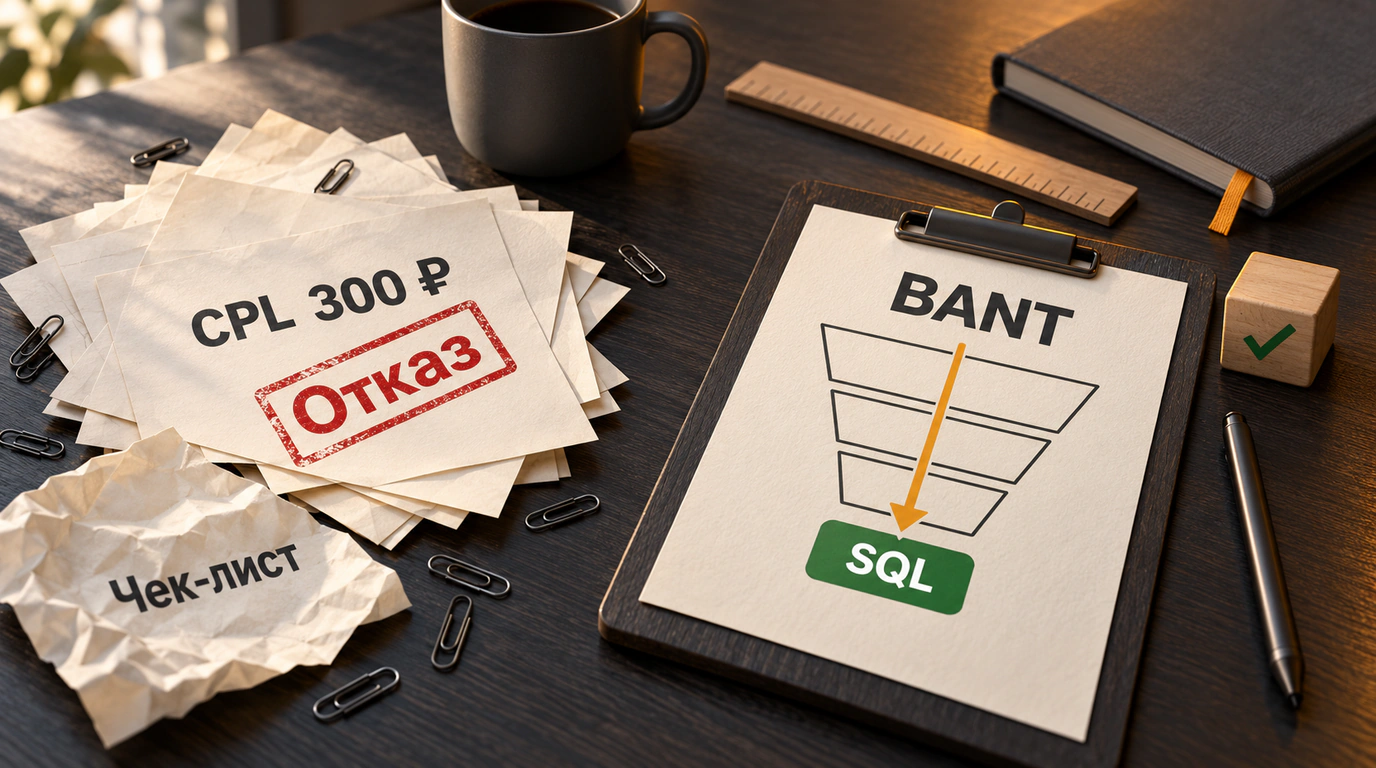
Still life of a marketer's desk contrasting the chaos of cheap rejected leads with a structured BANT qualification system.
LongreadSalesMarketingTrafficStrategy

The Cheap Lead Illusion: Why Businesses Drown in Inquiries While Revenue Stalls

The report boasts hundreds of leads at 300 rubles each, the marketer wants a bonus for a rock-bottom CPL, and the sales team is tearing their hair out: phones are dead, prospects snap at reps, and the register is empty. It's the classic marketing-and-sales disconnect. Chasing a lower cost per contact, businesses hand out hollow lead magnets like "100 Post Ideas," attracting freebie hunters with zero budget and no need for a real product.

The root cause is optimizing for the wrong metric. In a real-world case, a campaign with "expensive" 1,000-ruble leads cut customer acquisition cost from 10,000 to 5,000 rubles and brought in twice the revenue thanks to a 20% close rate versus 5% from cheap traffic.

The fix is to ditch blind CPL chasing and roll out BANT qualification. Adding a budget filter to your form raises the cost per lead, but it protects your sales reps' time and trains ad algorithms to optimize for actual buyers instead of idle clickers.

👍 0
vc.ru — Маркетинг (Игорь Суворов)RB.ru — Методология квалификации лидов BANT
October 22
News · October 221 news item

Yandex Restores Core Direct Features After Ten-Day Outage

After ten days of locked interfaces, Yandex has restored full campaign management in Direct: creating ads, editing creatives, and topping up accounts are all back online. The auction never stopped and held its spending caps, though reporting data from the outage days is still arriving in batches and needs manual reconciliation with your CRM.

Coffee table still life featuring a loyalty gamification punch card and a guest VIP card.
ArticleBusinessSalesMarketingTelegram

Doubling LTV Without Discounts: How a Coffee Shop Built a Repeat-Purchase Engine in 30 Days

When his coffee shop's profit plateaued at 400,000 rubles, entrepreneur Evgeny Makartsev—working inside Mikhail Grebenyuk's "Declaration" project—decided to stop burning cash on cold street traffic and focus on repeat visits. In 30 days, the team doubled regular guests' LTV without a single discount or coupon.

The turnaround rested on a simple trio:

  • Private Telegram club: Instead of a promo board, guests were invited into an insider club with private tastings and menu votes;
  • Threshold gamification: A "Collect 5 Stickers" card at an average ticket of 520 rubles locked in a 2,600-ruble habit loop;
  • Owner-led CustDev: The founder personally interviewed churned guests and fixed morning rush-hour bottlenecks.

Instead of slashing its own margins, the business boosted revenue by 40% simply by turning random passersby into a loyal community of regulars.

👍 0
vc.ru — Маркетинг
October 22
Studio still life with a podcast microphone and the scales of justice, symbolizing a niche legal SEO agency.
ArticleSEOBusinessOrganic TrafficStrategy

How to Make $32M a Year in One Niche: The Strategy of Ruthless SEO Domination

What pays off better for a service business: being a generalist for everyone, or becoming the most expensive narrow specialist in town? Chris Dreyer and his agency Rankings.io give a definitive answer: $32 million in annual revenue from a single vertical—SEO for personal injury law firms.

A generalist agency gets stuck undercutting prices, scattering focus across dozens of industries, and burning cash on cold outreach. A niche monopolist plays a different game. Knowing that Google Ads clicks cost $500–$1,000+ and attorneys earn massive contingency fees, the agency commands premium retainers with zero haggling.

The decisive edge was building a monopoly media asset: a flagship podcast with 450+ episodes that turned the agency into the industry's main gravity well for top US trial lawyers. Instead of chasing clients, the business built an inbound pipeline of top-tier buyers.

👍 0
AhrefsRankings.io — Legal SEO Agency
October 22