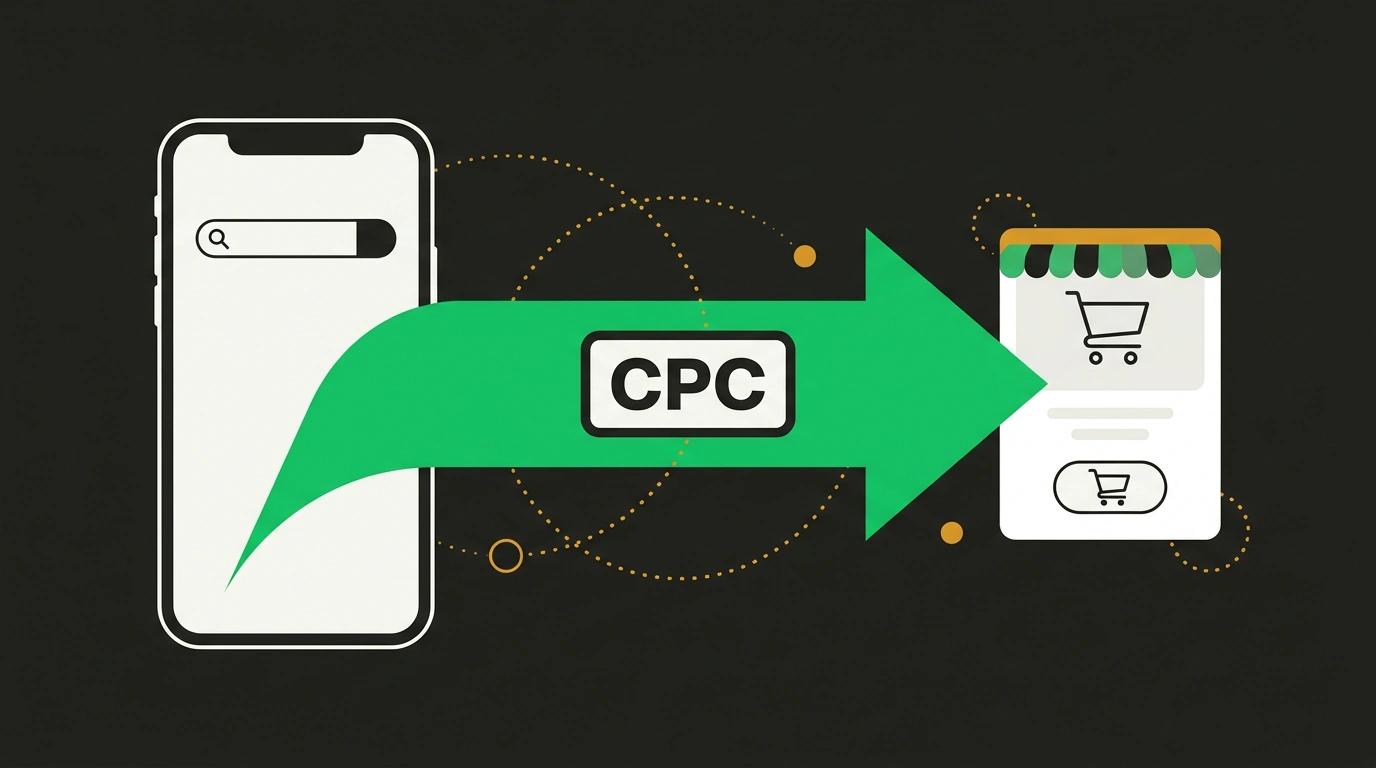
For years, marketers held onto a stubborn stereotype: a classifieds platform is a walled garden. You buy ad boosts, publish listings, polish your storefront, yet the user inevitably stays inside the platform. For large e-commerce players, national brands, and chain services, that closed loop was always a bottleneck—you want to send high-intent shoppers straight to your own site, your own checkout cart, and your own end-to-end analytics.
The arrival of the "Maximum Conversions" auto-bidding strategy for external websites inside Avito Ads changes the rules completely. Now the platform's massive transactional audience—over 70 million active monthly users—is open for direct performance lead generation with smart bid optimization.
How the Mechanic Works Under the Hood
The beauty of this tool is that you optimize your campaign for specific business events on your own website (completing a purchase, adding to cart, submitting a form, or making a phone call), while still paying on a familiar cost-per-click (CPC) model.
The algorithm doesn't try to guess intent from abstract keywords. In real time, it matches internal behavioral signals from the Avito ecosystem (search history, category views, favorites, delivery frequency, and average order values) against user actions on your landing page. When the probability of a target action is high, your click bid automatically scales up; when a click is unlikely to convert, the bid drops to a minimum.
Three Critical Rules for Setup and Learning
To keep your campaign from burning through budget with nothing to show for it, you have to follow the platform's strict technical requirements:
- Proper pixel setup and event tagging. In the "Analytics" section of your ad account, generate the dedicated JS pixel code and install it across every page of your website (via Google Tag Manager or directly in the code). Tag your target actions using JS events. Your ad's landing page must strictly belong to the domain where the pixel is installed.
- Enough data density to calibrate. Algorithms need fuel to learn. Avito's official recommendation: your chosen target event should generate at least 15 conversions per day per campaign. If actual purchases in your online store happen less often, move one step up the funnel—optimize for "add to cart" or "proceed to checkout."
- Daily budget with breathing room. Your daily cap should cover the cost of at least 10–15 expected conversions. If you squeeze the budget down to pennies, the system flips into conservative mode and chokes your reach to zero.
Auto-bidding calibration takes up to 14 days. Do not change bids, rewrite ad copy, or reconfigure goals during the first 2–3 days after launch. Any sudden tweak wipes out the audience signals the algorithm has gathered and sends learning back to square one.
As we noted earlier in our breakdown of click-out ads in Avito Ads, successfully moving transactional demand onto an external site depends on landing page speed and a frictionless path to checkout. Make sure you fill out your legal details in advance for automatic erid ad labeling via ORD—and test this fresh source of ready-to-buy customers before the auction gets crowded.