It's a scene every B2B company knows by heart: the team spends three months preparing for an industry expo. Designers polish the booth, marketing prints catalogs, logistics hauls heavy product samples across town, and the CEO signs off on hefty invoices for floor space and booth construction. The tab easily clears 1.5–3 million rubles. At the show itself, energy is sky-high: sales reps shake hands for three days straight, drink gallons of coffee, and haul a box of 150 business cards back to the office. A month later, you open the CRM—and see zero closed contracts. Millions burned, and the Head of Sales shrugs: "Guess the leads were cold."
The problem isn't the people who walked up to your booth. It's a systemic collapse in the post-show follow-up process. Let's take this breakdown apart piece by piece and build a playbook that turns trade show badges into actual money hitting your bank account.
The Post-Expo Black Hole: Why 80% of Contacts Turn Into Dead Weight
If you spend 1.5 million rubles on an exhibition and collect 150 business cards, your raw cost per contact is 10,000 rubles. That's not a cheap click from an ad network—it's a serious capital investment.
Come Monday morning, reps get back to the office and immediately get buried under daily firefighting: urgent shipments, accounting reconciliations, calls from existing clients. The box of business cards gets shoved to the corner of a desk with a mental note: "I'll clear the urgent stuff and start calling tomorrow." A week slips by, and three leak scenarios kick in:
- Lost context: Scribbled in pencil on a card is "Ivan, pumps, discount." Five days later, nobody remembers who Ivan is: the chief power engineer of a plant with a 40-million budget, or a procurement clerk collecting price lists to check a box. In our breakdown of the B2B funnel and the anatomy of long deals, we showed how missing the decision-maker's specific pain point kills the conversation on arrival.
- Scripted spam: A rep dials blindly: "Hello, you stopped by our booth, how can we help you?" The prospect has already forgotten your face and is annoyed by the generic pitch.
- Blind retargeting: Marketing uploads the contact list into an ad platform and blasts a generic "We're market leaders" banner instead of a targeted offer speaking to the buyer's actual problem.
The 48-Hour Factor: How Response Speed Decides Who Wins the Tender
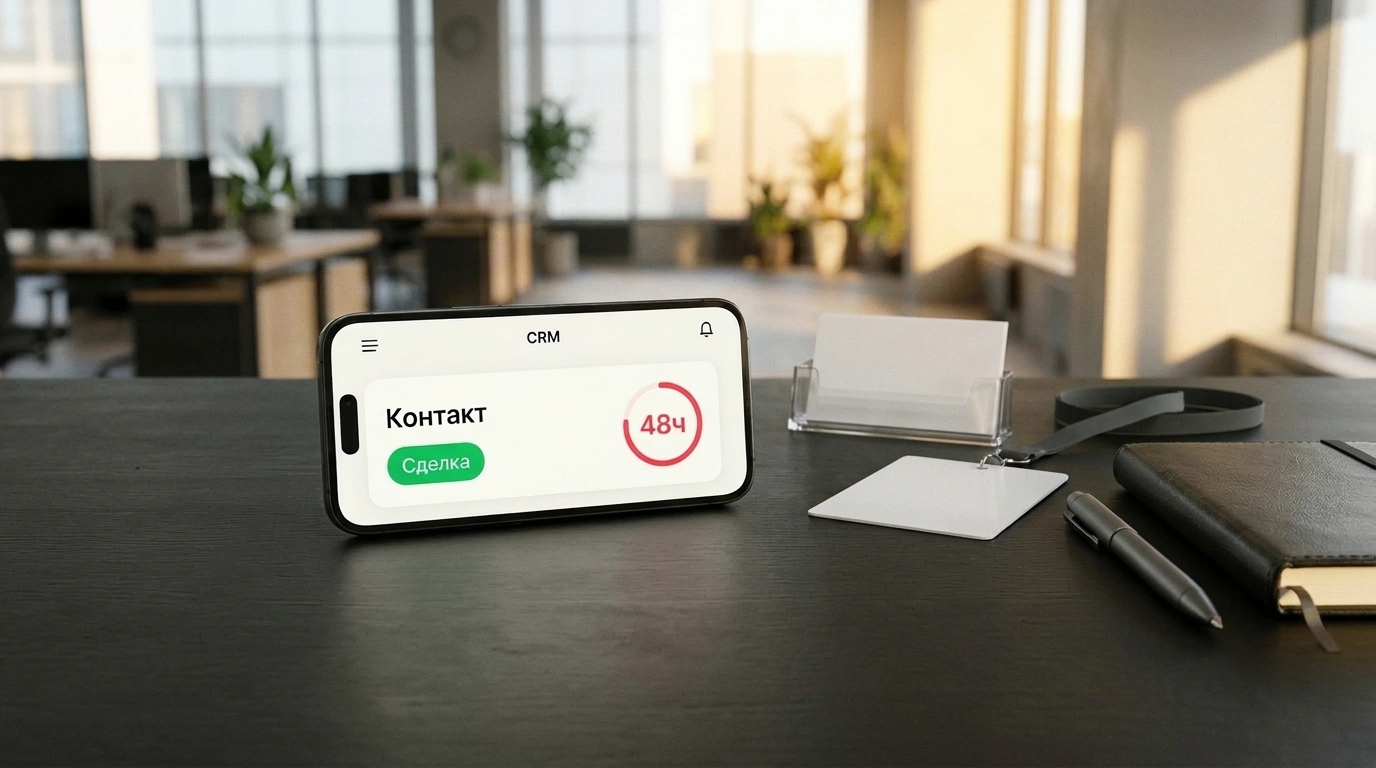
In B2B sales, there is a hard metric called Speed to Lead. According to LeanData, the odds of successfully qualifying a lead drop by 21x if your first meaningful touchpoint is delayed beyond 24 hours.
A decision-maker's memory window slams shut fast:
- 0–24 hours: The prospect is at an emotional peak and still remembers your engineers, samples, and conversation.
- 24–48 hours: The expo is over, and the details of the conversation start to blur.
- After 7 days: The contact has cooled off by 80%, and a late call feels like pushy cold spam.
Up to 78% of buyers sign with the vendor who sends the estimate and locks in next steps first. If your competitors email a proposal on Monday morning and your team doesn't get moving until Thursday, the contract is already gone. In our piece on meaning-driven B2B marketing, we noted that trying to make up for lost time with aggressive follow-ups only destroys trust.
The Booth Lead Passport: Ditching Paper for Live CRM Capture
The fix starts right at the booth: ban paper business cards as your primary record-keeping tool.
End-to-end lead capture runs on three simple steps:
- Personal QR code + Telegram: Every staffer wears a badge with a large QR code linking straight to their messenger. Right during the chat, the rep sends a quick templated hello: "Hi Ivan Sergeevich! This is Alexey from PromPrivod, locking in our contact from the expo."
- Mobile CRM: When someone hands over a traditional paper card, the rep scans it right away using a mobile CRM app (amoCRM or Bitrix24). Tax ID (INN) lookup services pull company details, revenue, and legal structure in three seconds flat.
- 60-second voice Lead Passport: Immediately after the conversation ends, the rep dictates five fields into the deal card by voice:
- Task: Replace 4 units in the electroplating shop in Q1.
- Pain point: German supplier missed a spare parts delivery; the shop is losing money.
- Budget: 18 million rubles, funding approved.
- Buying committee: Ivan Sergeevich — Technical Director (influencer); CEO signs off.
- Deadline: Send blueprint and commercial proposal by Tuesday 2:00 PM; follow-up call at 4:00 PM.
Set a booth rotation: 45 minutes working visitors, followed by a mandatory 15-minute break. During those 15 minutes, the rep must log and voice-dictate every collected contact into the CRM before the details fade.
Four Checkpoints for the Head of Sales: Shielding Reps from Busywork
The Head of Sales has to act as a shield between the sales team and internal office bureaucracy:
- 48-hour routine moratorium: On the Monday and Tuesday right after the show, booth reps are pulled off routine admin for at least 4 hours a day strictly to work the expo pipeline.
- SLA-based segmentation:
- Tier A (Hot): Pain point, budget, and deadline are clear. Custom quote goes out within 24 hours.
- Tier B (Warm): Need is on the horizon. Phone call and supporting materials within 48 hours.
- Tier C (Cold): Routed into an educational newsletter sequence without burning top reps' time.
- Deal card audits: The Head of Sales reviews the pipeline. Vague notes like "took a brochure" get rejected; every card must have a dated, time-stamped next step.
- Warm Deal Owner handoff: When passing a lead to a technical specialist, the booth rep makes a warm intro in the chat thread, confirming all context has been handed over.
The Content Lever Instead of Spam: Closing Deals with an Industry Brief
Instead of the dreaded "Did you get a chance to look at our proposal?" call that makes buyers cringe, use a content lever. In our analysis of the last-click trap in B2B, we proved that pressuring a prospect without demonstrating expertise tanks conversion.
While reps work the booth floor, marketing attends panel discussions and distills the takeaways into a crisp summary: "2026 Industry Tech Trends: An Executive Brief for Chief Engineers."
On Monday, the rep sends the decision-maker a personal Telegram message:
"Hi Ivan Sergeevich!
This is Alexey from the expo. We put together an analytical brief
on component supply risks for 2027. I remembered our conversation
about spare parts delays and wanted to share the document with you.
By the way, our engineers already sketched a preliminary layout for your shop.
Would Tuesday at 11:30 AM work to walk through the numbers?"
That positions you as a consulting partner, not a pushy salesperson. Second-touch conversion under this approach jumps from 10% to 50%.
Post-Expo Follow-Up Readiness Checklist
- Mobile CRM with business card scanning is set up on every team smartphone
- Personal QR codes for instant Telegram connection are printed on staff badges
- Lead Passport template is locked in with mandatory pain, budget, and buying-committee fields
- Head of Sales has blocked 4 hours per day for reps during the first 48 hours post-event
- Marketing has prepared an industry analytical brief for the first follow-up touch
A trade show is an expensive bet on lead generation. Put digital capture in place at the booth, protect those first 48 hours for your sales team, and lead with genuine value—and every million spent on the expo floor will come back as real profit.